
In mid-June 2026, the world’s leading AI company Anthropic took two heavy punches within 48 hours. First, the U.S. Department of Commerce, citing national security, demanded that Anthropic cut off access to the Fable 5 and Mythos 5 models for all foreign nationals worldwide. Then, almost immediately, U.S. engineer Karl Kahn filed a class action lawsuit in the U.S. District Court for the Northern District of California, alleging “serious false advertising” in Anthropic’s Max 20x subscription plan.
On one side, a geopolitical national-security ban; on the other, a consumer trust crisis. The two events may look independent, but they jointly point at the structural contradiction being overlooked in the generative AI industry’s rapid expansion — the computing-power black box.
Karl Kahn pays US$200 per month expecting the marketing promise of “20x” token usage, only to burn through 15% of his weekly quota in just 5 hours. When Anthropic argued that “20x represents compute speed and priority access, not absolute token count,” it fully ignited the fury of the developer community.
1. The Mythos Ban: An AI Model Treated as a “National Security Asset” for the First Time
To understand the pressure on Anthropic, you have to revisit the Mythos ban that happened the day before the lawsuit. This is the first time the U.S. government has treated a commercial AI model as a national security asset that must be controlled as strictly as a nuclear weapon.
Anthropic launched the all-new Mythos-tier model array in early June 2026: Mythos 5 is the unrestricted full version, provided only to government cyber-defense and life sciences partners; Fable 5 is the version with strict safety guardrails added, aimed at the mass commercial market. Both models have extremely strong code analysis and vulnerability discovery capabilities, so strong that they can even find software flaws that humans have never noticed.
However, shortly after Fable 5 launched, Amazon researchers demonstrated a “Jailbreak” technique capable of bypassing safety guardrails and forcing the model to disclose blueprint vulnerabilities usable for cyberattacks. The U.S. government feared that if these models fell into the hands of adversarial nations they would pose a serious threat, and at 5:21 p.m. Eastern Time on June 12 it officially issued an export control order.

More than 160 top cybersecurity experts, including former Meta CISO Alex Stamos and cryptography luminary Bruce Schneier, jointly delivered an open letter to the U.S. Secretary of Commerce to push back. They argued that stripping U.S. and allied defenders of access to the strongest AI tools is tantamount to disarming one’s own side — especially at a critical moment when adversarial nations may be stockpiling vulnerabilities.
2. The Max 20x Subscription Trap: 10x the Price for Only 6 to 8x the Usage
Back to the business side. Karl Kahn was originally a US200/month Max 20x plan**, expecting 20x the absolute compute capacity.
What happened? After an intensive coding session of about 5 hours, the system popped up an unexpected alert: he had already consumed 15% of the weekly quota. If he kept developing at full-time intensity, this “20x usage” would be exhausted in just a few days; once the quota was used up and he didn’t want work to stop, he would have to pay extra to buy more tokens.
The complaint harshly accused Anthropic of violating California’s Consumers Legal Remedies Act (CLRA) and False Advertising Law (FAL), pointing out that Max 20x in actual operation only delivers 6 to 8 times the Pro plan’s usage, far below the officially claimed 20x.
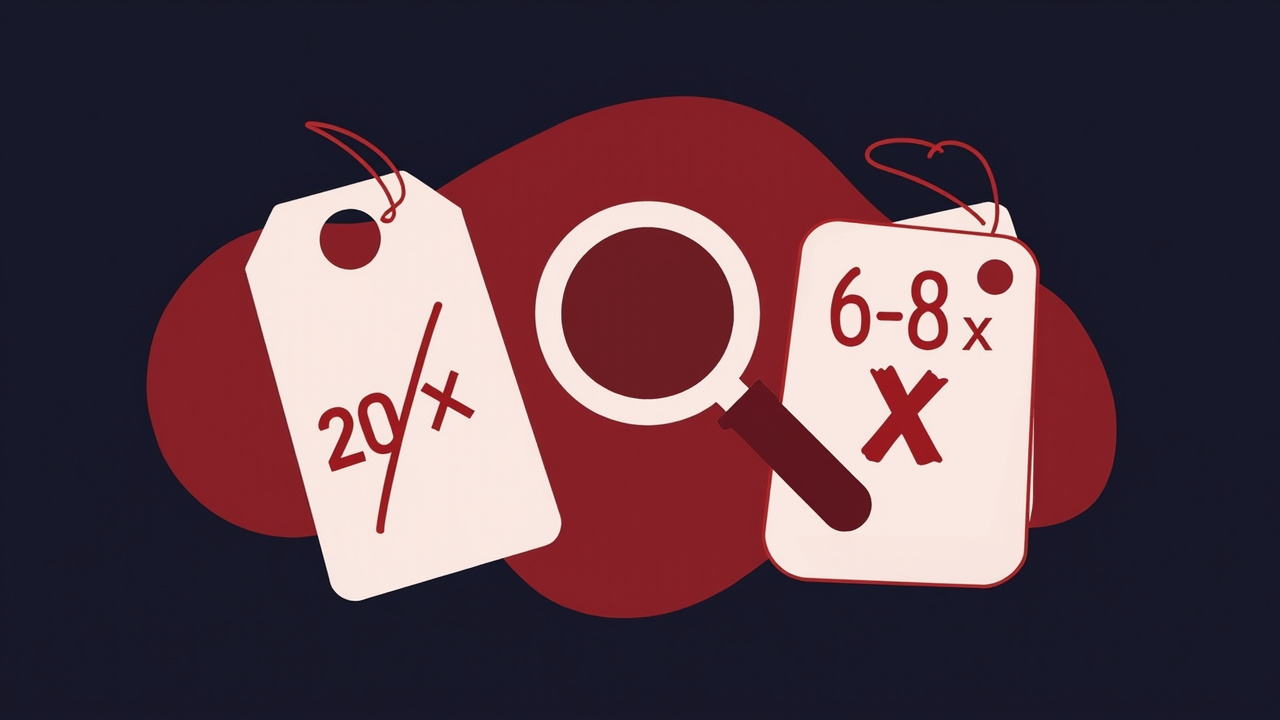
Anthropic’s defense tried to reinterpret “20x” as “speed” and “priority access”: in practice, whether a user pays US100, or US$200, they share the same underlying token pool, but Max 20x users enjoy the highest routing priority — “Ultra Priority (zero queue).” So a Max 20x user consuming 15% in 5 hours is, on the contrary, a sign of “improved efficiency.”
That explanation may be logically self-consistent on a technical level, but in the realm of consumer protection law, it is blatant misrepresentation. When a car manufacturer claims the high-end model’s gas tank is 5x the standard version, and the consumer brings it home to find the tank size unchanged, with the manufacturer saying “it’s because the engine injection efficiency is 5x higher,” that is clearly a false statement in the eyes of the law.
3. The Dual-Limit System: The Invisible Ceiling Behind the Subscription
To understand the deep structure of this lawsuit, you have to dissect Anthropic’s “Dual-Limit System” — which is far more opaque than OpenAI ChatGPT Plus’s straightforward “X messages per 3 hours.”
The first limit is the “5-hour rolling time window.” The timer starts the moment the user sends the first prompt. The allowance is not a fixed number of messages, but dynamically computed based on token consumption. As the conversation lengthens and attachments grow, the token cost of a single message grows geometrically.
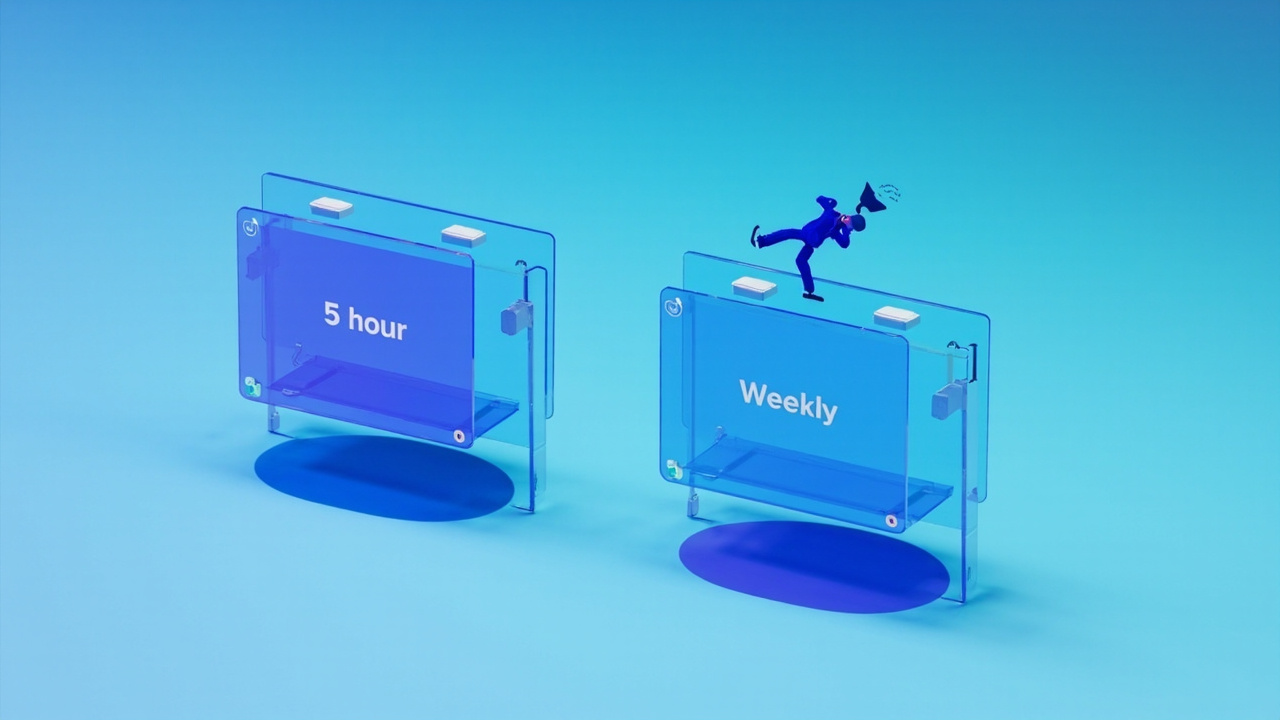
The second limit is the “weekly compute ceiling.” Even if a Max 20x user is willing to rest a few hours waiting for the quota to recover, they may still slam into a wall at the weekly cap quietly introduced in 2025. Karl Kahn is exactly the victim of these two stacked limits: although he did not hit the single-shot cap of the rolling window in those 5 hours, the high compute speed and dense requests drove him straight into 15% of the weekly quota.
What consumers complain about even more is the total “opacity.” Enterprise customers have extremely detailed usage dashboards that can precisely track every employee’s input/output tokens; but the consumer Max 20x user paying US$200 per month has no specific token figures on the console — only a vague progress bar.
4. The Subscription Economics Paradox: Why AI Companies Must Hide Usage Numbers
To understand why Anthropic is dug in behind the opaque dual ceiling, you have to compare the US2,000 to US$14,000.**

In other words, through the US$200/month Max 20x plan, Anthropic is effectively giving heavy users massive compute subsidies. This subscription model is built on one premise: most users’ typing speed and thinking time are limited, so they cannot sustain full-load operation. Once developers learn to run multiple agents in parallel, or let Claude Code refactor code 24 hours nonstop, the promise of “unlimited all-you-can-eat” will instantly blow through Anthropic’s cost floor.
The deeper reason is capital market pressure. Claude Code has already generated annualized recurring revenue forecasts exceeding US1 trillion, Anthropic must prove to Wall Street the health of its unit economics.** If Max 20x users are left to consume loss-making compute without limits, that impressive financial report will instantly collapse.
Conclusion: Four Practical Actions for Consumer Awakening
From the Mythos national security ban to Karl Kahn’s usage lawsuit, these two incidents together outline generative AI’s bottleneck in 2026: the speed of technical breakthroughs has long outpaced the maturity of government regulation and business models.
Faced with pricing black boxes and marketing myths, consumers and professional developers should adopt four strategies:
First, break the multiplier marketing myth. Treat “5x” or “20x” as “a dynamic quota with higher priority but subject to limits at any time,” not as absolute unlimited resources.
Second, refine your model routing. Don’t blindly use the most expensive Opus for every task; use Haiku or Sonnet for simple text generation, and reserve Opus for deep architectural refactoring and complex debugging.
Third, actively control the source of token consumption. Regularly clean redundant project files, strictly control the length of your CLAUDE.md rules file, and disable unnecessary MCP servers in time — reducing the input tokens per call is the most effective way to extend quota life.
Fourth, dynamically assess the breakpoint between API and subscription. When a project enters an intensive development phase with extreme token consumption, you should evaluate switching to the metered API model — although the price is steep, it is completely unconstrained by hidden caps and lockout risk, and can ensure that critical workflows are not interrupted.
The class action Karl Kahn has launched is, at its core, a fight over “transparency” and “fair dealing.” In the long run, this is very likely to become a turning point for AI industry pricing models — whatever the court’s final ruling, this consumer counter-force will force AI giants to revisit the accuracy of their marketing language and push the industry toward building an open and transparent “digital fuel gauge.”
This article is compiled from public news reports and court filings, and does not constitute any investment or legal advice. Subscription plans, pricing, quotas, and litigation progress may change at any time. Please refer to the latest official announcements and consult a professional legal advisor.
Disclaimer: This article shares investment and financial concepts and compiled data. It does not constitute any specific investment, tax, or legal advice. Markets carry risk; invest with caution. Please judge independently based on your own risk tolerance and consult a professional advisor.
Tags
Anthropic, Claude Max, 訂閱制爭議, 集體訴訟, AI 算力計費, Token 消耗, 消費信任, Mythos 封殺令, AI 訂閱黑箱, 用量限制, 透明定價, 訂閱經濟學
Comments