
May 2026 Report (Part 1) — From Heaven to Hell: How Greed Erased Three Months of Profit
💡 Reading time: ~12 minutes | Series: Monthly Performance Review #4 ⚠️ Content warning: This post covers the darkest moment of my account. But it’s also the post I learned the most from.
Monthly scorecard
| Metric | Value |
|---|---|
| Trades | 6 |
| Winners | 4 (+$6,604) |
| Losers | 2 (-$16,530) |
| Net P&L this month | -$9,926 USD |
| Monthly win rate | 67% (but in dollar terms a massacre) |
May is the month I’d most like to delete from the record — and the one I most cannot delete.
First, the good part: four winning trades
| # | Underlying | Strategy | Days | Net P&L |
|---|---|---|---|---|
| 9 | GOOG SP $370 | 2-day flash | 2 | +$690 |
| 10 | AAPL SP $270 | 2-day flash | 2 | +$909 |
| 11 | AAPL SP $285 | Short-term | 8 | +$1,080 |
| 12 | GOOG stock 500 shares | Short-term | 3 | +$3,925 |
| Total | +$6,604 |
The first half of May wasn’t bad. In particular, the GOOG stock 500-share short-term trade (+$3,925 in 3 days) and my first AAPL trades both went smoothly.
If the story had ended there, May would have been a great month.
The story didn’t end there.
The two catastrophic trades
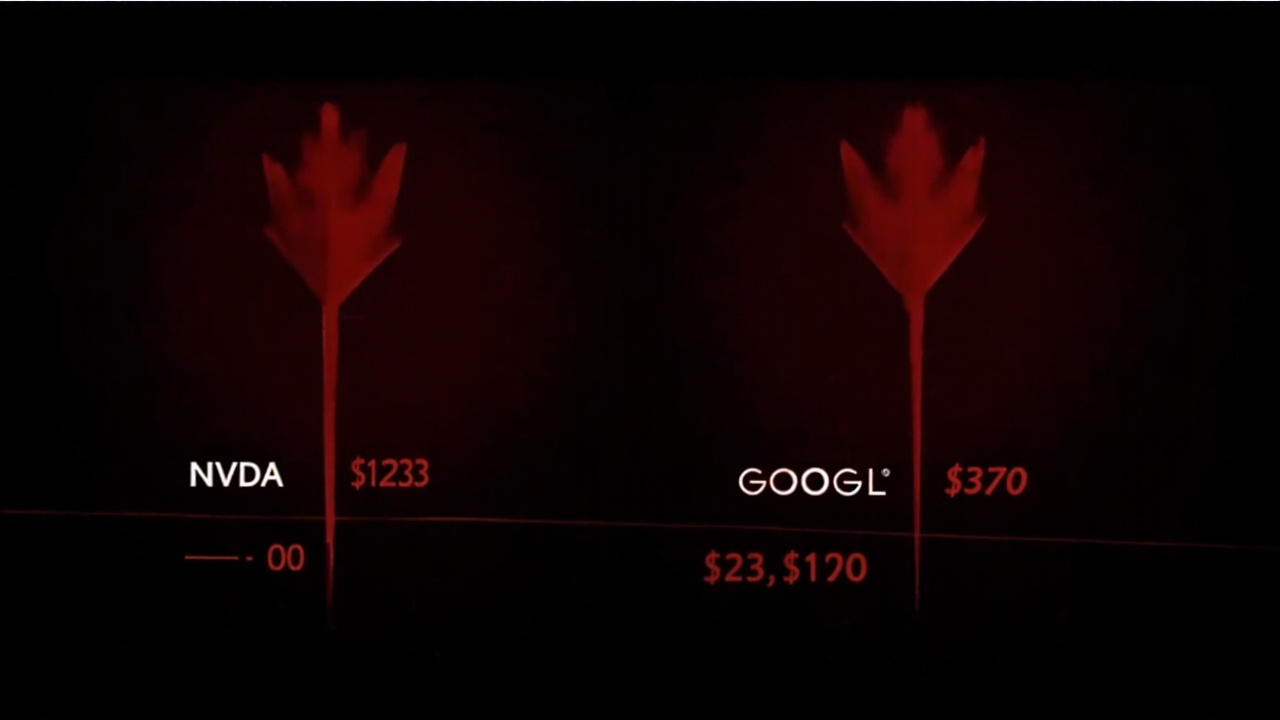
| # | Underlying | Strike | Contracts | Income | Cost to close | Net loss |
|---|---|---|---|---|---|---|
| 13 | NVDA SP | $223 | 6 | $6,180 | $12,240 | -$6,060 |
| 14 | GOOG SP | $370 | 6 | $4,890 | $15,360 | -$10,470 |
| Total | -$16,530 |
A single loss of $16,530 — that’s roughly giving back all the profit from January through April ($11,148), then digging an extra $5,382 hole.
Post-mortem: what exactly did I do wrong?
Fatal mistake #1: strike too close to the stock
This was the most fundamental problem.
| Past (successful) operations | May (failed) operations |
|---|---|
| NVDA SP $170 (-8.1% from stock) | NVDA SP $223 (-0.9% from stock) |
| NVDA SP $165 (-10.8% from stock) | Almost ATM |
| GOOG SP $295 (-6.3% from stock) | GOOG SP $370 (~-1% from stock) |
Why did I pick strikes so close to the stock?
The answer is a single character: greed (貪).
The premium on $223 was $10.30/share — more than 3× the $3.15/share I’d gotten on $170. I saw that number and greed overrode reason.
Fatal mistake #2: doubled the contract count
Not only was the strike too close, I also bumped contracts from 3 to 6.
Risk exposure:
Before: NVDA $170 × 3 × $3.15 = $945 premium, margin ~$51K
May: NVDA $223 × 6 × $10.30 = $6,180 premium, margin ~$134K

Margin share: $134K / $310K = 43% (over the 40% cap)
A closer strike × a bigger position = the biggest bet in the most dangerous spot.
Fatal mistake #3: didn’t stop out the moment things went wrong
When NVDA started falling from $225, my internal monologue went like this:
$225 → $222: "Small move, normal."
$222 → $220: "It'll probably bounce..."
$220 → $218: "It's already fallen this much, it can't fall more." ← line broken
$218 → $215: "Cutting now is too painful, let me wait for a bounce." ← missed the stop window
$215 → $212: "Done. I have to roll."
Every “it should bounce” is me arguing with the market. The market doesn’t care about my feelings.
If I’d stopped at $218 (line break -2%), the loss would have been around -$2,220. Actual loss: -$6,060. The cost of hesitation: $3,840.
Fatal mistake #4: GOOG repeated the same mistake
What hurt even more — while NVDA was already blowing up, the GOOG SP $370 × 6 I had opened at the same time made the exact same errors: strike too close, contracts too large.
GOOG’s outcome was worse: -$10,470.
What does this tell me? I didn’t learn the lesson from NVDA’s loss in real time, and let the same mistake play out on another underlying.
The root cause analysis for May
Tracing all four mistakes back to a single root cause: only one character.
Pride (驕).
Four consecutive months of positive returns → “I’ve mastered the system” → loosen discipline → chase higher returns → bigger positions, smaller safety distance → blow-up.
This isn’t a strategy problem — it’s a mindset problem. The Sell Put strategy itself is robust. The person running it became reckless.
May’s numerical impact
| Metric | Jan–Apr cumulative | May | After May cumulative |
|---|---|---|---|
| Net P&L | +$11,148 | -$9,926 | +$1,222 |
| Mindset | “Systematized rent” | “World collapsed” | “Start over” |
Four months of effort, wiped out in one month.
How I handled the emotion
The night after the May roll-out, I did these things:
- Closed every screen. No account, no price, no financial news.
- Went to the gym. 90 minutes of heavy training — flushing the anxiety out through the body.
- Wrote the post-mortem after a shower. Listed every bad decision point without emotion.
- 72 hours of no new trades. Let rationality return.
This was the “72-hour cooling-off period” I wrote about in Part 2 (“Iron-clad risk-management rules”). May was the first time I actually followed it.
To you, if you’re in the middle of a loss
If you’re sitting on an unrealized loss and reading this, here’s what I want to say:
Loss isn’t shameful. Failing to learn from a loss is shameful.
I lost $16,530, but I learned five things worth far more than $16,530:
- Safety buffer is the foundation — strike at least 8% below the stock
- Position size determines life or death — single-trade margin ≤ 20% of total capital
- The stop-loss plan must be set before you open the trade
- Success doesn’t mean you can loosen discipline
- The 72-hour cooling-off period really works
That $16,530 was tuition. And it was the best-value tuition in my entire investing life.
📌 Little Otter’s May note: If you’re only seeing my 92% win rate and want to follow along, please read this post three times first. The risk for an options seller isn’t the 92% wins — it’s how big the 8% losses are. Next up, I’ll cover the only bright spot in May — the GOOG stock 500-share short-term trade.
Disclaimer: This article is a personal trading experience share, not investment advice.
Comments