
How Taiwanese Investors Get Started with US Stock Options — Accounts, Funding, and Margin
💡 Reading time: ~14 minutes | Best for: Taiwanese readers who want to start trading US stock options but don’t know where to begin 📋 Previously: The first three articles covered Sell Put, risk rules, and a Greeks primer. This one solves the “how do I actually start” problem.
In the first three articles we talked a lot about strategy and concepts. But if you’re in Taiwan, the biggest question probably isn’t “should I do this?” — it’s:
“How do I start? How do I get the money over? How is the margin calculated?”
This article is for you, in Taiwan. I’ll share every step of my own journey from zero, no holds barred.
1. Choosing a broker: why I use Firstrade
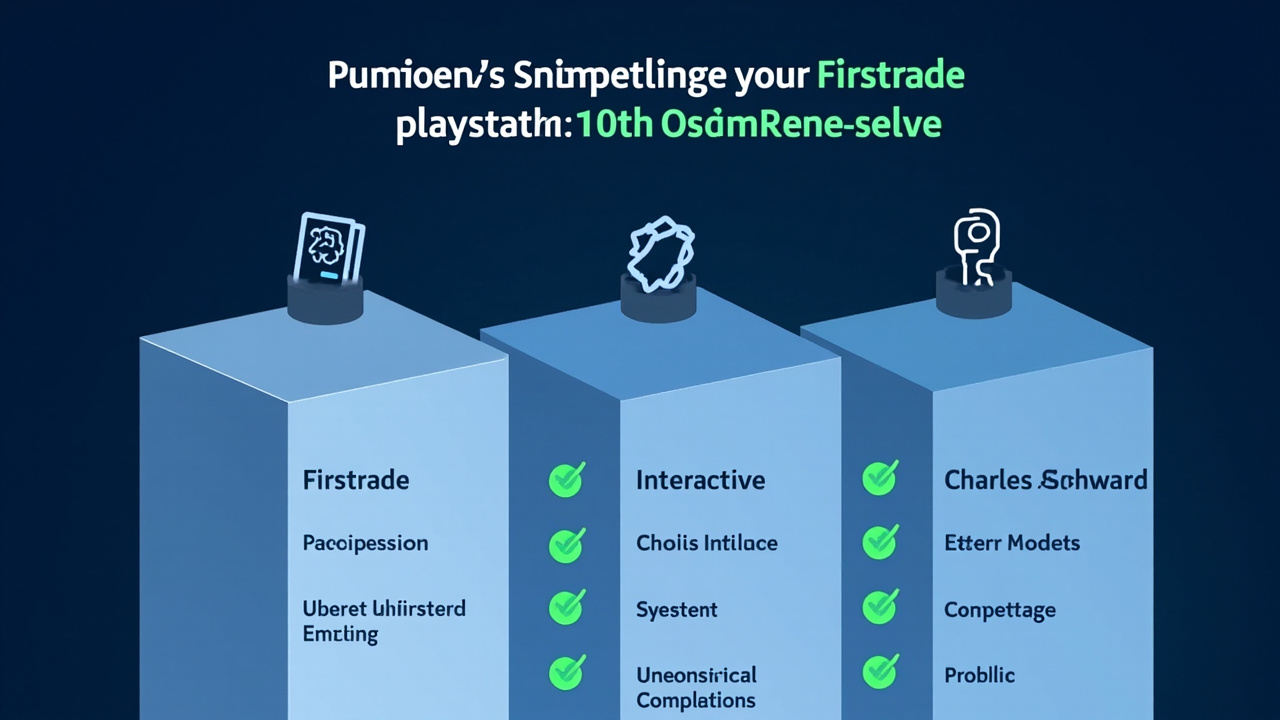
For Taiwanese trading US stocks, the most common online brokers are three:
| Comparison | Firstrade | Interactive Brokers (IBKR) | Charles Schwab |
|---|---|---|---|
| Options commission | Free | $0.65/contract | $0.65/contract |
| Chinese interface | ✅ Full Chinese | ✅ Has Chinese | Partial Chinese |
| Account opening difficulty | Easy | Medium | Medium |
| Minimum funding | None | None | None |
| Options permission | Apply for it | Apply for it | Apply for it |
| Beginner-friendly | ⭐⭐⭐⭐⭐ | ⭐⭐⭐ | ⭐⭐⭐ |
| Advanced features | Basic | Very powerful | Powerful |
| Margin model | Reg-T | Portfolio Margin optional | Reg-T |
Three reasons I picked Firstrade
Reason 1: zero options commission
For Sell Put, you “sell to open” and “buy to close” once each. If the broker charges $0.65 per contract, 3 contracts in-and-out is $3.90.
Doesn’t sound like much? But if you do 30–50 trades a year, that’s $120–$200.
Firstrade is fully free — meaningful savings over time.
Reason 2: Chinese interface is beginner-friendly
Learning options is stressful enough without having to fight a foreign-language interface. Firstrade’s Chinese is thorough — option chain, Greeks, and order entry are all available in Chinese.
Reason 3: simplest account opening
Online forms + ID upload, and you’re done in 3–5 business days. No interview, no test.
When should you consider switching to IBKR?
If your account exceeds $100,000 USD, and you need finer margin calculation (Portfolio Margin) and more advanced tools, consider moving to Interactive Brokers.
But if you’re a beginner with $30,000–$100,000 in the account, Firstrade is plenty.
2. Account opening: step by step
Documents you’ll need
| Document | Purpose |
|---|---|
| Passport (valid) | Identity verification |
| Taiwan ID card | Supplementary ID verification |
| Taiwan driver’s license (optional) | Some brokers need a second ID |
| Mobile number | Receive verification codes |
| Account notifications |
Firstrade opening steps
- Go to Firstrade’s website → click “Open an Account”
- Choose account type → Individual Account
- Fill in personal details
- Name (must match your passport)
- Address (in English; you can use a post office translation tool)
- Phone
- US tax ID → Taiwanese fill in “None” and submit W-8BEN later
- Upload ID photos → passport bio page + Taiwan ID front and back
- Sign the W-8BEN form → e-sign to certify that you’re a non-US tax resident
- Select account features → check “Options Trading” (you may need to answer some experience questions)
- Wait for review → usually 3–5 business days
Options permission application
At or after account opening, you need to apply separately for options trading permission. Firstrade will ask you:
- Your investing experience (years)
- Your annual income and net worth
- Which options strategies you plan to use
Recommendation: if you want to do Sell Put, you need to apply for Level 3 or Level 4 options permission. If you only get Level 2 at first, trade for a while and then request an upgrade.
3. Funding: how does money get from Taiwan to the US?
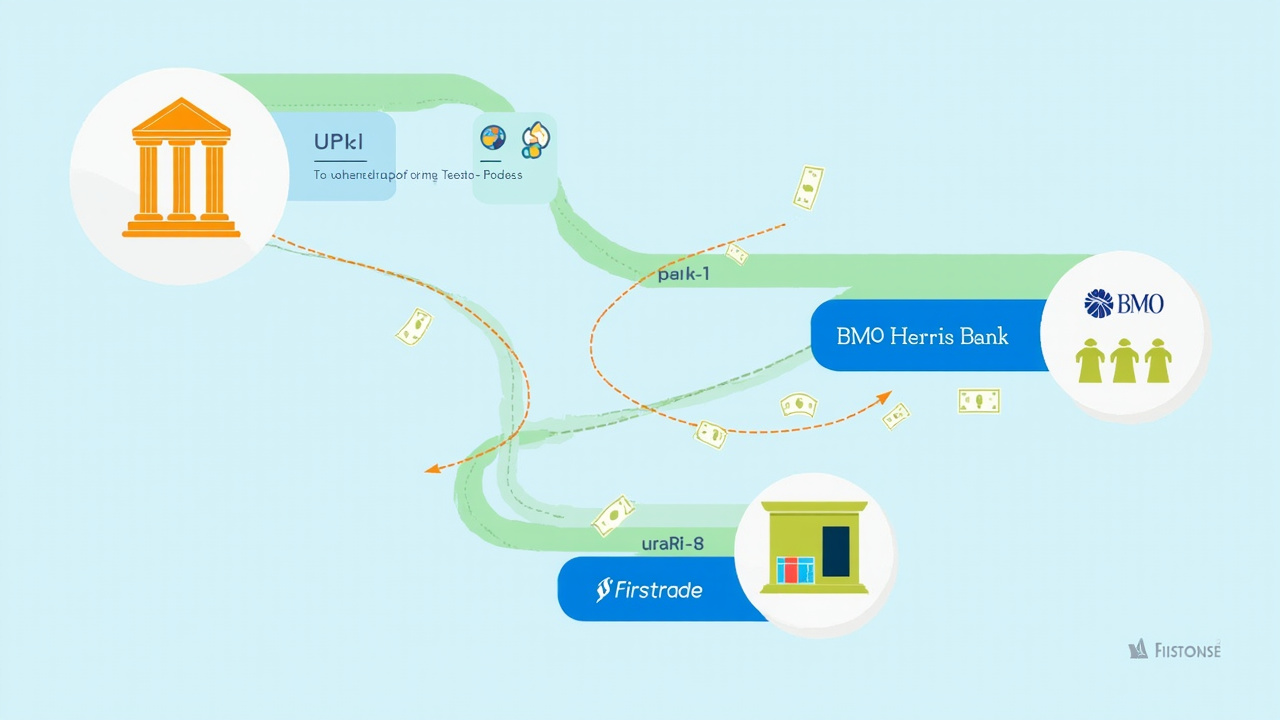
This is the part Taiwanese investors dread the most. Today the main method is international wire transfer.
Wire transfer flow
Your Taiwan bank account
     ↓ (International wire)
Correspondent bank (intermediary)
     ↓
Firstrade's receiving bank (BMO Harris Bank)
     ↓
Your Firstrade account
Step-by-step operation
Step 1: Get receiving details from Firstrade
Log in to Firstrade → “My Account” → “Deposit/Transfer” → “Wire Transfer”
You’ll get the following information:
| Item | Value |
|---|---|
| Receiving bank name | BMO Harris Bank |
| Receiving bank address | (Provided by Firstrade) |
| ABA / Routing Number | (Provided by Firstrade) |
| SWIFT Code | (Provided by Firstrade) |
| Receiving account number | (Your Firstrade account number) |
| Beneficiary name | Your English name |
Step 2: Go to your Taiwan bank to wire out foreign currency
You have two options:
| Method | Pros | Cons |
|---|---|---|
| Branch counter | Bank staff help you check the details | Need to visit the branch and queue |
| Online banking | Do it from home | Need to enable the foreign-currency wire feature first |
For the first time, I’d recommend going to the branch to make sure everything is right. After that, online banking is fine.
Step 3: Fill in the remittance form
| Field | What to fill in |
|---|---|
| Currency | USD |
| Amount | The USD amount you want to send |
| Beneficiary account | The account number Firstrade gave you |
| Beneficiary name | Your English name |
| Receiving bank | BMO Harris Bank |
| SWIFT code | The one Firstrade provided |
| Remittance purpose | “Personal investment” or “Securities investment” |
| Fee deduction | Recommend “OUR” — sender bears all fees |
Step 4: Wait for the money to arrive
- Usually 1–3 business days
- Firstrade will notify you when it arrives
Wire transfer fees
| Item | Cost |
|---|---|
| Taiwan-side wire fee | NT$800–1,200 (depends on bank) |
| Correspondent bank fee | $0–$25 USD (not always charged) |
| Firstrade deposit fee | Free |
Each wire costs roughly NT$800–1,500 in fixed fees. So don’t do frequent small wires — send at least $5,000 USD each time to keep the fee ratio low.
My wiring strategy
Here’s what I usually do:
- Wire every 2–3 months, $10,000–$30,000 USD each time
- Convert TWD → USD in Taiwan first, stash it in a foreign-currency account, then send it out when the FX rate is favorable
- Pick the bank with the lowest wire fee (differences are small, but worth comparing)
4. Margin: how much do you need for Sell Put?
This is the most common question. The answer depends on the underlying and the strike you choose.
Margin calculation (Reg-T standard)
Firstrade uses the Reg-T (Regulation T) margin model. The formula for Sell Put margin is:
Margin = max(
  (1) 20% × stock price × 100 × contracts + premium received − OTM difference
  (2) 10% × strike × 100 × contracts + premium received
)
That formula looks complex, but you only need to remember one rule of thumb:
Margin ≈ strike × 100 × contracts × 15%–25%
Real examples
| Trade | Strike | Contracts | Actual margin | % of $310K total capital |
|---|---|---|---|---|
| NVDA SP $170 | $170 | 6 | ~$102,000 | 33% |
| GOOG SP $310 | $310 | 3 | ~$93,000 | 30% |
| NVDA SP $175 | $175 | 3 | ~$52,500 | 17% |
| GOOG SP $295 | $295 | 3 | ~$88,500 | 29% |
| NVDA SP $223 | $223 | 6 | ~$133,800 | 43% ⚠️ |
Note the last one — NVDA $223 × 6 contracts, margin was 43% of total capital. That already breached my 40% risk rule, and it was one of the reasons I crashed in May.
Recommended sizing by capital
| Account size | Suggested contracts | Suggested underlyings | Margin usage |
|---|---|---|---|
| $30,000 | 1 | AAPL, mid-caps | ~30% |
| $50,000 | 1–2 | AAPL, GOOG | ~25%–35% |
| $100,000 | 2–3 | GOOG, NVDA | ~25%–35% |
| $200,000 | 3–6 | Diversified multi-underlying | ~20%–30% |
| $300,000+ | 6+ | Diversified multi-underlying | ~20%–30% |
Key rule: never let margin usage exceed 40% of total capital.
5. FX management: the hidden cost between TWD and USD
For Taiwanese options traders, there’s another often-ignored risk — currency risk.
How does FX move you?
Say you wired $10,000 USD to Firstrade at an FX rate of 32.5 (cost: 325,000 TWD).
A year later you’ve made $1,000 USD in option profits and want to send the money back to Taiwan. But the FX rate is now 31.0.
Wire out: $10,000 × 32.5 = 325,000 TWD
Wire back: $11,000 × 31.0 = 341,000 TWD
TWD profit: 341,000 − 325,000 = 16,000 TWD
You made $1,000 USD on options, but because the FX rate fell from 32.5 to 31.0:
Option profit (at the original 32.5 rate): $1,000 × 32.5 = 32,500 TWD
FX loss: $11,000 × (32.5 − 31.0) = -16,500 TWD
Real TWD profit: 32,500 − 16,500 = 16,000 TWD
Currency moves ate half your profit.
My FX management strategy
Strategy 1: Send in batches, never all-in
Don’t convert all your TWD to USD on a single day. I usually split into 3–5 batches, converting at different FX levels, and take the average.
Strategy 2: Don’t rush to send money back
Unless you need the cash in Taiwan urgently, leave the USD in Firstrade and let it keep working. Frequent round-trips in fees and FX spread eat heavily into your returns.
Strategy 3: Watch TWD trends, but don’t over-speculate
FX is even harder to predict than stocks. My approach:
- FX < 31.0 → convert and send aggressively (USD is cheap)
- FX 31.0–32.5 → normal pace
- FX > 33.0 → slow down, split into more batches
6. Taxes: what do Taiwanese options traders actually owe?
This is a complex topic, and I’ll only cover the basics. Please consult a professional accountant for your specific situation.
On the US side
| Item | Tax rate | When it applies |
|---|---|---|
| Dividends | 30% withholding | When you hold US stocks and receive dividends |
| Capital gains | 0% (tax-free) | Taiwanese are exempt from US tax on US stock and options gains |
| Option premiums | 0% (tax-free) | Premiums from Sell Put count as capital gains |
Key point: Taiwanese don’t owe US tax on options trading profits.
This is because you signed the W-8BEN form at account opening, certifying that you’re a non-US tax resident, and you benefit from the US-Taiwan tax treaty.
On the Taiwan side
| Item | Tax rate | Notes |
|---|---|---|
| Overseas income | Counted as basic income | Amount over NT$10M is taxed at 20% |
| Exemption | NT$7.5M per year | Basic-income exemption |
In short: if your annual overseas income (including options profits) is below NT$7.5M, you basically don’t owe any extra tax.
In my case: half-year net profit of $1,219 USD ≈ 38,497 TWD. That’s a universe away from the NT$7.5M threshold, so I don’t worry about it at all.
But if you’re trading at scale, with annual profits in the millions of TWD, you need real tax planning.
⚠️ Important note: The tax info above is for reference only and may change with regulation updates. Please consult a qualified tax professional before investing.
7. Cash management: my multi-account “reservoir” system

Last one — a more advanced piece of wisdom on cash management.
I have more than 25 bank accounts in Taiwan. This isn’t a collecting habit. Each account has a role:
Account categories
| Type | Count | Purpose | Example banks |
|---|---|---|---|
| High-yield savings | 3–4 | Short-term liquidity, maximize interest | Line Bank, Next Bank, Richart |
| Foreign-currency accounts | 2–3 | Currency exchange, wire out to Firstrade | Cathay United, CTBC |
| Salary account | 1 | Receive salary | Company-designated bank |
| Emergency reserve | 1 | Fixed NT$300,000, never touch | Post Office |
| Time deposits | 2–3 | Mid-term parking | Banks with the best rate |
| Living expenses | 1 | Daily spending | Bank linked to credit card |
Cash flow path
Salary → Salary account
              ↓
         ┌────┴────┐
         ↓         ↓
   Living costs   High-yield savings (accumulate to threshold)
                       ↓
                  FX account (convert)
                       ↓
                  International wire to Firstrade
                       ↓
                  Options trading (margin)
                       ↓
                  Profits → stay in Firstrade and roll forward
Why all this complexity?
Because cash discipline and trading discipline are the same discipline.
If your living money and investing money are mixed, you’ll panic on losses (because it’s the rent money) and loosen up on wins (because you feel like you can spend a little more).
Keep the money clearly separated, and you’ll always know:
- How much can I invest?
- Is my daily life unaffected?
- Is my emergency reserve still intact?
A clear mind is what lets you make good decisions.
8. The 30-day action plan for beginners
If you’ve read all four articles and feel Sell Put is worth a try, here’s how I’d recommend starting:
Week 1: open the account
- Get your documents ready
- Open a Firstrade account
- Apply for options trading permission
Week 2: fund the account
- Convert currency at a Taiwan bank (suggest at least $30,000 USD)
- Arrange the international wire
- Confirm the funds have arrived
Week 3: observe and simulate
- Spend 15 minutes a day looking at the option chain
- Use paper trades to log “what would have happened if I’d done this”
- Get familiar with Delta and Theta values
- Copy the five risk rules onto a sticky note and put it next to your screen
Week 4: first trade
- Pick a large-cap stock you know and like (AAPL, GOOG, MSFT)
- Trade only 1 contract
- Choose a strike with Delta 0.15–0.20
- Pick an expiration 30–45 days out
- Set the stop, log it in your trading journal
The goal of the first trade isn’t to make money. It’s to walk through the whole process once.
Final words: end of the foundation arc
That wraps up the four foundation articles. We’ve covered:
- ✅ What is Sell Put? — grasp the core concept
- ✅ Iron-clad risk rules — build your protection mechanism
- ✅ Greeks primer — read your dashboard
- ✅ Taiwanese getting started — solve the practical-operations problem
Next, I’ll be moving into the monthly performance review series — taking my real monthly trade data and showing you how Sell Put performs in different market environments. There will be highlights, there will be crashes, and there will be lessons.
Options trading isn’t something you master by reading tutorials. It takes real trades, real mistakes, and real reviews.
But as long as you have discipline, rules, and patience — the path is open.
See you in the next one.
📌 A note from Little Otter: Don’t give up just because the prep work feels tedious. Account opening, funding, understanding margin — you only do these once. After that, all that remains is executing the strategy and holding the discipline. The hardest step is always the first one.
Disclaimer: This article is a personal trading experience share, not investment advice. Options trading carries high risk and may result in total loss of principal. Please fully understand the risks and consult a professional before investing. Tax information may change with regulation updates — please refer to the latest rules and consult a professional accountant.
Comments