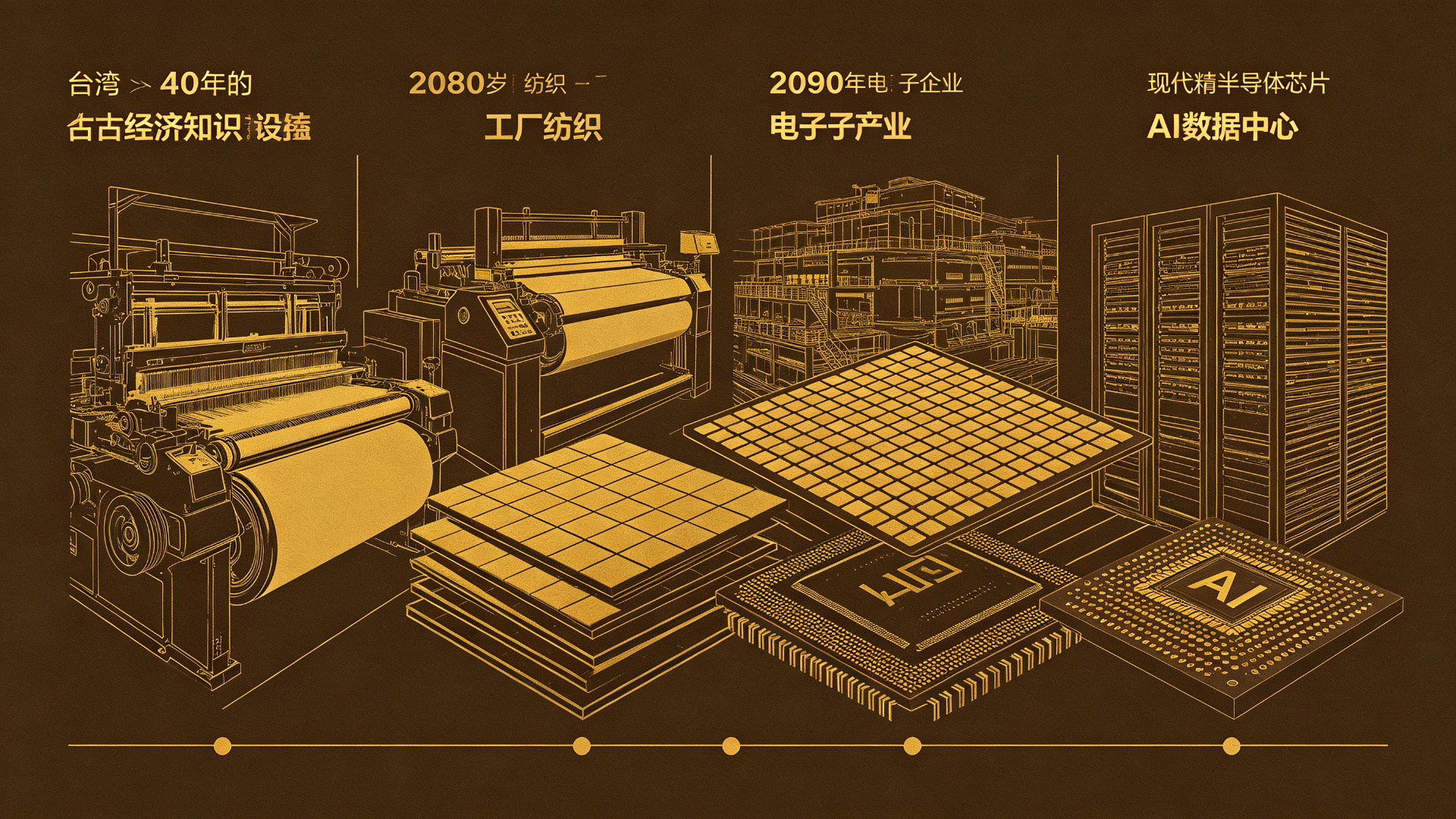
Taiwan’s 40-Year Journey: From Export Processing to Semiconductor Powerhouse
In 1985, Taiwan stood at a historic turning point. That year, the Plaza Accord was signed, and the New Taiwan Dollar began to appreciate significantly, challenging the labor-intensive export industries that had sustained the island for the past two decades. No one could have imagined that this island, then known for textile, footwear, and toy manufacturing, would become the heart of the global semiconductor industry four decades later, home to a “national sacred mountain” with a market cap exceeding two trillion dollars.
These forty years have been a period of profound economic transformation for Taiwan, and a time of dramatic changes in the financial destinies of countless Taiwanese people. From the era of stock market mania to the rise of tech nouveau riche, to today’s young people facing high housing prices and stagnant wages, each phase has left its indelible mark on the times.
Let us follow the timeline and review this wealth journey from “Taiwan money flooding your feet” to the “sacred mountain protecting the nation,” exploring how this island found opportunities in every crisis, and what hidden concerns lie beneath its prosperity.
1985-1995: The Plaza Accord and the Bubble Era — From Manufacturing Miracle to Asset Frenzy
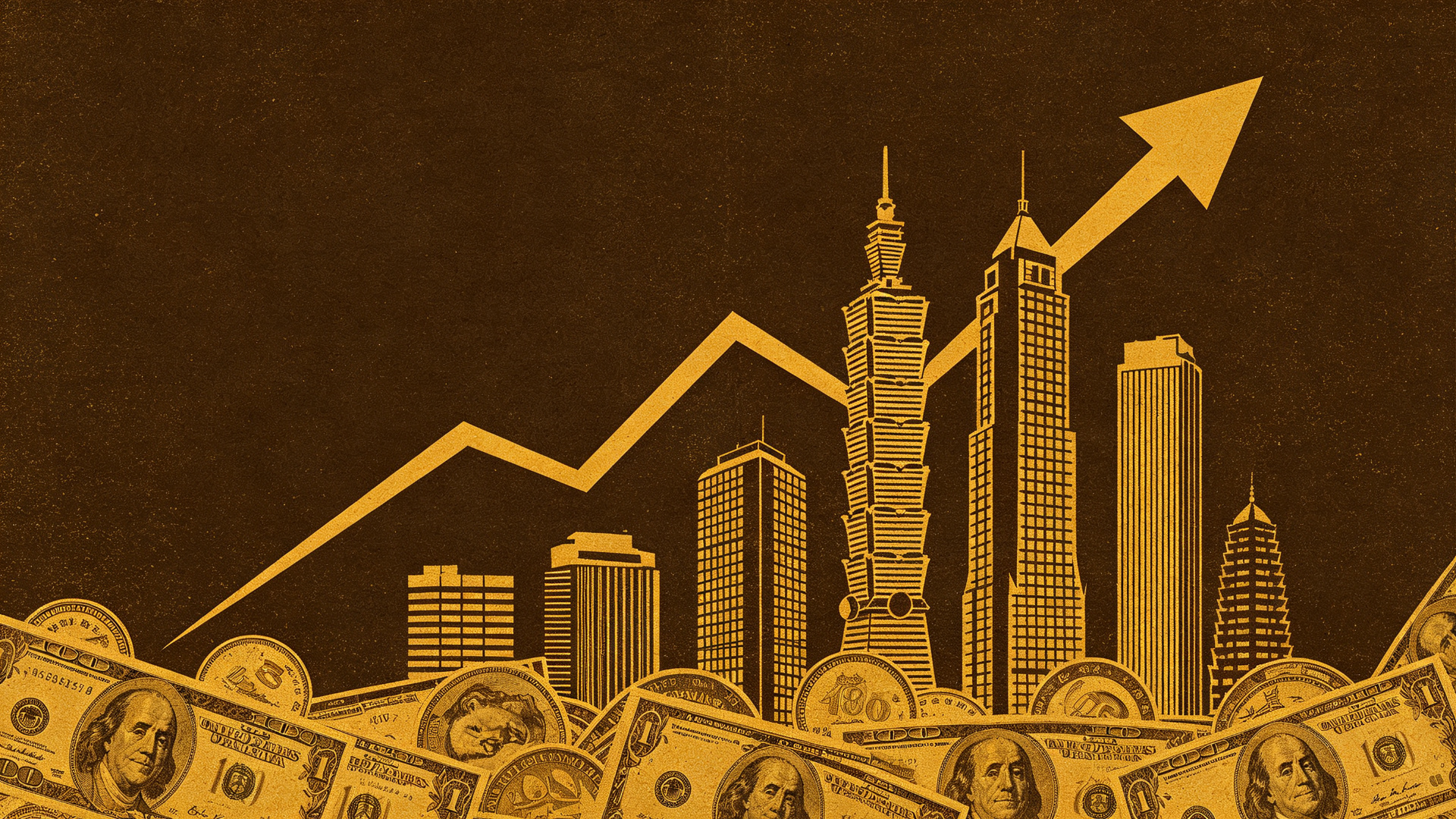
In September 1985, the Plaza Accord changed Taiwan’s economic destiny. To improve the US trade deficit, the US, Japan, Germany, the UK, and France jointly intervened in the foreign exchange market, causing the Japanese Yen and New Taiwan Dollar to appreciate. Within just three years, the NT Dollar exchange rate against the US Dollar rose from 40:1 to 25:1, an increase of over 60%.
This was undoubtedly a heavy blow to Taiwan’s export-dependent economy. The competitiveness of labor-intensive industries such as textiles, shoemaking, and toys declined sharply, and factories began to relocate. At the same time, however, massive hot money flowed into Taiwan seeking investment opportunities, creating one of the most extraordinary asset bubbles in human history.
From 1986 to 1990, Taiwan’s stock market soared from less than 1,000 points to 12,682 points — a 12-fold increase in four years. The entire nation went crazy for stocks: taxi drivers, market vendors, civil servants — everyone was talking about stocks. Housing prices also skyrocketed, with Taipei’s real estate prices tripling in four years. “Taiwan money flooding your feet” became the most popular saying of the time.
This bubble burst in 1990, with the stock market crashing from over 10,000 points to just over 2,000, wiping out countless fortunes. But the bubble also left a valuable legacy: entrepreneurs who had made money began to invest in high-tech industries, planting the seeds for the later semiconductor miracle. In 1987, Morris Chang founded TSMC in the Hsinchu Science Park, pioneering the pure-play foundry business model.
That era in Taiwan was full of restlessness and opportunity. Some got rich overnight, while others lost everything. But overall, Taiwan’s economy completed its first magnificent transformation from labor-intensive to technology-intensive.
1995-2005: Rise of the Tech Island and the Westward Wave — Semiconductor Foundations and Cross-Strait Trade
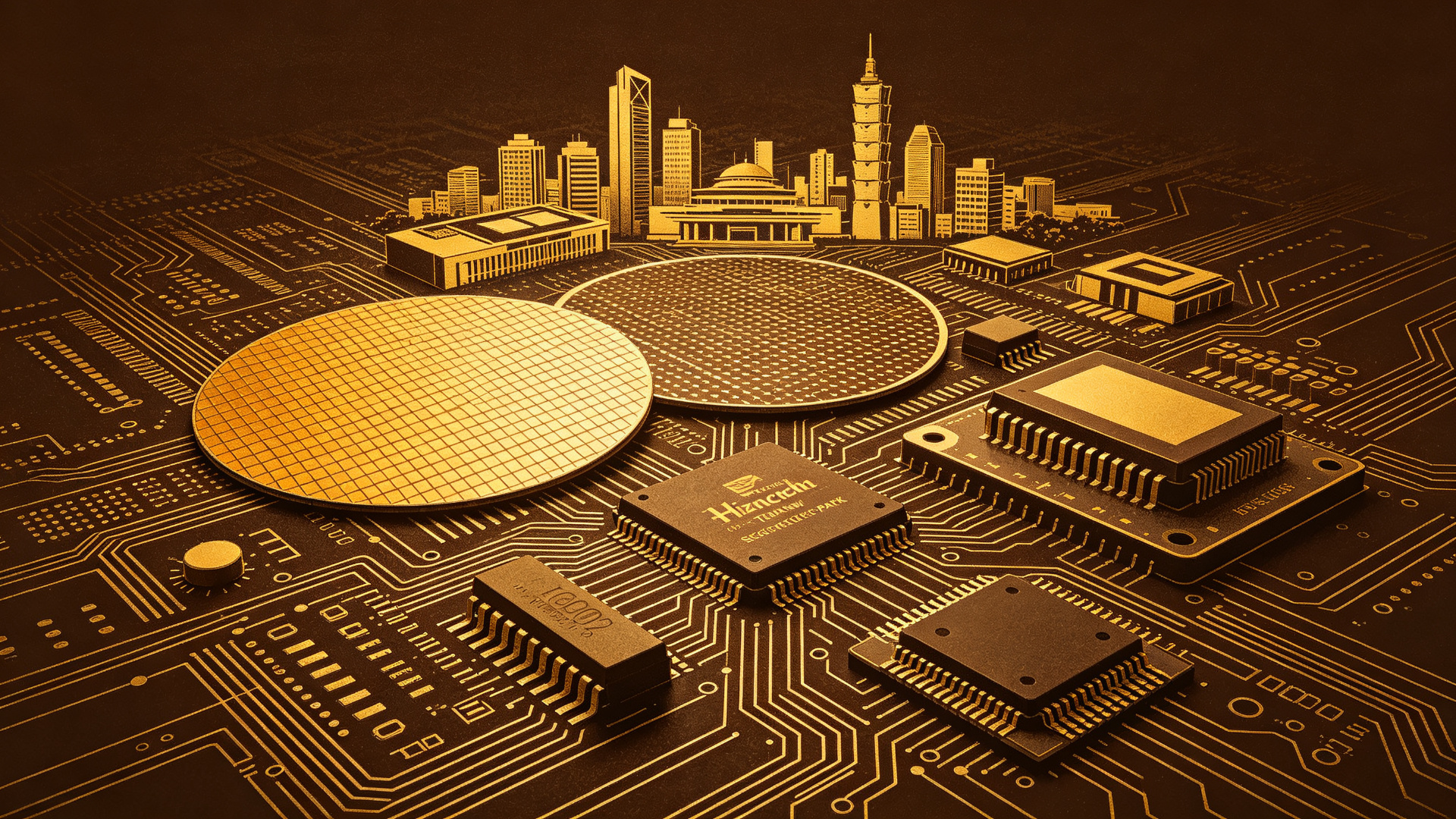
Entering the 1990s, Taiwan officially embarked on its path as a “technology island.” The Hsinchu Science Park became the engine of the island’s economy, with tech companies like TSMC, UMC, Foxconn, Acer, and ASUS rising rapidly. In 1995, Taiwan’s semiconductor output exceeded $10 billion for the first time, making it the world’s fourth-largest semiconductor producer.
This decade was also the golden age of Taiwanese enterprises “going west.” With the relaxation of cross-strait relations and the cheap labor and vast market brought by mainland China’s reform and opening up, a large number of Taiwanese manufacturing companies moved their production lines to the mainland. Foxconn built factories in Shenzhen and became the world’s largest electronics contract manufacturer; laptop ODMs like Quanta and Compal also moved west, establishing Taiwan’s key position in the global electronics supply chain.
At the same time, Taiwan’s domestic R&D capabilities were also rapidly improving. TSMC began mass production of 0.18-micron process technology in 1999, with technical strength starting to catch up with international giants. The dot-com bubble in 2000, while impacting tech stocks, also accelerated industry consolidation, allowing truly strong companies to emerge.
During this period, Taiwan’s per capita GDP grew from 14,000 in 2000, officially joining the ranks of developed economies. Tech nouveau riche became a new wealth class, housing prices in Hsinchu and Taipei’s Neihu district began to rise, and “tech new money buying houses” became a hot topic of the time.
But behind the prosperity, concerns began to emerge. The relocation of manufacturing led to fewer domestic job opportunities, the decline of traditional industries, and widening urban-rural gaps. After 2000, Taiwan’s wage growth began to slow, laying the groundwork for the later “stagnant economy.”
2005-2015: Formation of the Sacred Mountain and Social Turning Point — Wage Stagnation and Soaring Housing Prices
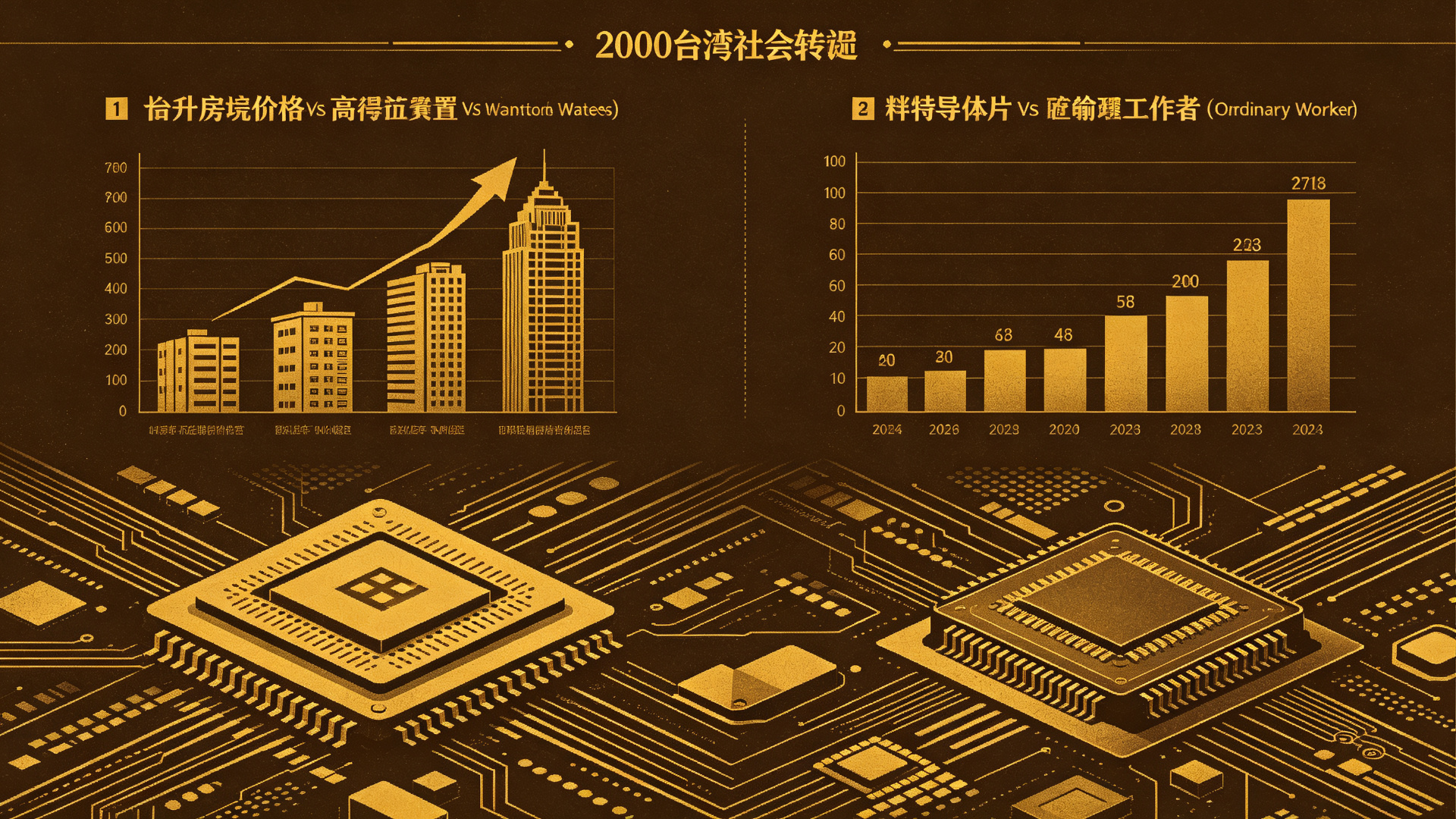
From 2005 to 2015 was a decade of “polarization” in Taiwan’s economy. On one hand, the semiconductor industry continued to grow, with TSMC becoming the absolute leader in global foundry services, and the nickname “sacred mountain protecting the nation” began to circulate. On the other hand, society as a whole fell into a “stagnant economy,” with wages stagnating, housing prices soaring, and young people finding it increasingly difficult to get ahead.
In 2007, Apple launched the iPhone, ushering in the smartphone era. As the core of the global electronics supply chain, Taiwan became one of the biggest beneficiaries. TSMC won Apple orders and its technical capabilities advanced by leaps and bounds; Foxconn became the largest iPhone assembler, with revenue hitting new highs year after year. In 2010, Taiwan’s semiconductor output exceeded $50 billion, accounting for over 20% of the global total.
But the prosperity of the tech industry did not spread evenly throughout society. On the contrary, “polarization” became increasingly severe. While tech professionals’ salaries kept rising, wages in most other industries barely grew. From 2000 to 2015, Taiwan’s regular wages increased by less than 10% on average — almost zero growth after accounting for inflation.
In stark contrast to wage stagnation was the skyrocketing of housing prices. After the 2008 financial crisis, central banks around the world eased monetary policy aggressively, and the low-interest-rate environment fueled a real estate bubble. Taipei’s housing prices rose from about NT700,000 per ping in 2015 — more than doubling in a decade. The price-to-income ratio exceeded 15 times, meaning an average family would have to work for 15 years without spending anything to afford a house.
This decade was also a period of dramatic changes in Taiwan’s social consciousness. Young people began to question the traditional value of “hard work leads to success,” “small happiness” became a buzzword, and the “hated generation” sentiment began to spread. The outline of an M-shaped society became increasingly clear, and the wealth gap continued to widen, becoming one of the sharpest contradictions in Taiwanese society.
2015-2026: The AI Era and Geopolitics — Semiconductor Hegemony and Population Crisis
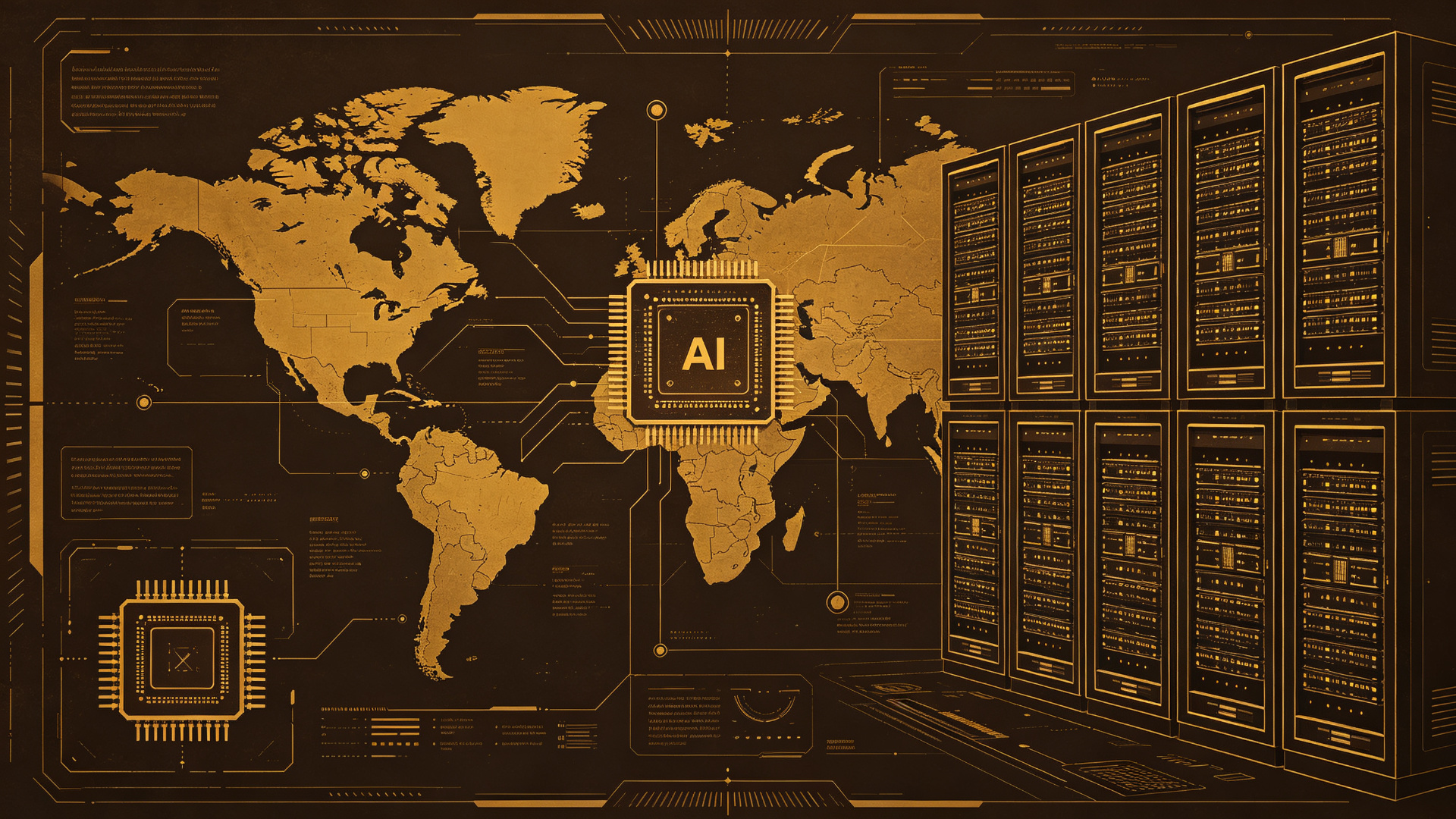
After 2015, Taiwan entered a more complex era. On one hand, the AI revolution brought a new wave of growth to the semiconductor industry, and TSMC’s position became more important than ever. On the other hand, geopolitical risks intensified and the population crisis deepened, presenting new challenges to Taiwan’s economy.
In 2020, the COVID-19 pandemic broke out, and remote work and online learning became the norm, causing global demand for semiconductors to surge. As the sole supplier of the world’s most advanced process technology, TSMC saw revenue and profits hit new highs year after year. In 2024, TSMC’s market cap exceeded 2 trillion — truly living up to its reputation as the “sacred mountain protecting the nation.”
The AI wave has pushed the importance of semiconductors to new heights. From ChatGPT to self-driving cars, from data centers to edge computing, every step of AI development depends on the most advanced chips. TSMC’s 3nm and 2nm processes have become strategic high ground in global tech competition, with countries vying to invite TSMC to build factories.
But the shadow of geopolitics is also growing heavier. The US-China tech war has escalated, semiconductors have become strategic commodities, and Taiwan finds itself at the center of great power博弈. Supply chain restructuring, chip export controls, geopolitical risk premiums — terms that once only appeared in textbooks are now realities that Taiwanese companies face every day.
Even more serious than geopolitics is the population crisis. In 2020, Taiwan’s population began to decline, with “more deaths than births” becoming the norm. In 2025, the number of newborns dropped to only about 110,000, a historic low, while the proportion of people aged 65 and over is about to exceed 20%, officially entering a super-aged society. Low birth rates, aging populations, and labor force decline — these problems are gradually eroding Taiwan’s long-term economic competitiveness.
In 2025, Taiwan’s GDP growth rate reached 8.6%, and per capita GDP exceeded $39,000, hitting record highs. But behind this prosperity is increasingly concentrated wealth and increasingly heavy social burdens. The stronger the semiconductor industry becomes, the deeper Taiwan’s economic dependence on a single industry grows; the brighter the GDP numbers, the stronger the sense of relative deprivation among ordinary people.
Conclusion: Standing at a New Crossroads
Forty years have passed in the blink of an eye. From an island doing export processing in 1985 to a tech powerhouse with global semiconductor hegemony in 2026, Taiwan has traveled an extraordinary path. Along this journey, there have been crazy bubbles, brilliant rises, the anxiety of stagnant economy, and new opportunities in the AI era.
Looking back at these forty years, we see a common pattern: every crisis is the beginning of a turning point. The Plaza Accord forced Taiwan’s industrial transformation; the dot-com bubble accelerated industrial upgrading; the financial tsunami was followed by the mobile internet era. Every time it seemed there was no way out, Taiwan found a new exit.
But this time, the challenges seem more severe. Geopolitical risks cannot be solved by corporate efforts alone, and demographic changes are long-term and irreversible. No matter how powerful the sacred mountain is, it cannot alone support the future of the entire society.
Standing in 2026, Taiwan has once again come to a new crossroads. Can Taiwan continue the miracles of the past in the next forty years? Can it find new growth drivers beyond semiconductor hegemony? Can it solve the deep contradictions of wealth distribution and population crisis? These questions may require our generation to answer with action.
After all, the miracles of the past forty years didn’t fall from the sky — they were created by generations of Taiwanese people with their own hands. The answers to the future are also in our own hands.
This article is for knowledge sharing only and does not constitute any investment advice. Investment involves risks. Please make decisions based on your own risk tolerance.
Comments