
Opening: NT$38,000 a Month in Taipei Is Called “Survival Mode”
Many people think poverty is because they don’t try hard enough, but this is actually one of the most expensive and widespread traps of our generation. Because the real price you pay is never that you earn less—it’s that you spend the golden years of your life walking a path that was never going to get better.
Ah-De, 35, works in administration at a small-to-medium trading company in central Taipei. His monthly salary is NT$38,000—in Taipei, you know and I know, that’s not living, it has a more precise name: survival mode.
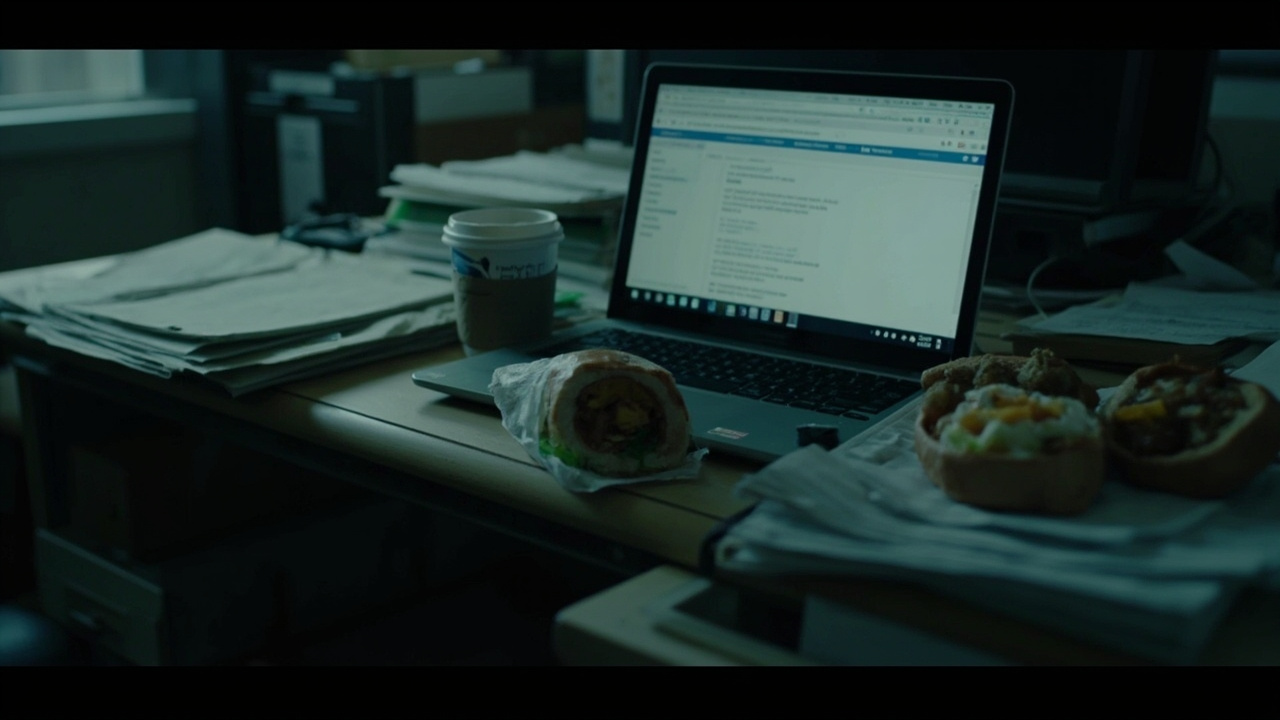
His every day runs like a programmed routine, precise to the point of suffocation: at 7:15 a.m. on the Bannan Line platform, he stuffs himself like a slice of toast into the packed MRT car; at 8:50 he clocks in and 100+ unread emails pop up; five minutes before closing time his boss drops a project due the next morning, and he doesn’t dare complain, quietly cancels the dinner he’d arranged with friends long ago. He thought that as long as he was dutiful, hardworking, and patient like Clostridium, one day he would be noticed, that his promotion would come.
He waited five years. The result was a raise of NT600,000 per ping to NT$800,000. He felt like he was trapped in a quicksand pit—the harder he struggled, the faster he sank.
Chapter 1: The Speed of Home-Price Increases Always Crushes the Speed of Raises
Ah-De isn’t lazy—he’s the office’s agreed-upon nice guy, a pushover who can’t say no. When someone asks him to help carry the load, he says “no problem” with his mouth but in his heart he’s calculating how late he’ll have to work today.
The problem was never that he was lazy, but that the reward mechanism of this system is completely disconnected from his life goals. A raise of NT200,000 per ping. The rise in one ping is 60 times his half-year of raises.
When the reward you earn with your time can’t keep up with the rise in asset prices, the harder you work, the relatively poorer you become.
This isn’t a personal failure—it’s a structural trap. Our generation is trading our most precious vitality for a sad ticket called a “living permit.”
Chapter 2: That Class Reunion Lit Up Three Different Life Trajectories
What really woke Ah-De up wasn’t a setback at work or the pressure of housing prices—it was a junior-high class reunion he shouldn’t have attended.
The reunion was held at a Taiwanese stir-fry restaurant, the air thick with beer, stir-fried conch, and the clamor of life. A-Jie, who works at TSMC, was loudly complaining about shrinking bonuses—but even that shrunken number was still several times Ah-De’s annual salary. Mei-Lin, who married a doctor, chatted about which European country she’d visit next month and which private bilingual kindergarten her child would attend. Their world was too far from Ah-De’s; he could only smile awkwardly and quietly fork at the fried rice in front of him.

Just then, a figure sat down next to him—it was Xiao-Yu. In junior high he was an average student with an average face, the kind of guy you wouldn’t look twice at in a crowd. After graduation nobody heard of him joining any famous big company; all they heard was that he didn’t go to work and did something freelance from home.
Xiao-Yu started chatting about looking at properties in New Taipei on 591. Ah-De asked in surprise: “Can you afford it?” Xiao-Yu said offhandedly: “I bought a two-bedroom in Xinzhuang two years ago, paid off the down payment, and now I’m looking at whether I should upgrade to a three-bedroom.” At that moment Ah-De realized that this classmate everyone had dismissed as “unambitious” had quietly reached a position he could never catch up with.
Chapter 3: What Does the “Unambitious” Person Really Win At?
Xiao-Yu isn’t a rich second-generation, and he didn’t win the lottery. What he won was that from the very beginning, he wasn’t hijacked by the track of “stable employment.”
He chose freelancing, and struggled in the first few years, but precisely because he didn’t have a fixed salary, he was forced to learn how to take on projects, negotiate, manage cash flow, and build a portfolio—skills a salaryman never learns. His income didn’t grow linearly; it jumped in steps—climbing from over NT70,000 or NT100,000 a month.

In five years, he upgraded himself from “someone who sells time” to “someone who sells solutions.” While Ah-De was still arguing with his boss about whether to push for that NT$3,000 raise, Xiao-Yu was thinking about how to double his hourly rate, how to sell the same hour multiple times.
Salary increases will never catch up with the accumulation of assets; only when you start earning with your own system do you truly escape survival mode.
Chapter 4: A Harsh Reminder for All the “Ah-Des” Out There
This story isn’t asking you to quit and start a business tomorrow—it’s asking you to see three things clearly:
First, a raise itself isn’t the answer. When your income structure decides how much you can take home, a raise only nudges your ceiling up a little.
Second, the transferability of your skills is what matters. If what you do today can be learned by someone else in three months, you’ll always be a wage slave.
Third, the speed of asset accumulation must outrun inflation and housing prices. Otherwise no matter how much you save, you’re just postponing bankruptcy.
Ah-De later started using his evenings to learn video editing, and three years later transitioned to freelance editing work with an hourly rate 2.5x his salary. He didn’t quit his job; he quietly switched the tracks of his life in place.

Conclusion: You’re Not Building a Future, You’re Just Delaying the Moment You See the Truth
Living on NT$38,000 a month in survival mode in Taipei isn’t because you lack ability—it’s that you chose to trade your most expensive resource for the cheapest return.
That classmate dismissed as “unambitious” isn’t smarter or luckier than you—he just figured it out a little earlier: those who live on salaries are always fuel for the system; only when you turn your time, skills, and brand into assets can you truly afford the life you want.
Next time you sit on the platform, looking at the savings number on your phone that never reaches where you need it to be, ask yourself: am I Ah-De, or Xiao-Yu?
This article is an adapted story and opinion piece for reference only. Every career choice carries risks and opportunity costs; please evaluate based on your own situation and consult a career advisor if necessary.
Disclaimer: This article shares investment concepts and compiled reference material. It does not constitute any specific investment, tax, or legal advice. Markets carry risk and investing requires caution; please make independent judgments based on your own risk tolerance and consult a professional advisor.
Tags
薪資困境, 臺北生活, 生存模式, 階級流動, Passive Income, 創業思維, 斜槓, 上班族翻身, 買房, 貧富差距
Comments