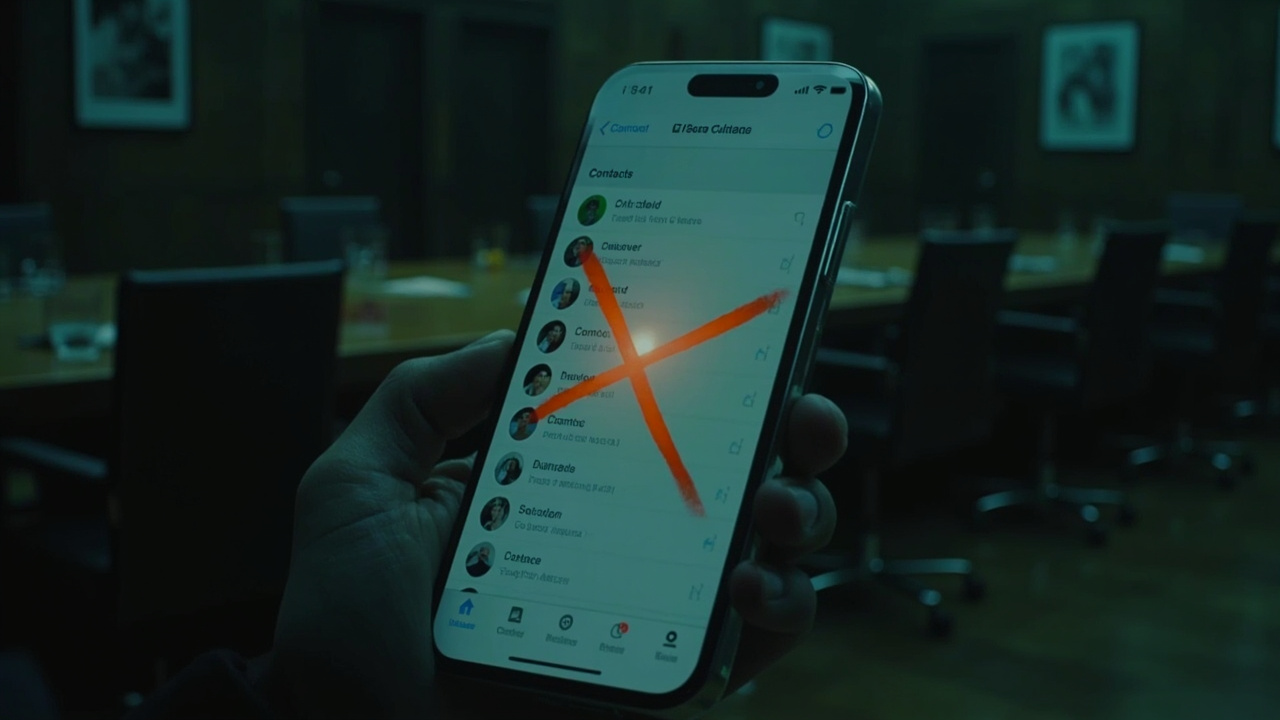
Why does the high-value contact never like your overtime selfie? Why does a generous dinner sometimes get you blocked faster?
Today’s content might sting a little, but it could save you at least a decade of wasted social effort.
I recently saw a viral article titled “Ten Moments When Mentors Silently Block You.” The piece was well-meaning, urging people to be ambitious, to be grateful, to keep their promises. Honestly, my only reaction was: this is like teaching a fish to smile so it won’t be eaten by a shark. The logic isn’t wrong — the direction is completely inverted.
Some say “mentors hate when you complain, hate when you take, hate when you have no sense.” Then they advise you to improve yourself, give more, be punctual, keep your word. Sounds great, right? But have you thought about this: why would a NT$1M/year person spend time accommodating the cluelessness of a NT$100k/year person? This isn’t a moral question. It’s math.
Today, no chicken soup, no moral lecturing. I’ll take you through the lens of economics, game theory, and even evolutionary psychology to peel back that thin layer between you and the silent block. Once you see it, you’ll understand — some of your social interactions went bankrupt the moment you opened your mouth.
Myth 1: The Rich Don’t Hate Complaining — They Hate Inefficient Emotional Processing
You say: the rich hate complainers and like problem solvers, right? Half right.
The truth is: the rich don’t hate complaining — they hate inefficient emotional processing. Think about their time cost. Musk bills by the minute. A dinner with Wang Xing can spin out an entire new赛道 (track/industry). For them, listening to your complaints isn’t emotional support — it’s negative-asset custody.
You vent about a broken corporate system. What goes through their head? Not “you poor thing,” but:
- Is this problem worth solving?
- If yes, how much money and how many people would it take?
- If no, why are you spending time complaining?
See the cognitive gap — you see venting, they see due diligence.
And the sharper truth: the poor trade emotion for comfort; the rich trade emotion for efficiency. A 30-minute complaint consumes both parties’ half hour, with zero output. Meanwhile, that half hour could have closed a contract or played two rounds of golf with two potential investors.
So not complaining isn’t a virtue — it’s a social currency. In high-net-worth circles, emotional stability is itself a scarce asset. If you’re emotionally unstable, you’re bringing a pile of waste paper to trade for someone else’s gold. Who else are they going to block?
It’s like walking into a convenience store for a bottle of water and telling the owner: “Hey, let me tell you about my miserable life, and can I have the water for free?” The owner’s only reply: “Get as far away as you can.” You thought it was networking. It was a bankruptcy notice.

Myth 2: Low-Cost “Sincerity” Is the Most Sophisticated Form of Emotional Blackmail
Some say “don’t always think about taking — learn to give.” Fair enough. But here’s the question: a person with only NT$5 in their pocket, no matter how much they want to give, what can they actually give? That’s the real question.
Many articles encourage you: “Even without resources, you can give with your heart, organize notes, share information proactively.” Let me tell you, in the eyes of genuinely wealthy people, this kind of low-cost “sincerity” is exactly the most off-putting form of emotional blackmail.
Here’s a real case (not a story, a model): a young man worked hard to add a big shot on WeChat. To show his dedication, he sent the big shot three messages every day, no exceptions:
- First: a “good morning, positive energy” quote
- Second: a screenshot of an industry news item
- Third: “Your speech today was amazing, I want to learn from you”
Do you think the big shot is moved? Let me tell you what the big shot actually does: he mutes the conversation. Why? Because for high-net-worth people, the cost of attention is far higher than money.
You send three pieces of垃圾信息 (junk) every day, and you think it’s giving. Actually, you’re robbing his attention. The notes you organized might be information overload for him. The information you shared, he saw three minutes ago in a paid group. The value you imagine is, to him, visual pollution.
So what does real “giving” look like? It’s irreplaceability, or extreme leverage value. For example:
- You’re a top doctor and the big shot has a health issue — you can arrange a specialist consultation. That’s irreplaceable.
- You’re a technical whiz and the big shot’s company hits a data security problem — you fix it in ten minutes. That’s leverage value.
- You hold a scarce resource he absolutely cannot buy — a specific license, an introduction to a key person. That’s a rare connection.
The poor network with attitude. The rich network with chips. When you have no chips, your attitude, no matter how good, looks like harassment in their eyes.
The essence of networking is not “who you know” but “how high your replacement cost is to someone.” If your replacement cost is zero, you are the zero.

Myth 3: Being Late Is a Devastating Blow to the Spirit of Contract
Let’s double-click on something more basic — punctuality and integrity — but I want to go deeper. Why do the rich despise lateness so much?
On the surface, it’s about respecting time. The deeper reason: lateness is a devastating blow to the spirit of contract.
In the business world, all wealth is built on expectations and trust. Stocks are discounted expectations. Contracts are vessels of trust. You’re 15 minutes late. In the rich person’s eyes, that’s not “traffic was bad” — it’s a character judgment about your respect for contracts and basic敬畏 (awe). They immediately conclude: if you can’t fulfill the simplest contract of a scheduled meeting at 100%, then a contract worth millions, a critical project delivery, will almost certainly slip too.
This isn’t harshness. It’s risk control. The rich built their wealth on countless on-time deliveries, and they’ve seen too many chains collapse because of a single small delay.
Punctuality isn’t manners. It’s a title. Every time you show up on time, you tell the other person: “I am a predictable, low-risk partner.” Every time you’re late, you shout: “I’m unreliable, and working with me will be a disaster.”
It’s like组队 (teaming up) in a game to fight a boss. If a teammate is always late and fires skills randomly, what do you do? You kick them out and block them. Because if you don’t, the boss will kick you.
The Root of “Poor Aura”: Tunneling Effect from Long-Term Scarcity
Now I want to share a truth nobody dares to say: many articles mention “scarcity mindset, bragging, extreme insecurity” but never tell you where these come from.
The root is the tunneling effect caused by long-term resource scarcity. Psychologists have found that the reason the poor seem to have a small格局 (vision), to be petty and short-sighted, isn’t because of bad character. It’s because long-term scarcity occupies all of their cognitive bandwidth.
Every day your brain runs the rent due next month, the kid’s tuition, the credit card bill. Your brain is filled with “urgent but unimportant” matters. You have no spare bandwidth to think about the long term, about格局, about value.
When you sit across a wealthy person at dinner, you unconsciously emit a kind of aura — the hunger for opportunity, the fear of loss, the anxiety of comparison. That aura, the rich person can smell in a second, because they came from that stage too, or they’ve seen countless examples around them.
- You discuss investing with them; you think “can I double my money?” They think “what’s the risk exposure?”
- You discuss a project; you think “can you pull me in?” They think “where’s your capability boundary?”
- You brag about a new handbag; they think “your cash flow might be in trouble.”
Some say “improve yourself” — right, but they don’t say what to improve. Not the number of vocabulary words you memorize, not the days you log at the gym, but your cognitive bandwidth.
How do you improve it? Subtraction. Reduce the scarcity in your life. Even if you’re poor, find a way to leave yourself some slack — for example, force yourself to save an “error fund,” or set aside half a day each week with no phone, just thinking. When you stop running from survival, that “poor aura” on you will slowly fade, and the rich will see you as a normal person — not a walking risk point.

3 Counter-Intuitive Networking Tactics
After all those “don’ts,” what should you actually do? I’ve distilled three counter-intuitive tactics. Follow them, and even if you have no money today, you’ll carry an aura of “almost rich.”
Tactic 1: Learn to Not Respond
This is ruthless. The poor’s biggest problem: they answer everything, terrified of awkward silence, terrified of looking ignorant. What kind of person do the rich admire most? Someone who dares to be silent.
When the other person makes an unreasonable request, or asks a stupid question, the poor smile awkwardly and force out an answer. The rich just smile and say nothing. Silence is the highest form of refusal. This energy of non-response instantly signals: this person has boundaries, this person cannot be casually offended.
In any social setting, the person who dares to create silence is the one who controls the room.
Tactic 2: Turn Your Asking into a Transaction
Stop saying “let me treat you to dinner and pick your brain.” In a rich person’s ears, that sentence means “I want to freeload.”
The right move: put a clear price on your time, even if the price is low. For example, you want to consult them on an investing question. Don’t say “Mr. Wang, free for coffee sometime?” Instead say:
“Mr. Wang, I’d like to take 20 minutes of your time to consult on a question about the X track. My current budget is NT$2,000 an hour, or I can prepare a detailed competitor analysis report as an exchange. Which is more convenient for you?”
Guess what happens? 90% of the rich won’t take your money — and they’ll see you in a completely new light. Why? Because you spoke their language — the language of value. You respected their time and your own. That’s playing the rich person’s game with rich person’s rules.
Tactic 3: Be a Human Filter, Not a Human Megaphone
Everyone says “share information proactively.” Wrong. In an age of information overload, what’s missing isn’t information — it’s verified, effective information.
You don’t need to post ten朋友圈 (WeChat Moments) a day. You only need to do one thing: everything you recommend must be premium. The restaurant you recommend must be炸裂 (mind-blowingly good). The book you recommend must solve a concrete problem. The person you recommend must be reliable enough for you to stake your reputation on.
When you become that kind of trust filter, you’ll find the rich coming to you on their own — because their time is too valuable, and they need a trustworthy选品官 (curator). You save them screening time. You become priceless.

Closing: The Value of Being “Used” Is the Real Respect
Let’s return to the most fundamental question: why do we care whether the rich block us?
We often hear: “You deserve respect,” “Become a better version of yourself.” Those words are warm, but not sharp enough. Let me tell you the truth:
In this world, respect is not asked for. It is exchanged for. A better version of yourself isn’t meant to be liked — it’s meant to be used. Don’t find the word “used” offensive — the essence of business is mutual use. If I can use you, and you can use me, what we have is a partnership. If you have no value to be used for, what we have can only be called charity.
So stop obsessing over why the rich blocked you. You should be grateful. They blocked you because, in their eyes, you don’t yet qualify to be used. That’s not humiliation — it’s honest market feedback.
What you need to do is not kneel, not flatter, not learn a stack of social礼仪 (etiquette). What you need is to quietly build wealth, to desperately build skills, to forge yourself into a尖刀 (sharp blade) in a细分领域 (niche).
When you become that blade, you’ll notice: before, you were trying to squeeze into their circles; now, they’re the ones trying to pull you in. Before, you were afraid of being blocked; now, they’re afraid of being deleted by you.
The world is that real, but also that fair.
So stop asking why the rich don’t like you. Instead, ask: “What is there about me that the rich can’t solve?” Remember my closing line:
The ultimate chip in networking is not how many people you know, but how many people need to know you. If you feel the whole world is blocking you, the probability is not that the world is broken — it’s that your “usable value” hasn’t shipped yet.
If today’s content made you a little uncomfortable, congratulations — you’ve grown.
Disclaimer: This article is for sharing perspectives only and does not constitute any interpersonal or career development advice. All scenarios are conceptual models. Please use your own judgment and take responsibility for your decisions.
Image Generation Prompts
Image 1: The Economics Behind the Silent Block
- Placement: Article opening hero banner
- Emotional Anchor: Awakening, alert
- Color Tone: Cool grey with warning orange
- Prompt (Midjourney v6):
A surreal scene of a giant smartphone screen displaying a contact list, one contact is being struck through with a red X, the background shows a boardroom full of empty leather chairs and a long mahogany table, soft cinematic lighting, muted teal and grey with a single warm orange accent on the X mark, no human figures, no readable text --ar 16:9 --v 6 - Prompt (DALL-E 3):
16:9 surreal scene: a giant smartphone screen displaying a contact list with one contact being struck through by a red X, the background shows a boardroom with empty leather chairs and a long mahogany table, soft cinematic lighting, muted teal and grey with a single warm orange accent on the X, no human figures, no readable text.
Image 2: Emotional Stability as a Scarce Asset
- Placement: End of myth one section
- Emotional Anchor: Stability, scarcity
- Color Tone: Cold-warm contrast
- Prompt (Midjourney v6):
Abstract conceptual illustration of a single glowing gold coin floating in a dark void, the coin has the pattern of a calm human heartbeat on its surface, the surrounding air is filled with faint chaotic red lines that cannot approach the coin, minimalist surrealism, soft studio lighting, no text --ar 16:9 --v 6 - Prompt (DALL-E 3):
16:9 abstract conceptual: a single glowing gold coin floating in a dark void, the coin has the pattern of a calm human heartbeat on its surface, the surrounding air is filled with faint chaotic red lines that cannot approach the coin, minimalist surrealism, soft studio lighting, no text.
Image 3: Replaceability Cost Visualization
- Placement: End of myth two section
- Emotional Anchor: Scarcity, irreplaceability
- Color Tone: Deep purple and gold
- Prompt (Midjourney v6):
A clean minimalist conceptual illustration of a giant hourglass filled not with sand but with golden coins, the upper chamber is overflowing and the lower chamber is overflowing too, the coins spill out into a vast dark void on both sides, soft studio lighting, deep purple background with golden accents, no text --ar 16:9 --v 6 - Prompt (DALL-E 3):
16:9 clean minimalist conceptual: a giant hourglass filled with golden coins, the upper chamber overflowing and the lower chamber overflowing too, the coins spill out into a vast dark void on both sides, soft studio lighting, deep purple background with golden accents, no text.
Image 4: Tunneling Effect Illustration
- Placement: End of tunneling effect section
- Emotional Anchor: Pressure, breakthrough
- Color Tone: Dark grey with light beam
- Prompt (Midjourney v6):
Abstract conceptual illustration of a small human silhouette inside a dark tunnel, the tunnel walls are covered with countless small icons of bills and calendar marks, at the far end of the tunnel a tiny bright white light glows, the silhouette is looking at the light, soft cinematic lighting, muted greys with a single white focal point, no text --ar 16:9 --v 6 - Prompt (DALL-E 3):
16:9 abstract conceptual: a small human silhouette inside a dark tunnel, the tunnel walls are covered with countless small icons of bills and calendar marks, at the far end of the tunnel a tiny bright white light glows, the silhouette looks at the light, soft cinematic lighting, muted greys with a single white focal point, no text.
Image 5: 3 Unconventional Tactics
- Placement: End of three tactics section
- Emotional Anchor: Action, clarity
- Color Tone: Gold, blue, green
- Prompt (Midjourney v6):
Abstract conceptual scene of three large stone tablets standing in a triangular arrangement on a polished floor, the leftmost tablet is engraved with a single question mark, the middle one with a balance scale, the rightmost with a magnifying glass, soft golden spotlight from above, muted stone grey with golden accents, no text --ar 16:9 --v 6 - Prompt (DALL-E 3):
16:9 abstract conceptual: three large stone tablets standing in a triangular arrangement on a polished floor, the leftmost engraved with a single question mark, the middle with a balance scale, the rightmost with a magnifying glass, soft golden spotlight from above, muted stone grey with golden accents, no text.
Comments