
June 2026 is shaping up to be a pivotal moment in the AI landscape.
On one side, OpenAI quietly rolled out GPT-5.6 in the ChatGPT Pro backend—no fanfare, no keynote, but the developer community is buzzing about its 1.5 million token context window, 3D generation capabilities, and browser automation features.
On the other side, Zhipu AI dropped GLM-5.2, fully open source under the MIT license, claiming to outperform GPT-5.5 on the SWE-bench Pro coding benchmark. The debate about open source catching up to closed models is heating up again.
Two models, two philosophies, one June. This isn’t just about technical specs—it’s a head-on collision between two business models.
GPT-5.6 Sneaks In: From Language Model to Executable Agent
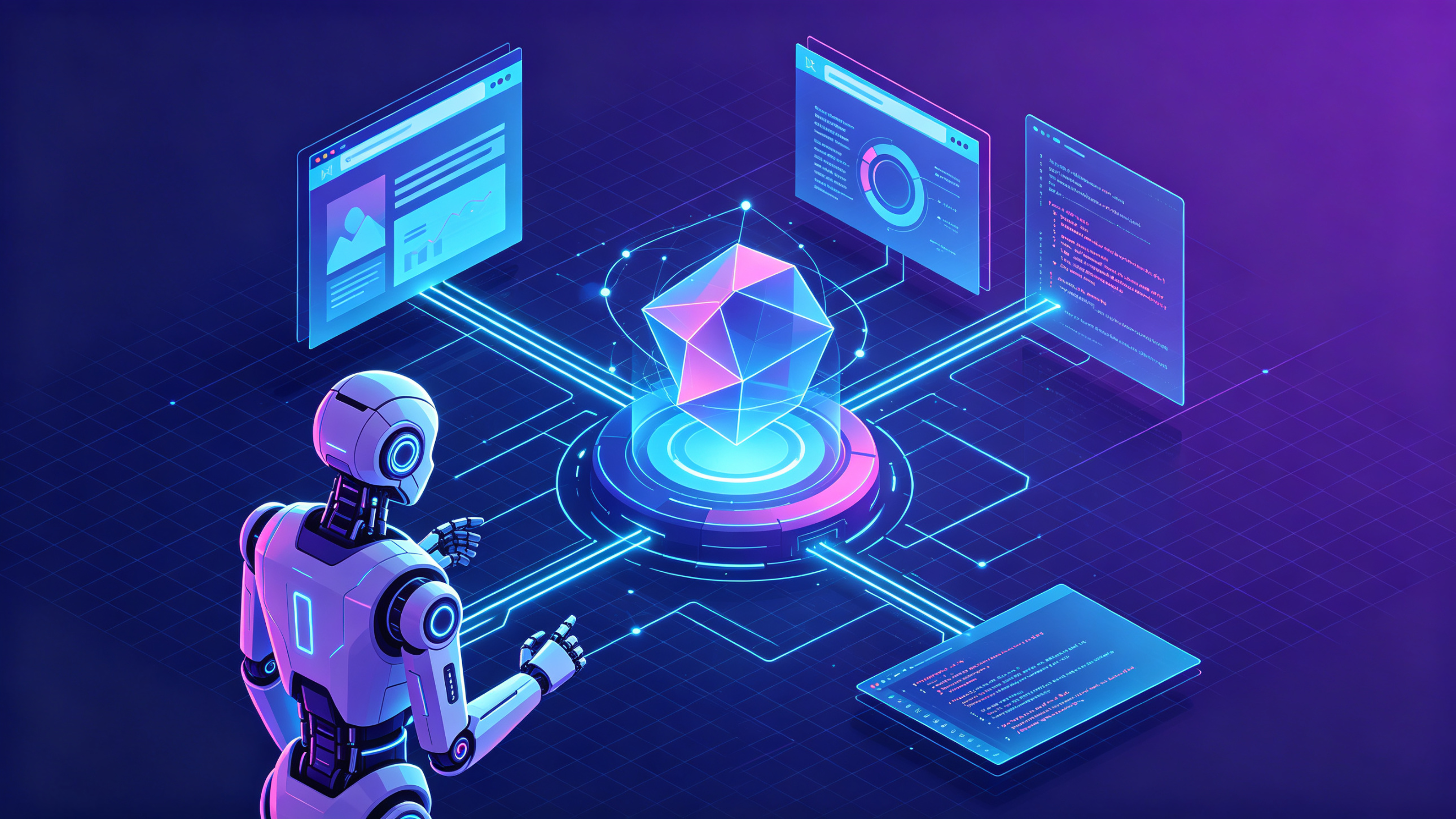
GPT-5.6 arrived quietly. Multiple ChatGPT Pro users spotted the unnamed new model in their backend, and community verification confirmed it’s the rumored GPT-5.6.
This upgrade isn’t about making the model “sound more human.” It’s about making it “do more things.”
Based on leaked testing feedback, GPT-5.6 brings three key capabilities: visual replication, SVG 3D object generation, and Playwright browser automation. Put simply, it’s no longer just a dialog box that gives advice—it’s an executor that can actually get things done.
Imagine this: you show it a design mockup, and it directly converts it into a working webpage. You describe a 3D model, and it generates an SVG object you can rotate and zoom in your browser. You tell it “book me a flight to Tokyo next week,” and it automatically opens the browser, clicks, types, and completes the entire process.
This reflects OpenAI’s strategic shift—from “language model” to “executable Agent.” Sam Altman isn’t building a better chatbot. He’s building a super-intelligent agent that can take over your entire digital existence.
The context window has also expanded to 1.5 million tokens—a 43% increase from GPT-5.5’s 1.05 million. That means you can feed it an entire codebase, a whole book, or all the documents from a project in one go, and it can understand and process everything.
But closed-source models have clear downsides: you never know where the capability boundaries lie, all upgrades are decided by the vendor, and pricing is whatever they say it is.
GLM-5.2 Goes Open Source: Commercial Freedom Under MIT License

Around the same time, Zhipu AI dropped another bombshell—GLM-5.2 officially launched as open source.
This isn’t one of those “open source but you can’t actually run it” gimmicks. Model weights, inference code, and deployment documentation are all available on GitHub and Hugging Face, under the most permissive MIT license.
What does MIT license mean? In short: you can use it commercially for free, modify it, create closed-source derivatives—almost no restrictions, as long as you include the original copyright notice in copies.
For enterprises, this is a golden ticket for commercial adoption. No worrying about licensing fees, no fear of legal risks, just take it and use it—you can even package it as your own product and sell it.
GLM-5.2’s specs are impressive too: a 744B total parameter MoE architecture, 1 million token context window, and 128K max output tokens. It particularly shines in long-context tasks and code generation.
What’s even more interesting is that on launch day, GLM-5.2 was already adapted for multiple domestic compute platforms including Huawei Ascend, T-Head, Moore Threads, and Cambricon. That means basically whatever hardware you’re using, you can probably run it.
Open source brings more than just free—it brings control. You can deploy the model on your own servers, data never leaves your domain, no leakage concerns. You can fine-tune the model for your business needs, building a custom version. You can even participate in community development and help push the model forward.
But open source models have their problems too: high deployment barriers, requiring specialized teams to maintain, and usually slower update cycles than closed-source alternatives. For small and medium teams, the “free” price tag might come with higher maintenance costs.
Coding Capability Showdown: The Real Story Behind SWE-bench Numbers

After all this talk, which model is actually better?
Let’s look at the most convincing metric—the SWE-bench Pro coding capability test. This is a benchmark specifically designed to evaluate AI’s ability to solve real software engineering problems. It’s difficult and genuinely reflects a model’s coding ability.
According to Artificial Analysis Intelligence Index v4.1 evaluation data, GLM-5.2 scored 62.1%, surpassing GPT-5.5’s 58.6%. That’s a fascinating number—open source models are starting to outperform closed-source models on specific tasks.
But hold on before you draw conclusions.
First, GPT-5.6 just launched and doesn’t have official SWE-bench scores yet. Based on leaked testing feedback, its code reasoning should be noticeably better than GPT-5.5, and the final scores will likely widen the gap again.
Second, benchmark scores don’t equal real-world experience. SWE-bench measures “ability to solve specific types of problems,” but real development scenarios are far more complex—understanding business logic, collaborating with teams, dealing with legacy code, debugging and optimization—none of which a single score can fully capture.
Plus, GLM-5.2’s 62.1% is a result achieved under specific configurations. In actual use, whether you can unleash its full potential depends on your hardware setup, prompt quality, and use case.
A fair assessment would be: in pure code generation, open source models are nipping at the heels of closed-source models, and the gap is closing fast. But in comprehensive capability, multimodal experience, and ecosystem integration, closed-source models still have clear advantages.
Practical Developer Advice: Model Selection Strategy for Different Scenarios

After all these technical details, the most practical question for everyday developers is always the same: which one should I choose?
The answer is simple: it depends on your use case.
If you’re an individual developer or small team building general-purpose applications—chatbots, content generation, customer service systems—closed-source models remain the most cost-effective choice. No deployment worries, no maintenance, no upgrades—just pay and use, and focus your energy on business logic. The overall experience of models like GPT-5.6 is still hard for open source to match right now.
If you’re a mid-to-large enterprise with strict data privacy requirements, or if you need deeply customized model capabilities, open source models are worth serious consideration. Models like GLM-5.2 with MIT licensing can be deployed directly in your internal environment, with full data control, and can be fine-tuned for your business scenarios. Long-term, the cost might be lower than heavily calling closed-source APIs.
If you’re building edge devices, offline applications, or have extremely low latency requirements, open source is pretty much your only option. You can quantize and compress the model, deploy it on all kinds of devices, and not depend on an internet connection.
Of course, the ideal approach is often a “hybrid strategy”—build core sensitive business with open source models, and supplement general scenarios with closed-source APIs. This way you get both data security and the advanced capabilities of closed-source models.
One important point: don’t fall into “parameter worship.” How big the model is, how high its scores are—that’s a different question from how well you can use it. Prompt engineering, workflow design, business understanding—these “soft skills” often matter more to the final outcome than the model itself.
This June showdown is just the beginning.
Closed-source models are accelerating evolution, moving from “chatting” to “doing.” Open source models are catching up fast, moving from “usable” to “good.” Both paths compete with and inspire each other—and in the end, every developer and user benefits.
No need to rush to pick sides. Stay open-minded, understand the strengths and limitations of each, and choose based on actual needs—that’s the most rational stance in this AI era.
After all, tools are never the goal. Solving problems is.
Comments