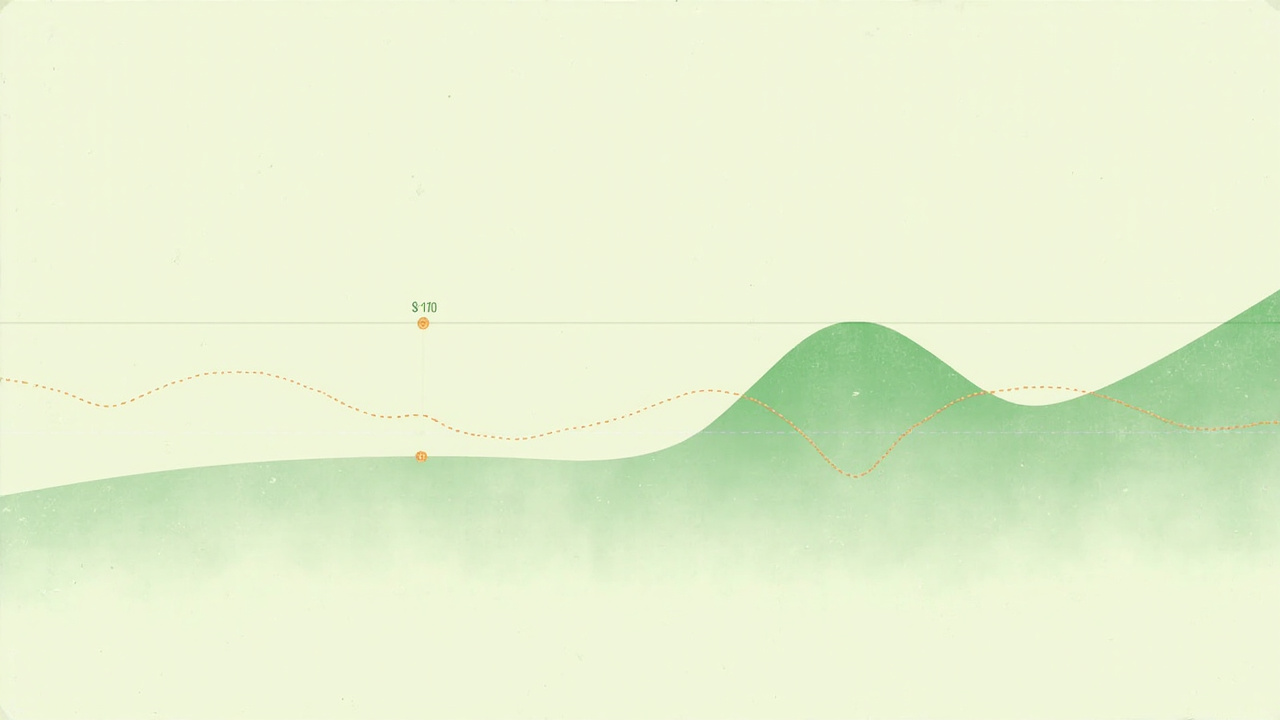
Has this ever happened to you? Last month you finally worked up the courage to buy a stock, and the next day it started falling. Three days of red, your heart racing, you gritted your teeth and held. It kept dropping until you couldn’t stand it and sold at a loss. That very day, close, the price bounced — and then rallied for five straight days. You stood on the sidelines watching it soar, so mad you wanted to smash your phone. You started wondering if someone was watching your account, waiting specifically for you to buy before dumping, and for you to sell before lifting.
Let me tell you: no one is watching you, but you are being harvested. And the harvester doesn’t need to know who you are, because every reaction, every panic, every greedy impulse has already been written into their script.
Do you know why you always buy at the top? Because the moment you finally decide to buy, you’ve already been convinced. And the things that convinced you — news reports, friend recommendations, hot tips in LINE groups, YouTube gurus — all only appear in volume once the price has already run a fair bit. You think you entered because you saw an opportunity, but actually you ran toward the fireworks after they were already over — all that’s left is trash on the ground and your trapped position.
Stage 1: Accumulation — You Won’t Even Notice This Stock
What do institutions do at this stage? They quietly buy at low prices, but they don’t buy everything at once. They intentionally let the price chop around — up a little one day, down a little the next — so you feel the stock has no juice, so existing retail holders get bored and think the stock is dead, and finally can’t stand it anymore and sell.
You know retail investors’ biggest weakness? Impatience. You see a stock chopping sideways for three months, you feel it’s a waste of time; you think “my money just sits here doing nothing — I might as well buy stocks that are running every day.” So you sell, and institutions pick up your chips at your sell price. This stage can last three months, half a year, even a year. Institutions aren’t in a hurry — what they want is cheap chips. They wait until retail has lost all patience, until no one’s watching, until volume has shrunk to nothing — only then can they accumulate chips at the lowest cost.
**Suppose you bought at NT48 and NT49, thinking at least you didn’t lose much. Two months later the stock hits NT31 of upside. If you had bought 10 lots, you missed out on NT310,000 is the price of your impatience — and the source of institutions’ profit.
Stage 2: Markup — Institutions Start Manufacturing the Narrative
Now the price starts to rise, and rise visibly — from NT60, NT70. You start noticing the stock, but you don’t dare buy because you feel it’s already moved and you’re afraid of buying the top. What do institutions do at this stage? They manufacture the narrative — leaking positive news (big orders, rosy industry outlook, analysts suddenly turning bullish), media coverage, LINE forwards, friends bragging at gatherings about how much they made.
You watch the price keep going — NT75, NT$80 — and your heart starts itching, regretting not buying earlier, feeling you’ve missed a big opportunity. What are institutions doing? They’re slowly distributing, selling chips little by little to retail who are starting to get excited. But they’re smart about it — they don’t dump in one shot, they sell into the rally, letting the price keep climbing, making you feel there’s still more upside, making you feel you have to buy now or you’ll miss it.
The scariest part of this stage is how you start rationalizing your buy. You find a pile of reasons to convince yourself — the company has great fundamentals, the industry is the future trend, the technical pattern hasn’t topped — but your real reason is only one: you see it keep going up, and you fear missing out. That’s FOMO (Fear Of Missing Out), and it’s exactly the emotion institutions want. The moment you buy because you fear missing out, you’re no longer investing — you’re chasing, you’re placing an emotional order, and emotional orders result in buying at relatively high prices.
Stage 3: Distribution — The Last Frenzy
This is the most critical and cruel stage. The price starts oscillating near the highs — up NT5 the next, then up NT$4 the day after. You hold the stock with your heart in your throat, but you don’t dare sell because you see it still pop back up and you think it’s just a normal pullback, and pullbacks are buying opportunities. Meanwhile, the news keeps printing positive headlines, analysts keep raising price targets, the community keeps shouting to add — surrounded by all this, you feel you should have conviction, but you don’t notice that volume is expanding, every day a large amount of stock is changing hands, and that stock is moving from institutions’ hands to retail hands.
What institutions do at this stage is dump all remaining chips to the market. They use every bounce to distribute, every positive headline to distribute, retail confidence and greed to distribute. The cruelest trap here is the “false breakout” — the price may suddenly print a big bullish candle above the prior high, making you feel the main wave is coming, luring everyone still watching to jump in — only to start falling the next day. That big bullish candle was the final escape wave, and you didn’t escape — you added.
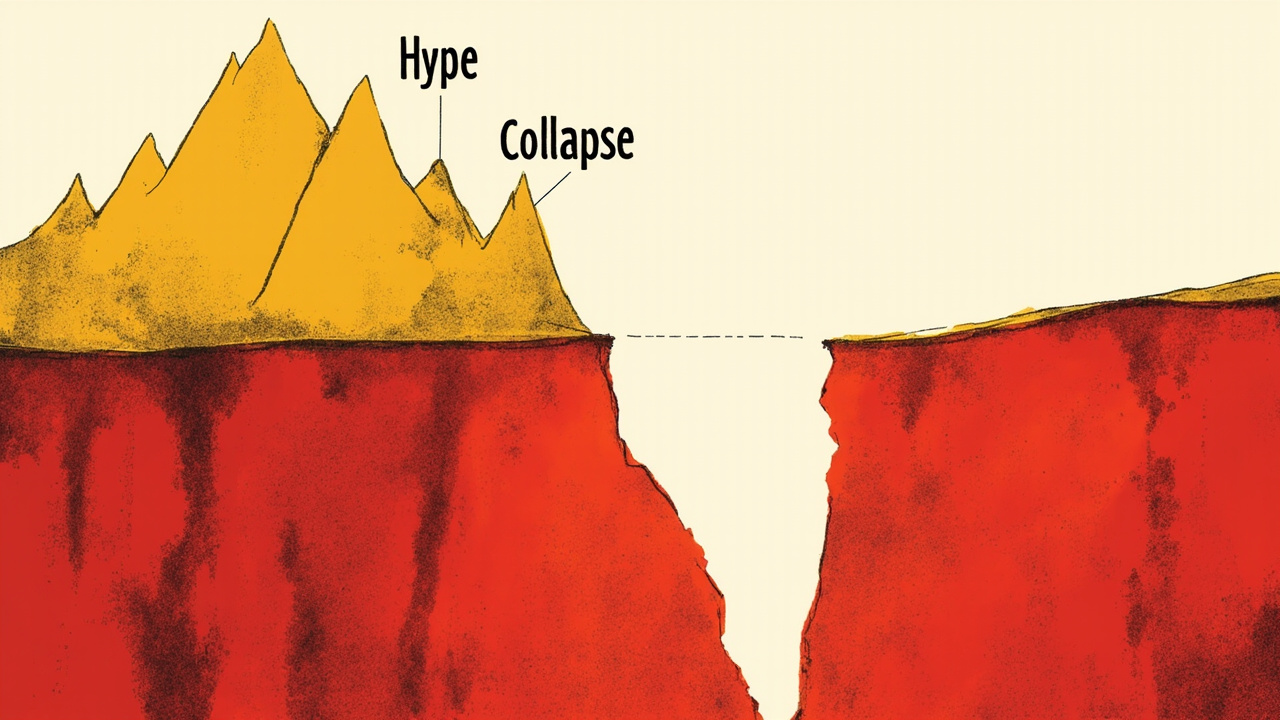
Stage 4: Markdown — You Finally Give Up
Once institutions have dumped all chips onto retail, they start shorting or at least stop defending. The price starts falling in a row, faster and harder than it rose. Down 5% today, 7% tomorrow, limit-down the day after. You finally give up, cut your position near the bottom, swearing off stocks forever. Then institutions start a new accumulation round — the stock you just cut losses on doubles from the bottom three months later. This script replays on the Taiwan market every few years. Your identity shifts from “chased in at the top” to “sliced at the bottom,” and institutions complete a perfect harvesting cycle.
Three Underlying Rules Institutions Follow
Rule 1: Your emotional reactions are designed by institutions. Institutions have spent decades studying retail psychology — they know fear makes you sell at lows, greed makes you buy at highs, reluctance makes you refuse to cut losses, and wishful thinking makes you expect miracles. Every emotional reaction you have — fear, greed, reluctance, wishful thinking — is part of institutions’ script. You think you’re making rational decisions, but you’re just predictably reacting under emotional drive, and those reactions are why you lose money.
Rule 2: Institutions need your greed to lift prices, and your panic to collect chips. When the price is at lows, institutions want all retail to ignore the stock, so they can buy at the lowest prices. When the price is at highs, institutions want all retail to pay attention, so they can dump chips to you at high prices.
Rule 3: Institutions can wait, you can’t. This is retail’s biggest disadvantage. Institutions have ample capital; they can slowly accumulate at lows and let the price chop for months — they’re not in a hurry because they know time is on their side. But you’re different — your capital is limited, you may be investing with spare cash, you may even be using borrowed money, you can’t wait too long. You get anxious when the price doesn’t move; you get itchy when other stocks run. This impatience is your biggest weakness.
Four Iron Rules
Rule 1: If you don’t understand it, don’t touch it. If you don’t even know what the company does, don’t understand the basic logic of its industry, and you only want to buy because a friend mentioned it or you saw a news report — don’t touch it. You don’t know what you’re buying; you’re just gambling.
Rule 2: Don’t invest money you urgently need. If this money is needed in three months, if it’s your living expenses, if losing it would affect your life — don’t invest it. Because you’ll be anxious, and anxiety makes you make bad decisions — selling when you shouldn’t and buying when you shouldn’t.

Rule 3: Don’t buy because it has gone up. If a stock is already up 30% or 50%, media is covering it heavily, everyone around you is talking about it — be very careful, because you might be taking the last baton, you might be helping institutions distribute.
Rule 4: Set stop-loss, don’t hold and pray. If you didn’t set a stop-loss before buying, if you’re still fantasizing that it will come back when it drops, if you’re already down 10% and still refuse to take the loss — you will eventually hit a 30% or 50% disaster, and by then you won’t even be able to sell because your mindset has already collapsed.
Four Immediate Action Steps
Step 1: Open your brokerage account, pull up all your trades from the past year, and calculate how much you made in total and how much you lost in total. Don’t look at individual stocks — look at overall return, then compare with the index. If your return lost to the index, your operations for the year failed, and you’d have been better off just buying an ETF. This is brutal but you must do it, because only by facing real numbers will you know where your problem is.
Step 2: List every stock you currently hold, write down your original reason for buying, and ask yourself whether those reasons still hold. If they don’t, why are you still holding? If it’s only because you can’t accept the loss, you’re holding a loser — you should stop out immediately. If the reason still holds, keep holding, but set your stop-loss and take-profit levels — don’t let gains turn into losses.
Step 3: Cancel all subscriptions in LINE groups, Facebook communities, and YouTube channels that broadcast hot tips daily. They only interfere with your judgment, only make you itch when you see others making money, only make you emotional decisions. Build your own decision criteria rather than following others’ recommendations, because no one else is responsible for your losses.
Step 4: From now on, before buying a stock ask yourself three questions: Why do I want to buy this stock? Where are my stop-loss and take-profit? Can I bear it if I lose? If you can’t answer these three questions, or the answers don’t reassure you, don’t buy.
Remember this: the people who make money in the stock market are always a minority — not because they’re smarter, but because they’re calmer. They aren’t controlled by emotions, aren’t swayed by market mood; they know when to be greedy and when to be afraid. If you want to survive in this market, learn to do the opposite of the majority — when everyone panics, be greedy; when everyone is greedy, be afraid. You’ve probably heard this 100 times, but can you actually do it?
The stock market isn’t an ATM — it’s a battlefield. Either learn the rules and become the hunter, or face reality and stop being prey. There is no third path.
This article is for financial education only and does not constitute investment advice. The institutional operation stages described herein are general explanations of common structural phenomena in the market, and do not refer to any specific stock or actor. Investors should evaluate based on personal financial situation and risk tolerance, and are advised to consult a Taiwan-licensed financial advisor and tax professional. All investing carries risk; past performance does not guarantee future returns; investors may lose part or all of principal.
Disclaimer: This article is for the purpose of sharing investment and financial-planning concepts and compiled data, and does not constitute any specific investment, tax, or legal advice. Markets carry risk; invest prudently. Make your own judgment based on your personal risk tolerance and consult a professional advisor.
Tags
Institutional Accumulation, Pump and Dump, Retail Psychology, FOMO, Stop-Loss Discipline, Retail Blind Spots, Single-Stock Investing, DCA, Investment Discipline, Investment Traps, Emotional Trading, Chips
Comments