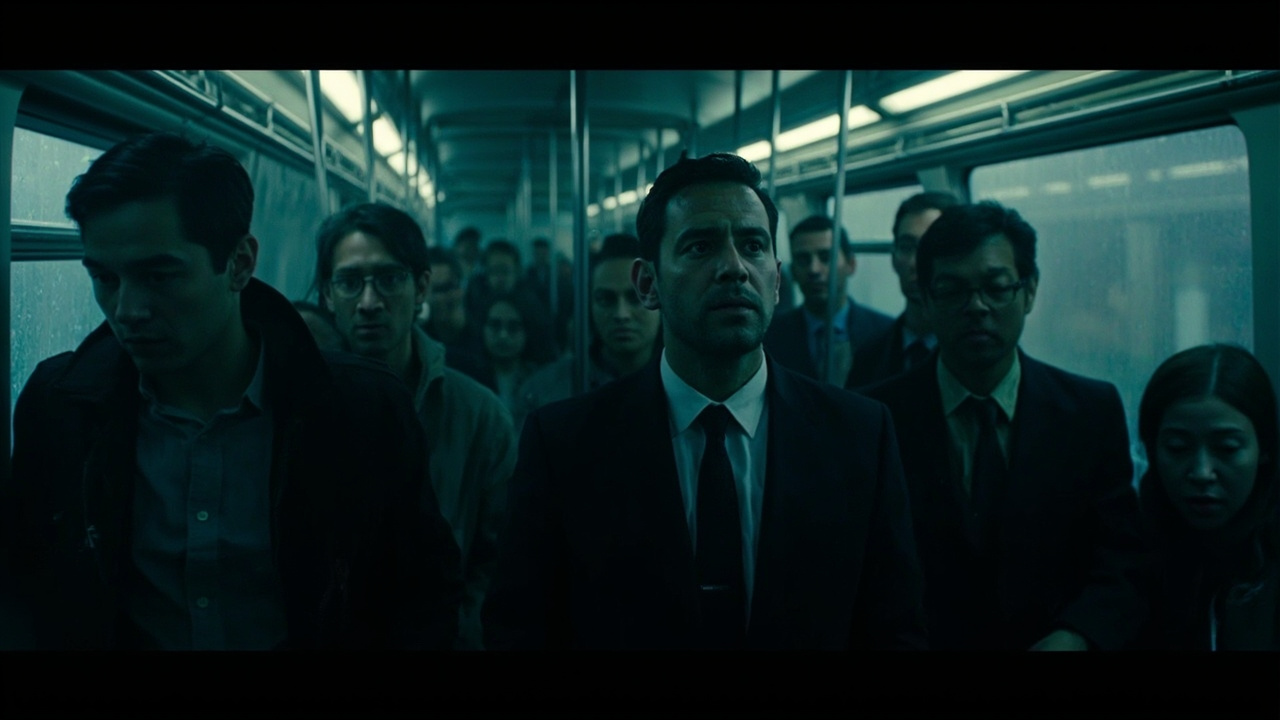

You squeeze onto a packed train for two hours a day, mentally tallying the rent you saved, convinced you are taking the first step toward homeownership. The brutal truth: you are cheerfully selling your youth to the pavement for less than NT$160 an hour, and you think you got a deal.
This is not fear-mongering. It is a math problem the developers and your elders will never explain. Today we rip open the poor man’s illusion of frugality and dissect the time-poverty trap hidden behind cheap suburban rent, so you can finally see the underlying logic of how the rich monopolize resources.
1. The Developer’s Lie: Have You Counted the 800 Hours of Your Life?

Those new developments advertising a 35-minute commute are lying to you with the best-case scenario. Their 35 minutes is only the time you spend inside the train car. They deliberately hide the walk to the station, the platform wait, and the final trek from the exit to your office door.
Add weather delays and rain-day traffic, and a one-way 30-minute ride balloons past an hour. Two and a half hours vanish from your day. In a year, that is a full 800 hours — roughly an entire month of your life gone.
Now do the math out loud: when you save NT160. That is far below the legal minimum wage. You would never take a part-time job paying NT$160 an hour, yet you happily auction your life away to a daily commute.
This is the most chilling form of poverty mindset: you value money more than your one and only life.
2. Willpower at Zero: The Terrifying Depths of Ego Depletion

The human brain is a battery with a finite daily charge. When you jolt awake to a piercing alarm and shove yourself into a sardine-can train car, your brain is feverishly burning energy to handle the crush, the noise, and the constant threat of a sudden jolt.
By the time you finally drop into your office chair, a third of your daily willpower is already gone. Survive the same transit disaster on the way home, and by 8 p.m. when you drag your exhausted body through the door of your suburban rental, the willpower battery is dead flat.
In that state, you have zero energy to cook a healthy dinner. You tap open a delivery app and order greasy fast food without a second thought. All that money you carefully saved on rent quietly transforms into delivery fees and bubble tea.
Worse, because your mental bandwidth is gone, you cannot study investing or pick up a high-income side skill. The only thing you can manage is collapsing onto the couch to scroll short videos for cheap dopamine.
The core logic of time poverty: you trade time for money because you cannot afford alternatives, but the time you lose is the very thing that could have earned you more money.
3. Reading on the Commute Is the Most Sophisticated Form of Self-Deception

Some self-proclaimed efficiency gurus will push back: they listen to online courses or read books on the train. This is peak self-delusion — a poison brewed by the paid-knowledge industry to harvest your tuition fees.
Real deep learning that upgrades your cognition demands intense focus and an undisturbed quiet environment. When your body is rocking with the car, surrounded by strangers’ body odor and nonsensical chatter, your brain is locked in a low-grade fight-or-flight state. It simply cannot perform deep information processing or memory consolidation.
The business thinking and finance insights you half-hear are at best a placebo that soothes your time anxiety. You think you are hustling; in reality, you are just performing productivity for a frustrated version of yourself.
4. The Rich Man’s Time Leverage: The Underlying Logic of Paying for Location

Why are the rich happy to drop tens of millions of NT dollars on prime-location luxury apartments? You think it is just showing off? Dead wrong. The underlying logic of the rich buying core-district property is the highest form of geographic arbitrage and resource extraction.
Living downtown means they save two to three hours of transit time every day — that is the priceless invisible asset. They buy distance with money, preserving their full, high-efficiency decision-making energy and abundant willpower.
While the poor sweat over a scooter parking spot, the rich have already closed a major deal in their office. Downtown concentrates the city’s densest pool of high-net-worth individuals and the freshest business intelligence. The commute time the rich save goes to high-end networking events, key introductions, and intense workouts. This is the Matthew Effect playing out in the dimension of time — those who own time always seem to generate more of it, and more wealth with it.
5. A Case Study in Blood and Tears: Two Classmates, Two Radically Different Lives After Three Years
Consider a real-world class-divergence case. Xiao Ming and A-Wei graduated from the same university class, both landing software engineering jobs at the same Taipei tech firm with identical starting salaries of NT$50,000 a month.
Xiao Ming clung to the mantra saving money is making money and moved to Tamsui for an NT15,000 place in a lane just ten minutes’ walk from the office, falling visibly behind on savings at the start.
Three years later, their paths diverged violently. Xiao Ming, chronically sub-healthy, caught colds constantly and called in sick. After work he lacked the energy to even reply to messages and completely cut off social and learning activities. A-Wei slept naturally until 8:30 a.m. and enjoyed four full hours of golden, uninterrupted time every day.
A-Wei used those high-energy, distraction-free mornings to self-learn advanced programming languages and AI applications, and attended industry meetups on weekends. Three years in, a multinational giant poached A-Wei at double the salary, and he launched his own software studio on the side. Xiao Ming is still at the same old company, getting meager raises, still riding the Tamsui-Xinyi line each day, wondering what life is about.
Xiao Ming’s tragedy is rooted in the time-poverty trap: he traded his priceless youth for the cheapest possible rent discount.
6. Redefining Expensive: Stop Paying Your Landlord With Your Life
The poor always price time by their current salary, assuming the evening is empty anyway, so they might as well trade it for savings. The rich think in opportunity cost — they ask how much future return that same block of time could generate if invested in themselves.
If you are destined to become a person earning seven figures (in NT dollars) or more, every single hour of your day is precious. Burning it in traffic jams and red lights is squandering the foundation of a future wealth empire.
Do not forget the invisible health tax of long commutes: chronic jolting and sleep debt spike your stress hormones, slow your metabolism, drive stress-induced weight gain, and weaken your immune system. The rent you saved will eventually turn into clinic fees, supplements, and therapy bills.
Starting tomorrow, audit your living situation and commute cost with fresh eyes. Spending a few thousand NT dollars more per month to live near your office is not wasteful luxury — it is a self-investment with an outstanding return. What you are buying with that money is two extra hours of sleep a day, post-work stamina, and razor-sharp mental clarity.
Channel your energy into the few activities that compound into massive returns — that is the only way to break out of the class trap. Master the rich man’s logic of time leverage, stop bleeding your life away on pointless transit, and take back control of your own future.
Have you ever had a meltdown from being drained by your commute? Share your time poverty story in the comments, like and subscribe to support us in exposing society’s brutal truths, and help more people see the rich man’s underlying logic!
This article touches on financial and investment advice. Please evaluate based on your own situation and consult a qualified financial advisor.
Comments