
Did your salary last month beat what you earned three years ago by even one dollar? Stop and think about that seriously. You squeeze into the MRT every morning, swipe in, sit in meetings, work overtime, drag yourself home at 11 pm. Three years later, the number on your pay slip is still the same. But your rent has gone up, your lunch box has gone up, your health-insurance premium has gone up, and even a single bubble tea went from NT70. You are not poorer; you are just running toward poverty at ever-higher speed.
And while you were busy clocking in, the net worth of a certain group quietly doubled. Not from lottery wins, not from trading stocks, not from selling real estate. They were right next to you, using the same 24 hours to do what you thought was impossible.
This is not a motivational video. I am not going to talk about dreams and effort. What I am going to talk about is something harsher: AI is repricing the value of every individual.
This article shares information for financial-education purposes only and does not constitute any career advice or investment advice. Every person’s industry, career stage, and skill mix is different, and a strategy that works for someone else may not work for you. For all major career decisions, please evaluate on your own and consult a Taiwan-licensed career counselor or financial planner.
The Harsh Truth: Your Pay Slip Is Flat Because Your Scarcity Is Flat
Why People Who Only Know How to Clock In Are Becoming Worth Less in the AI Era
In the AI era, your value is not determined by the hours you put in, but by the scarcity of the problems you solve. When your work can be replaced by AI, your market price becomes the price of “replaceable labor” — that is, constantly being marked down.
The real reason your salary is not rising is not that your boss is stingy — it is that your scarcity is declining. This is not fearmongering; it is the basic pricing logic of the labor market. As the number of people (including AI) who can do your job grows, your salary naturally gets compressed.
According to 104 HR Bank’s observation, Taiwan’s average annual salary adjustment over the past five years has been only about 1.5%. But if inflation in Taiwan stays around 2% over the same period, your real purchasing power is actually shrinking — your nominal salary may inch up, but your real quality of life slips downward.
The harsher part is this: if your skill scarcity does not improve, your replaceability in 10 years will only be higher, not lower.
Trait 1: Cross-Domain Composite Skills × AI Tools = Scarcity Multiplied
The first shared trait of people whose net worth has exploded in Taiwan is that they are not single-skill craftsmen. They are “cross-domain composite skill” talent, and they integrate AI tools into their workflows with mastery.
What Are Cross-Domain Composite Skills?
Examples:
- A marketer who also understands data analysis, AI tools, and basic design carries far more market value than a pure marketer.
- An engineer who also understands product thinking, business models, and customer interviews gets promoted faster than a pure engineer.
- A salesperson who also understands SEO content, automation tools, and account management can serve 3 to 5 times the clients of peers.
According to 104 HR Bank data, cross-domain composite-skill talent earns a salary premium of 22% to 35%. This is not the story of a few individuals — it is a structural market trend.
The Real Productivity Multiplier of AI Tools
The people whose net worth has exploded in Taiwan are not the ones avoiding AI — they are the ones turning AI into their leverage. They use AI tools to lift work efficiency by more than 40%, and the time they save is not spent scrolling their phones; it is reinvested in learning new skills, doing higher-value tasks, and building their personal brand.
Use AI to lift your scarcity — that is the right logic. Not using AI to do your current job faster and get laid off faster, but using AI to do things you could not do before.
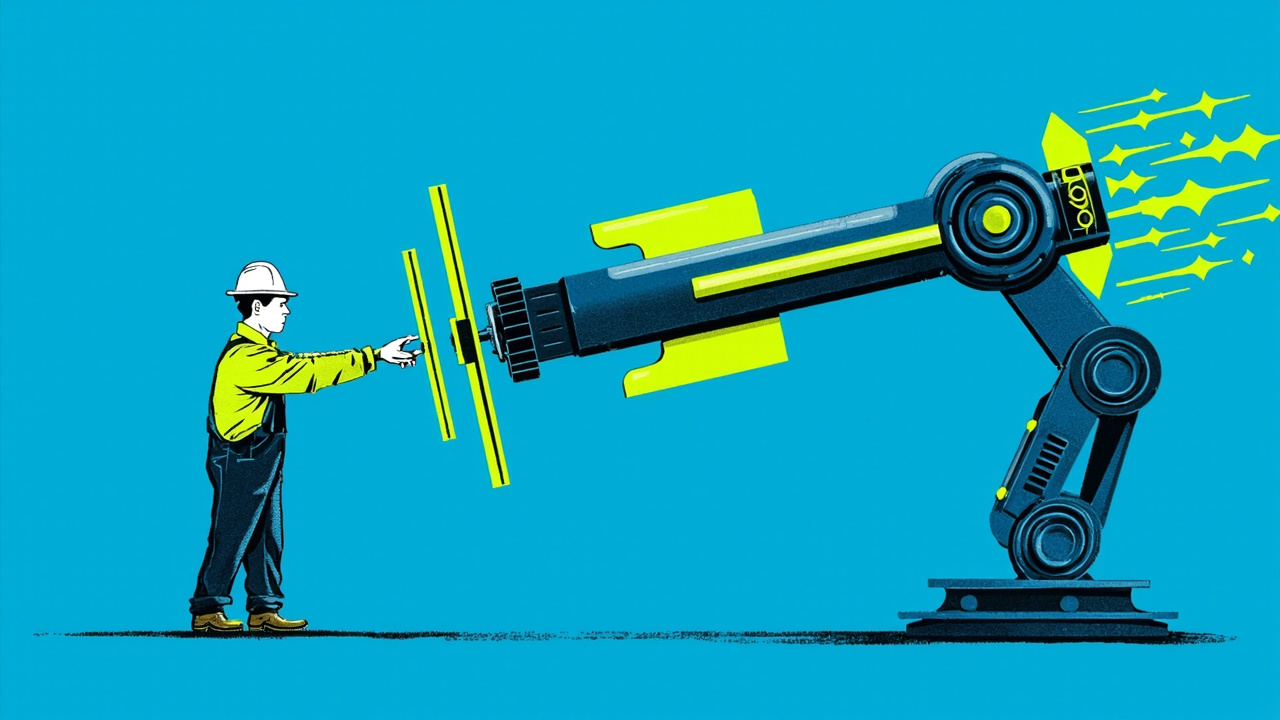
Trait 2: They Have a Digital Personal Brand, and Their Market Visibility Far Exceeds Their Peers
The second shared trait of people whose net worth has exploded in Taiwan is that they do not stay quietly grinding inside the company walls. They convert the professional assets they accumulate at work into value that circulates outside the office.
The Real Power of a Personal Brand
According to LinkedIn Taiwan’s 2024 survey, professionals with an active personal brand are contacted by recruiters 4 to 6 times more often than average employees, and the salaries offered are typically 15% to 25% above market rate.
This means once you have external visibility, you do not have to chase job opportunities — they come to you. When you shift from “the one being chosen” to “the one being invited,” your salary-negotiation leverage changes entirely.
The Blind Spot in Taiwanese Workplace Culture
Taiwan’s workplace culture has a deep misconception: that sharing professional expertise outside the company is leaking company secrets or paving your own exit. But in reality, the people who dare to share professional knowledge externally are usually the ones the company most wants to retain, because their personal brand is itself the company’s living advertisement.
Concrete ways to build a personal brand:
- Build a blog or Substack in your industry and consistently publish professional content.
- Share work methods and industry observations weekly on LinkedIn or other professional communities.
- Join industry conferences or online communities and actively share cases.
- Rewrite internal proposals as public articles (after removing sensitive details).
These moves will not take food off your plate; they will make your plate bigger.
Trait 3: Build a Second Income Outside the Office = Monetize Knowledge Assets Externally
The third trait is that they have built a second source of income outside the workplace — but not the kind of side hustle you are thinking of. I am not telling you to run a night market stall, take freelance gigs, or open a Shopee store.
The Real Path of Knowledge-Asset Monetization
What the people whose net worth has exploded in Taiwan do is convert the professional expertise they accumulated at work into value that can circulate outside the office:
- Write an industry-analysis blog.
- Share work methods on social media.
- Launch online courses on a teaching platform.
- Speak at industry community events.
The core value of this is not just the extra income. Far more importantly, it dramatically raises your market visibility, makes your external market price transparent, and gives you more leverage when negotiating salary.
Why Is This More Effective Than a Night-Market Stall?
The night-market problem is: you exchange time for money, and accumulate no asset. The day you stop, the income stops. But knowledge-asset monetization accumulates content, subscribers, students — assets that can grow exponentially.
An engineer who spent 5 years accumulating programming experience writes one in-depth technical article in 10 hours, and it might be seen by 50,000 people in 3 months. If 100 of those 50,000 are willing to pay for his online course, the revenue from those 100 students can exceed what he earns from a week of overtime.
More importantly, those 50,000 fans and 100 students are his personal-brand assets — they follow him into his next article, his next course, his next job search.
3 Outcome Projections: Two Twenties From a NT$45,000 Monthly Salary
Path 1: Keep Walking the Old Road
Assume you currently earn NT51,000. It sounds like a raise, but if Taiwan’s inflation stays at 2% over the same period, your real purchasing power is actually shrinking.
More importantly, if your skill scarcity does not improve, your replaceability in 10 years will only be higher, not lower.
In 20 years your monthly salary is about NT50,000-plus.
Path 2: Systematically Increase Your Value
Same starting point of NT$45,000/month, but you spend two years systematically building cross-domain composite skills while using AI tools to lift your work efficiency by 40%, while building a personal brand to raise market visibility.
According to the 104 HR Bank data cited earlier, cross-domain composite-skill talent commands a 22% to 35% salary premium, and combined with the average jump from a job switch, a conservative estimate is that two years from now your monthly salary has a chance to reach NT65,000.
If 20 years from now your monthly salary reaches NT100,000, the cumulative income gap over those 20 years is roughly NT20 million.
Path 3: The Worst Case in an Extreme Scenario
This number’s premise must be made clear: the result holds only if you actually execute systematically and choose a direction that matches market demand. If you develop the wrong skill set, if your personal brand does not find the right audience, if your cross-domain integration does not meet market standards, the result will not materialize.
But conversely, if you execute systematically for two years and still see no progress, that is also important market feedback, and you need to readjust direction. No qualitative-leap strategy is guaranteed to succeed — what is being described here is the statistical average outcome under correct execution.

4 Steps to Take Action
Step 1: Audit Your Replaceability
Open the list of tasks in your job and tag each one with whether AI can already do more than half of it. Type the answers into the comments or your notebook, and see how much of your time can be liberated.
That liberated time is the capital for your next phase of learning.
Step 2: Pick One Cross-Domain Skill and Start
Do not be greedy. Pick one cross-domain skill that compounds with your main job and start learning it. Engineers can learn product thinking, marketers can learn data analysis, salespeople can learn automation tools.
Set aside 5 to 10 hours a week, and within six months you will see a clear difference.
Step 3: Start Building Your Digital Personal Brand
Start with the simplest move: post one 500 to 1,000-word industry observation or work reflection per week on LinkedIn or your usual professional platform. Do not chase perfection; chase consistency. Six months from now you will have a searchable professional track record.
Step 4: Monetize Your Professional Knowledge Once
Whether it is one online talk, one paid article, or one small workshop, make one attempt at monetizing your expertise. You will learn many things in the process that you cannot learn for free: how to price, how to market, how to face customers.
That experience becomes the starting point of your second income outside the office.
Conclusion: Your Value Is Set by Your Scarcity
In the AI era, your market price is not set by your hours, but by the scarcity of the problems you solve. Use AI to lift your scarcity — that is the right logic.
You do not need to quit, do not need to start a business, do not need to become a different person. You only need to do three things in your current position: learn one cross-domain skill, use AI tools to amplify your output, and turn your professional accumulation into a personal brand.
One year from now you will find the market is pricing you differently. Because you are no longer the person anyone can replace. You are the person who has cross-domain skills, AI leverage, and a personal brand.
Ask yourself right now: among the tasks you repeat every day, which ones can AI already do more than half of? Write down the answers — that is the time you need to reclaim for your next phase.
Disclaimer: This article is shared for financial-education purposes only and does not constitute any career advice or investment advice. Every person’s industry, career stage, skill mix, and risk tolerance are different, and a strategy that works for someone else may not work for you. For all major career decisions, please evaluate on your own and consult a Taiwan-licensed career counselor or financial planner. The data cited from 104 HR Bank and LinkedIn are market observations and do not guarantee any specific outcome. The effectiveness of AI tool application varies by individual, and past performance does not guarantee future results.
Tags
AI Era, Cross-Domain Skills, Personal Branding, Passive Income, Knowledge Monetization, 104 Job Bank, LinkedIn, Lifelong Learning, Career Promotion, Wage Stagnation, Inflation, Digital Nomad, Content Creation, Career Competitiveness
Comments