
The AI dev world was busy this week (Oct 12–19), but most of the noise was just news.
I went through the official changelogs, engineering blogs, and GitHub’s trending list, skipped the beginner tutorials and marketing posts, and kept only the updates you can actually build with and write about.
This roundup covers four areas: models and APIs, agent infrastructure, open-weight models, and trending GitHub projects. At the end you’ll find the blog topics I’d pick.
Models and APIs: Three Big Moves in One Week

Google’s Gemini 4 Argon is GA. Since Oct 13, gemini-4-argon has been live in the Gemini API, aimed at complex coding, agentic, math, and science work (Gemini API changelog).
Per Google’s announcement, it has a 1M unified input-output token limit and introduces a new “continuation protocol.” Introductory pricing is $2 per million input tokens and $10 per million output; after Nov 30 it rises to $4 / $20. It also landed in GitHub Copilot the same day.
Why it’s worth a post: the discount ends this month, so now is the cheapest time to run cost benchmarks.
Claude Opus 5.5 fast mode is out of research preview. As of Oct 15 you no longer need to request access or send the fast-mode-2026-02-01 beta header (requests that still send it keep working). On Oct 14 Anthropic also shipped OpenTelemetry export in beta, sending spans from the Messages API and Managed Agents to your own observability backend, with SDK support in seven languages including Python, TypeScript, and Go (Claude Platform release notes).
Why it’s worth a post: wiring LLM calls into an existing OTel / Grafana pipeline is immediately useful for anyone running production services.
OpenAI expands GPT-Live voice. On Oct 16, prompt-to-voice opened to all API customers: describe a voice in text, generate it, and reuse it in GPT-Live sessions. Creating the voice is free; speech uses regular GPT-Live billing. On Oct 15, a native Decisions integration let apps act while the user is still speaking (OpenAI API changelog, custom voices guide).
Agent Infrastructure: From Polling to Events
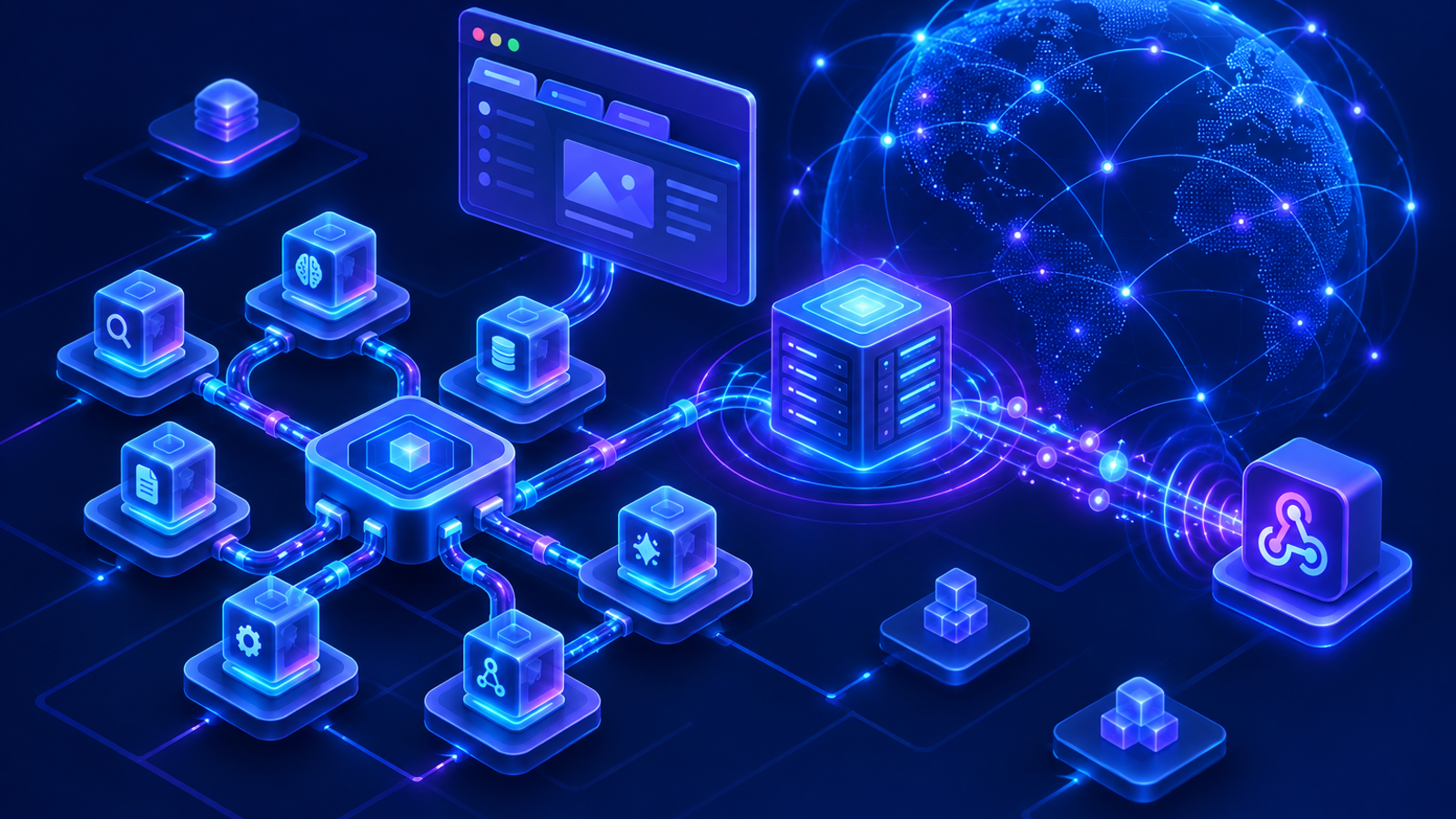
For full-stack engineers, the most interesting changes this week were in the infrastructure layer.
Cloudflare ships its first MCP Event. Since Oct 13, the Cloudflare API MCP server pushes Workers Issues (production errors) as MCP Events. Clients discover them with events/list and subscribe with events/subscribe; when a new issue appears, the server posts a signed event to your webhook so an agent can start investigating without polling (Cloudflare AI changelog).
Cloudflare’s Agents SDK gets a persistent browser. The new browserTool (Agents SDK v0.28.0+) keeps tabs, cookies, and logins across turns, survives Durable Object hibernation, and idles out after 10 minutes by default. Cloudflare says it also works with the AI SDK and TanStack AI adapters.
Vercel AI SDK 7.0.x keeps shipping. According to Developers Digest, [email protected] (Oct 14) added toolCallConcurrency so SDK-executed tool calls can run sequentially, and WebSocketChatTransport (Oct 8) lets useChat run over a persistent connection. See vercel/ai releases for the latest versions.
LangChain v1.4.0 adds built-in FastMCP via the langchain.mcp namespace, alongside new LangSmith features like AI Search and Trajectories (LangChain October newsletter).
GitHub made two security tools GA on Oct 15: AI Scan for pull requests and agentic autofix. Actions workflow lockfiles entered public preview on Oct 14 (GitHub Changelog, October).
Open-Weight Models: Big Enough to Plan Hardware Around

Reflection Beam (Oct 16). A 501B-parameter MoE with 23B active per token, a 1M context window, and an Apache 2.0 license, focused on coding and agents. It ships BF16, FP8, and NVFP4 weights, has day-one support in Transformers, SGLang, and vLLM, and is available through Hugging Face Inference Providers (Hugging Face blog).
Meta Muse Spark Open (Oct 15). 816B parameters and a 1M context, pitched as runnable locally on Macs. But TechCrunch, citing Engadget, says local use needs at least 1TB of RAM, ideally on an M5 Ultra Mac Studio. License details still need manual review.
Why it’s worth a post: “Apache 2.0 Beam vs. custom-licensed Muse Spark” is a very practical comparison for teams planning to self-host commercially.
Trending on GitHub: The Agent Plugin Boom
Numbers below come from the GitHub weekly trending list on Oct 19, filtered for full-stack and AI integration:
- morluto/rea: agent-driven reverse engineering, from app behavior down to native binaries. About 327K stars, +229K this week, #1 on the list.
- mksglu/context-mode: context-window optimization for AI coding agents, sandboxing tool output and persisting session memory. About 31K stars, +4,138 this week.
- heygen-com/hyperframes: write HTML, render video, built for agents. About 67K stars, +5,883 this week.
- anthropics/claude-plugins-official: Anthropic’s official Claude Code plugin directory. About 43K stars, +4,774 this week.
- cursor/plugins: Cursor’s plugin spec and official plugins. About 13K stars, +1,717 this week.
The trend is clear: plugin and skill ecosystems around tools like Claude Code and Cursor are becoming the new package registries.
Wrap-Up: Topics I’d Write This Week
If I could write only one post this week, I’d pick from these three:
- Build an agent that starts debugging the moment an error happens, using MCP Events. Cloudflare’s implementation is complete and reproducible, and it’s a natural way to explain why the MCP 2026-07-28 spec moved to a stateless core.
- Gemini 4 Argon vs. Claude Opus 5.5 fast mode: a real cost test. Run the same full-stack task during the discount window and compare tokens and latency.
- Pipe LLM calls into OpenTelemetry. Use the Claude SDK’s OTel export to trace agent behavior in your existing observability stack.
Which build would you like to see first? Leave a comment and I’ll write that one next.
Comments