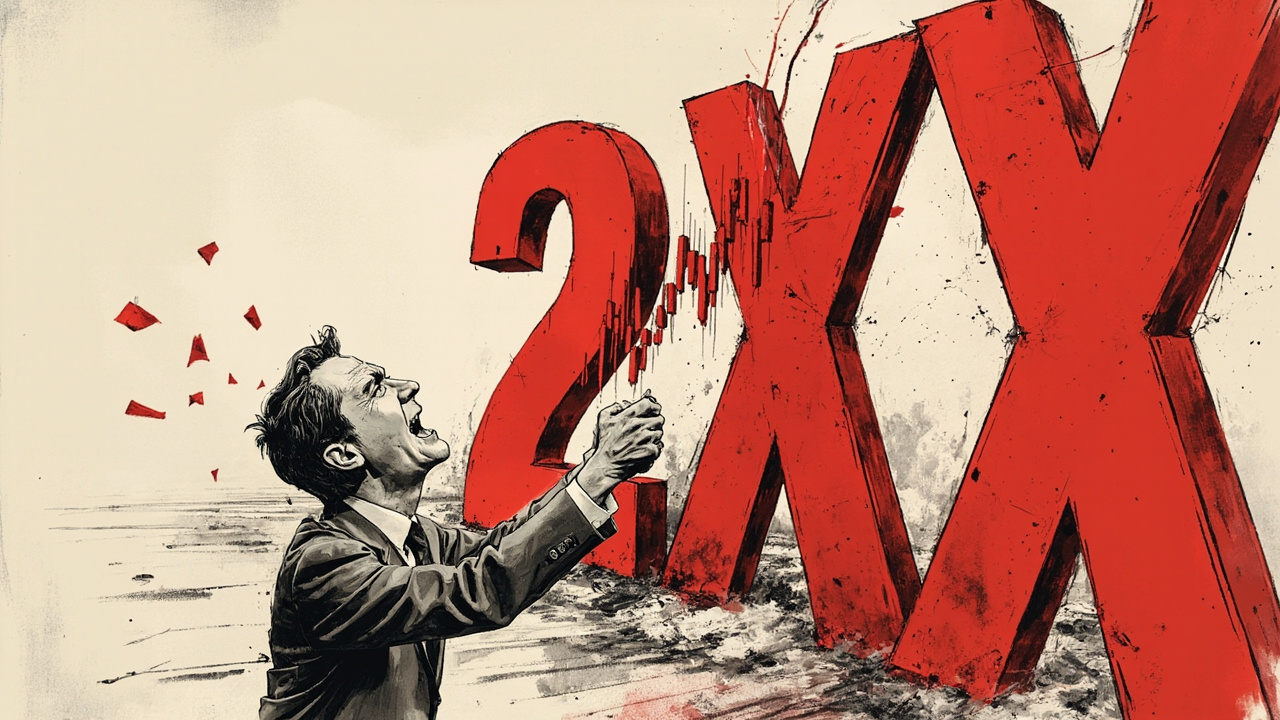
9 of 10 Bankrupt Retail Investors Die From “Not Setting Stop-Losses”: A Stock Market Survival Guide
Today you are once again watching the numbers on your account drop, your fingers hovering over the keyboard, unsure whether to add to your position. Does this scene feel familiar? Most people think they lose because of bad luck, missing the right stock, or news arriving too late—but let me tell you: what truly bankrupts Taiwan’s retail investors has never been picking the wrong stock. It’s not knowing when to stop.
It’s not that you can’t make money—it’s that you don’t know when to cut your losses. This is the core of what I’m going to share with you today. There’s a saying in the stock market you must carve into your brain: those who don’t understand stop-losses will, sooner or later, return their profits to the market—and then lose their principal too. This isn’t meant to scare you—it’s what 20 years of TWSE retail investor data tells us.
The Taiwan Stock Exchange once published statistics showing that more than 60% of retail investors have lost money continuously for over three years. Sixty percent—out of ten friends you know who play the stock market, six are long-term losers. And almost all of those six say the same thing: “I’m just unlucky.” “If I just wait, it will come back.” “This time I bought a good company, it will definitely rebound.”
Those three sentences are the three doors to bankruptcy.
1. The First Fatal Flaw: No Stop-Loss, Hope as Strategy
Have you ever had this experience: you buy a stock, it drops 10% and you tell yourself to wait; it drops 20% and you call it short-term volatility; it drops 30% and you start averaging down, thinking your cost basis is lower and you’ll make money when it bounces. Then it keeps falling, until you can’t stand watching it anymore, and you cut out at the bottom—and it really does rebound—but you’re no longer in the position.
Does this script feel familiar? It’s not bad luck. It’s called “loss aversion”—the default setting of every human brain. Nobel laureate Daniel Kahneman’s research tells us: human pain from a loss is twice as intense as the pleasure from an equivalent gain. So your brain automatically convinces you—“Wait, don’t take the loss. If you sell, the loss becomes real.”
That voice is your most dangerous enemy.
During the 2022 correction in Taiwan’s stock market, the TAIEX fell from 18,619 to 12,629—a drop of more than 32%. Many chose to average down after a 15% drop, then averaged down again after a 25% drop, until their capital was exhausted and they were forced to take the loss near the bottom. By the time the 2023 rebound came, they had no ammunition left.
2. The Essence of a Stop-Loss: It’s Not Surrender, It’s Money Management
You may now be thinking: “I know I need to stop loss, but I don’t know where to stop.” That is the real problem. A stop-loss is not surrender—it is the core mechanism of money management.
Taiwan’s financial regulators are very clear about the definition of risk management: investors must operate within the maximum loss they can bear. This is not a suggestion—it is the basic framework that protects you.
The essence of a stop-loss is: you decide in advance under what conditions you are willing to accept the outcome of this trade, instead of letting the market decide your fate.
How exactly do you set it? One simple formula: maximum tolerable loss per trade = 1% to 2% of total capital. For example, if you have NT10,000 to NT$20,000. When you work backward from this amount to determine your position size, you’ll find you would never concentrate heavily on a single stock—this is the first line of defense in position management.
3. Position Management: If You Can’t Manage Positions, You Shouldn’t Be in the Market
Position management is the concept most foreign to retail investors. Buying NT100,000 each of ten stocks carries entirely different risk exposures.
Never put more than 20% of your capital into a single position. Concentration is fine, but “over-concentration” is suicide. A black swan in any single stock can wipe out 5 years of hard work.
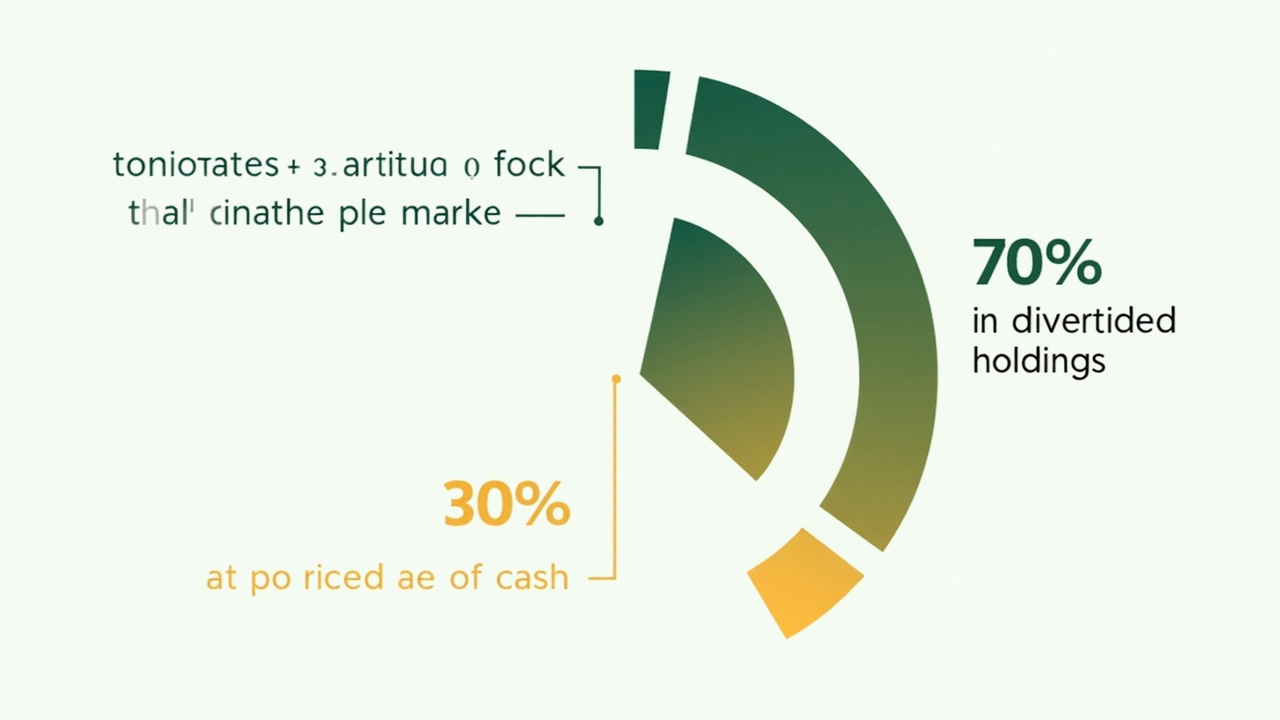
Another key principle: always keep at least 30% of your portfolio in cash. When the market drops, cash is your only friend. While others are forced to dump at the bottom, you have cash to scoop up cheap chips. This is why pros get richer on the way down, while beginners get poorer.
4. Survival Guide for Extreme Markets
When the market enters a systemic decline (like the 2022 Taiwan correction), discipline matters more than judgment. The most common mistake retail investors make in extreme markets is thinking “it has fallen enough” and starting to bottom-fish. The result is usually “there’s always a lower low.”
Three rules for surviving extreme markets:
- Don’t catch falling knives on stocks that have broken their monthly and quarterly moving averages. The real bottom is a V-shaped reversal that gives you a clear entry signal—not endless bottom-fishing all the way to bankruptcy.
- When total capital losses hit 20%, immediately cut positions by 50%. This is not a judgment call—it is mechanical discipline.
- After three consecutive losing trades, force yourself to stop for two weeks. You aren’t resting—you are avoiding “revenge trading.”
Conclusion: The Essence of Stock Market Survival Is Survival
Retail investors lose money in the stock market not because they aren’t smart enough, but because they lack discipline. Smart people ask “how much will I make this time?” Pros ask “what’s the most I could lose this time?”
When you learn to use stop-losses to cap maximum loss, position management to diversify risk, and mechanical discipline to fight human weakness—you have a chance of surviving in this market where 90% of retail investors lose money.
The market will never run out of opportunities—what it lacks is people who live long enough to see them arrive.
This article shares investment concepts and is not trading advice. Taiwan stock trading involves high risk; past performance does not guarantee future results. Please assess carefully based on your personal risk tolerance and consult a licensed investment advisor before entering the market.
Disclaimer: This article shares investment concepts and compiled reference material. It does not constitute any specific investment, tax, or legal advice. Markets carry risk and investing requires caution; please make independent judgments based on your own risk tolerance and consult a professional advisor.
Tags
Stop-Loss Discipline, 損失規避心理, 康納曼, 心理學陷阱, 攤平地獄, 部位管理, Extreme Markets, 散戶保命, 台股教訓, Capital Management
Comments