
Are Retail Investors Always “Locked” by the Whales? Understand This Trap and Turn Things Around Immediately
Why is it that the moment you buy, the price goes sideways; the moment you sell, it shoots up? The whole market is supposedly bullish, money keeps pouring in, yet the stock is held down by an invisible hand that won’t let it move a single step. Many people chalk this up to bad luck, or to whales personally targeting them — but the truth is far colder and far more precise than that — this isn’t a coincidence; it’s a structural game designed by the whales. It’s a comprehensive encirclement, from chip distribution to psychological warfare.
In the stock market, the vast majority of retail investors live on the surface of price swings, watching red and green candles, chasing hot themes, following the herd to buy and sell — but they’ve never seen through the underlying rules of how the market runs. Stock prices are never determined by how many people are buying — they’re driven by the concentration of chips, the weight of liquidity, and the intentions of the major capital.
1. The More Retail Investors Buy, the More They Turn the Stock Into Something “Heavy-Plodding”
The more retail investors buy, in essence, they are breaking highly concentrated quality chips into countless tiny scattered portions — turning the stock from a light-load operation into a heavy-plodding one.
What the major capital needs to do is exploit this defect in dispersed chips to complete the closed loop of “buy low → wash → rally → distribute” — converting retail investors’ greed and fear into their own hard cash profit.
To read this game, you first need to understand the survival logic of the major capital. For institutional whales controlling tens of billions or hundreds of billions, their trading logic is fundamentally different from retail investors’. Retail investors’ capital of tens or hundreds of thousands can test-drive and execute in a second without moving the price — but the whales can’t.
Their capital base is so large that if they try to test-drive and sweep up supply, they’ll instantly clear all the sell orders in the order book, forcefully push the price up, and drive their own average cost up — a suicidal move that completely contradicts the core principle of buy low, sell high.
2. What Whales Need Is “An Environment Without Competing Bidders”
So whale accumulation is never a one-shot transaction — it’s a long, hidden, precise campaign. Like a reservoir filling up, they collect chips quietly bit by bit over a long stretch of time, suppressing price volatility the whole way so that no one notices the capital entering.
This dictates the core requirement of the accumulation phase: an endless stream of cheap sell orders is needed; retail investors must voluntarily dump chips at the low end; meanwhile, the stock must look utterly worthless, ignored, forgotten by the market.
Only then can they pick up enough controlling chips at the lowest cost in an environment free of competing bidders.
3. Retail Investors Pouring In Actually Breaks the Whales’ Rhythm
Large numbers of retail investors buying in at different price levels with different expectations scatters the chips completely — the float becomes abnormally heavy — and every one-point rise faces dense selling pressure, leaving no foundation for a rally.
Many retail investors don’t understand: why is it that when they and tens of thousands of other retail investors are buying, with abundant buy-side demand, the price can’t move? This is the lethal damage of scattered chips.
The whales’ holdings are highly unified, with a clear target price and operating plan. Before reaching the target, the chips are firmly locked up — the selling pressure on the float is almost zero. By contrast, retail investors’ positions are completely scattered — some want to take profit at three points, some are desperate to sell the moment they’re back to break-even, some use leveraged capital and are forced to stop out, and others simply lose patience during sideways action and cut their losses to leave.
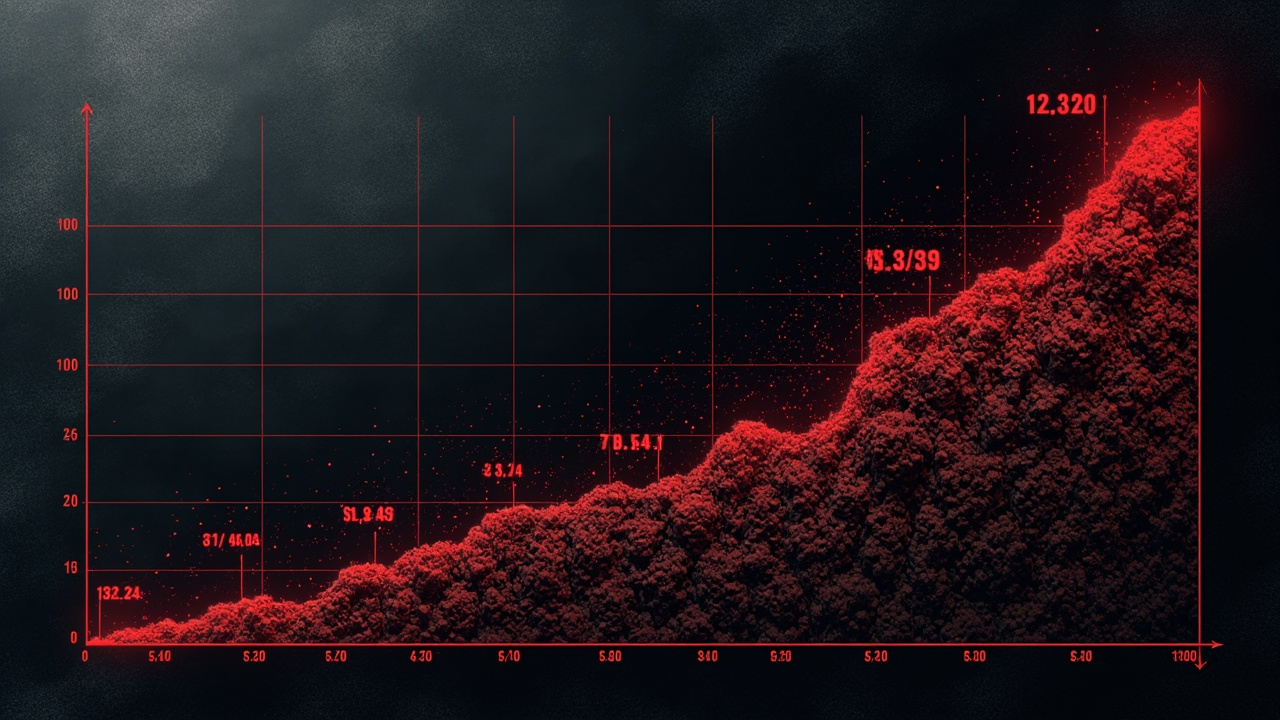
These scattered selling pressures are like countless mines buried at every price level along the way up. The moment the price starts moving up, these pressures slam it back down, forming an unscalable wall of supply.
4. So What Do You Do? Survival Strategies for Retail Investors
Since this is a structural game, is there any way for retail investors to turn things around? Yes — but only on the condition that you accept three things:
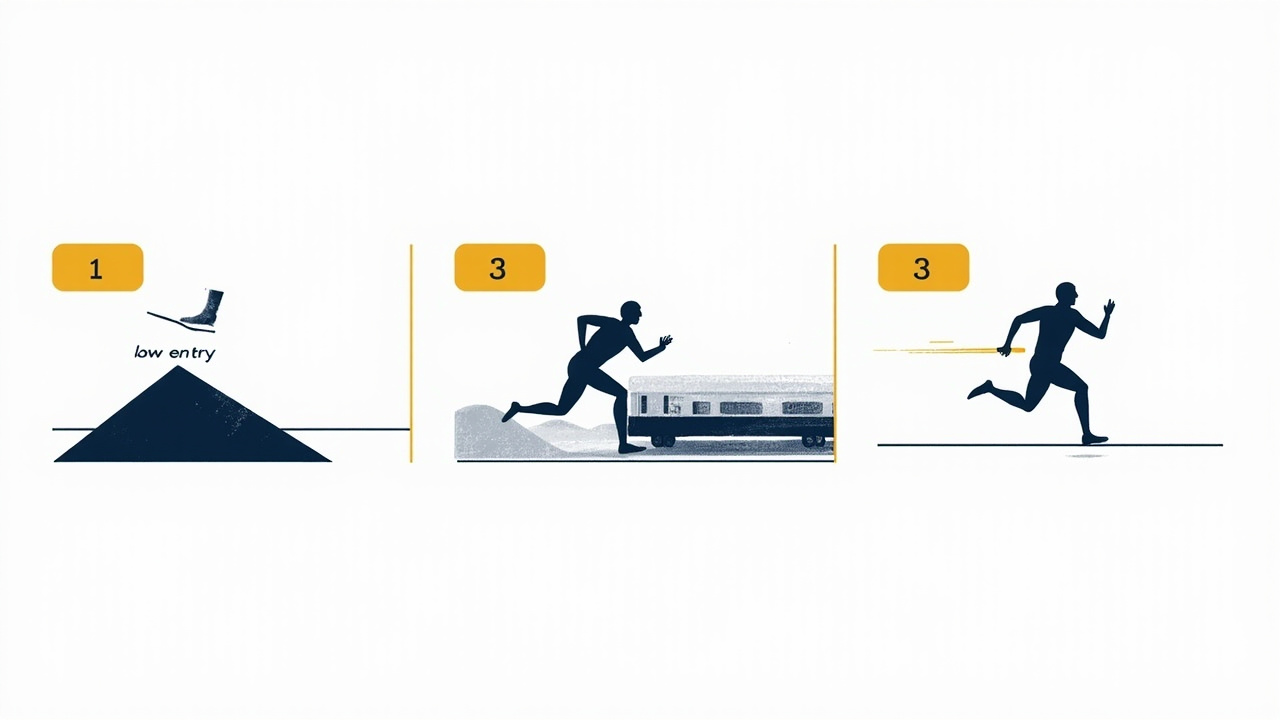
First, don’t compete with the whales for low-end chips. When a stock is cold, boring, and no one is talking about it, retail investors usually stay away — but that’s precisely when the whales are accumulating at the low end. If you want to ride the whales’ coattails, you need to enter during the middle of their push-up, take on a relatively clear risk, and trade it for a higher win rate.
Second, watch liquidity, not buzz. Whether a stock can rally has nothing to do with “how many people are talking about it” — it’s about “chip concentration.” Watching daily volume, changes in chip distribution, and the direction of broker-branch flows is far more meaningful than parsing the news.
Third, build your own exit discipline. What the whales fear most isn’t that you don’t buy — it’s that you don’t sell. The mistake retail investors make most easily is “take profit at three points, then hold through drawdowns forever.” When you have no exit discipline, you become the perfect liquidity provider in the whales’ eyes.
Closing: Understand the Rules of the Game Before You’re Qualified to Sit Down at the Table
This game was never about whether retail investors can make money — it’s about whether retail investors realize they’re participating in a structurally asymmetric contest. What the whales need is liquidity, uninformed counterparties, and market emotions woven from greed and fear.
When you understand the three-layer operating logic of chip distribution, liquidity structure, and psychological game, you may finally shift from being “a designed sheep” to being “a player who reads the game.” The market doesn’t reward hardworking sheep — but it does reward清醒 (clear-eyed) hunters.
This article shares investing concepts, not buy/sell recommendations. Taiwan stock trading involves high risk — please assess your personal risk tolerance carefully and consult a licensed investment advisor before entering the market.
Disclaimer: This article shares investment and financial-management concepts and information, and does not constitute any specific investment, tax, or legal advice. Markets involve risk; invest with caution. Please make independent judgments based on your own risk tolerance and consult a professional advisor.
Tags
Retail Trap, 主力建倉, 籌碼分散, Liquidity, 橫盤, 結構性陷阱, Taiwan Stocks, 散戶自救, 股市心理學, 跟風交易, 主力出貨
Comments