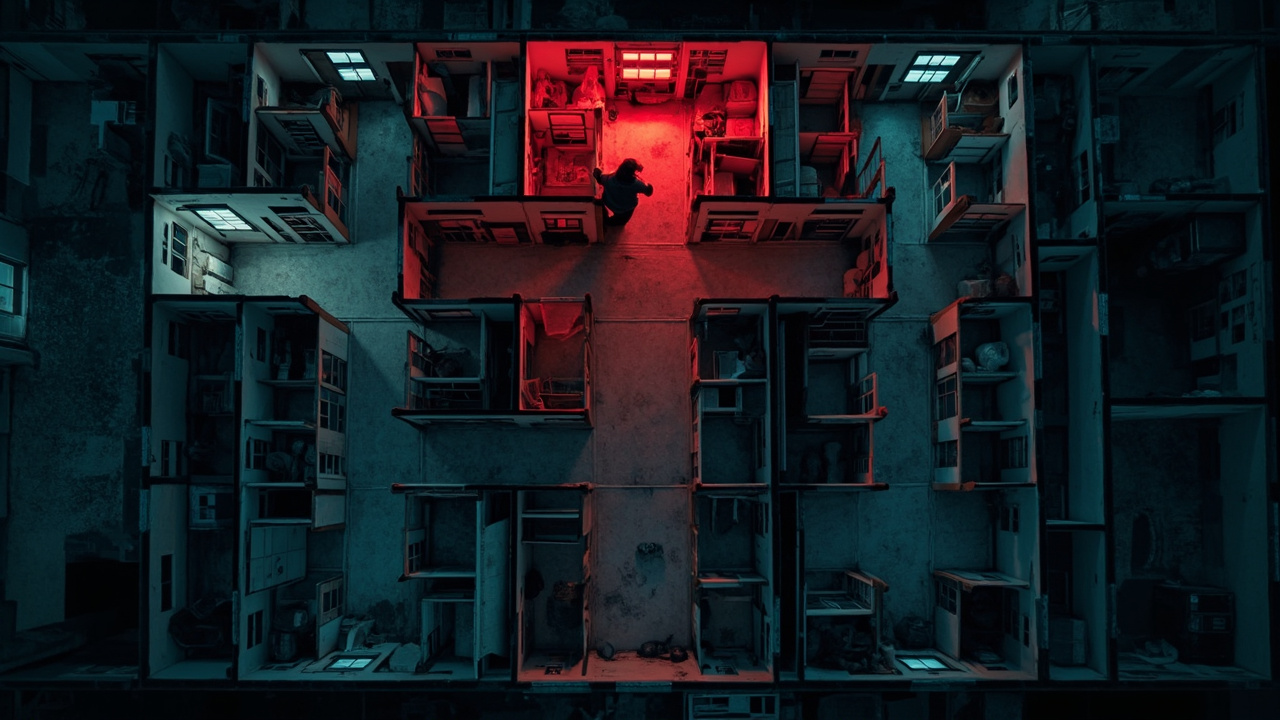
Why Low-Price Studios Are the Perfect Trap for the Poor
You have probably seen those ads on Facebook or property websites: “Just NT$500,000 down and you can move into a boutique studio in the heart of the city.” Developers slap on a glossy 3D rendering and a few emotional lines about how buying beats renting, and suddenly thousands of young professionals renting their way through city life are swept up in a buying frenzy.
You think you are finally escaping a slumlord’s grip and owning a little shelter in this cold city. The brutal truth? Presale studios marketed on a low total price are a perfectly engineered financial trap — built to squeeze the very last drop of savings out of people who can least afford it.
Today we are tearing the masks off these gorgeous show suites. We will break down exactly how developers, sales agents, and banks team up inside this so-called friendly, low-barrier game to siphon off every drop of sweat from your next thirty years. If you are about to scrape together your last dollars to buy a studio, read every second of this article. It might save you from a fall you will never climb out of.

Layer One: The Visual Trick of Total Price and the Hidden Profit in Unit Price
To understand this trap, start with how developers hunt land and chase profit. In Taiwan’s hyper-expensive metro areas, the cost of acquiring land has skyrocketed into jaw-dropping territory. When a developer pays a fortune for an awkward, irregularly shaped sliver of land, the only thing on their mind is squeezing the maximum profit out of that limited footprint.
Plan it as a standard three-bedroom, two-living-room layout, and you might fit only two or three units per floor, pushing the total price out of reach for the average buyer. With wages stagnant and inflation biting, ordinary salaried workers simply cannot afford it. To keep units selling while preserving fat margins, the industry cooked up a brutally clever pricing tactic: suppress the total price while aggressively inflating the per-unit price.
They slice a single floor into ten, even twenty cramped micro-units — barely ten ping each. On the surface, NT$8 million per unit feels almost within reach if you stretch a little. But that is a deliberate exploitation of a cognitive blind spot: the public is sensitive to the total price and numb to the per-ping price. Do the real math on a per-ping basis and you will be shocked — these studios often cost 10–20% more per ping than a standard three-bedroom in the same district. Developers weaponize your panic about getting on the property ladder, so you willingly pay the highest per-ping price in the entire neighborhood.

Layer Two: Showroom Space Magic and the Common-Area Black Hole
The moment you step into a gorgeous presale sales center brimming with anticipation, you have already walked into a hall of illusions. The agent walks you through a sleek, warmly lit model unit that feels surprisingly spacious. Glass partitions, an open-concept kitchen — your brain instantly paints a picture of you stepping in after work, wine glass in hand, unwinding in style.
But that model unit hides a stack of space-magic secrets the sales industry would rather you never learn. First, almost every piece of furniture in the showroom is custom-built in shrunken dimensions for visual effect. That double bed that looks cozy might be a full twenty centimeters shorter than a standard one — if you are taller than 170cm, your feet will hang off the edge. Wardrobes are deliberately slimmed down. When you actually move in and try hanging normal hangers inside, the door will not close; you will be forced to hang clothes sideways or fold everything.
It gets more devious. Showrooms lean heavily on transparent glass partitions instead of solid concrete walls, creating the illusion of visual extension. In real life, you cannot have a bedroom, bathroom, and living room with zero privacy screens. Once you swap those glass panels for real concrete or wooden partitions after handover, that once-stylish spacious interior instantly shrinks into a suffocating cage.
Beyond the visual deception, the common-area ratio is the most bloodsucking hidden black hole in low-price studios. Modern presale projects routinely hit common-area ratios of 35%, even approaching 40%. That means out of the NT3 million went toward public spaces you will never use. Your actual indoor space might be a pathetic eight or nine ping — not even enough room for a standard sofa. You just spent a lifetime of savings essentially subsidizing the developer’s cost of building a flashy but useless grand lobby.

Layer Three: The Mortgage LTV Cliff at Handover
The cruelest reality usually detonates years later, the moment the building is finished and keys are handed over. Many young buyers naively believe that putting down 10–15% as a deposit and letting the bank cover the rest with a standard 80% mortgage is all they need. What they never realized is that Taiwan’s banks apply extremely tight internal risk controls on these studios.
In the eyes of lenders, any unit whose indoor area after subtracting common areas falls below 15 ping gets classified as a high-risk studio product. These units have terrible resale liquidity and carry the highest crash risk when the property market wobbles. So banks will absolutely not lend you the 80–85% LTV they give on a normal two- or three-bedroom. For studios, expect 60% at best, often 70%, with interest rates above standard mortgages and frequently no grace period.
This creates a terrifying funding gap — the so-called handover cliff crisis. Imagine you bought an NT1.6 million for the down payment. At handover the bank tells you the unit is too small to lend more than NT1.4 million hole in the middle, and the developer is not extending credit. To bridge the gap, countless young buyers with no way out are forced to take out personal loans at 5–7% interest with a maximum seven-year term.
That means on top of a fat mortgage, you also have to squeeze an extra NT$10,000–20,000 a month out of your paycheck to service the personal loan. What you thought would cost about as much as rent instantly balloons to 60–70% of your monthly salary. Your cash flow snaps like a dry twig the moment you take possession, dragging you into an abyss from which you will never return — turning you into the bottom-rung serf of the financial system.

Layer Four: The Living Hell After Move-In and the Slide Into a Slum
Even if you grit your teeth, borrow from every relative and friend, and survive the handover crisis, the real nightmare is just beginning. The day you excitedly move into your studio, you discover the living quality is a total disaster. With a single floor chopped into a dozen units, this layout is virtually incapable of decent light or ventilation. Most studios are single-aspect, and some have no openable window to the outside at all.
Your room turns into a sealed tin can. The air stays permanently stale, and the walls grow mold from humidity. Even worse, the kitchen usually comes with a bare-bones induction cooker jammed right next to your bed. Fry an egg or boil instant noodles and the entire room’s bedding and clothes soak up cooking odors. Because the unit count is so dense, partition walls are built with the cheapest lightweight materials — late at night you can clearly hear your neighbor’s TV, the sound of their shower, even shouting arguments.
Beyond the brutal conditions inside your four walls, the entire community’s ecosystem is the fatal blow to your quality of life. Because the price barrier of a studio is low, this is absolute paradise for speculative investors to sweep up. More than half the units in the building may be investor-owned rentals. Your tenant turnover rate will be terrifyingly high, and you never know who moves in next door — maybe a night-shift worker with flipped schedules, maybe rowdy college students shouting in the hallway, maybe even an underground illegal operation or a daily-rental Airbnb.
Meanwhile, the luxury amenities you were so excited about quickly hit the cold reality of empty coffers. Because the studio’s total ping is small, even at NT$150 per ping in management fees, the total fees collected across the whole building still fall far short of covering security and cleaning. Within two or three years, that once-glamorous infinity pool dries up because no one can afford the maintenance, and the luxury gym turns into a junk-filled, dust-caked ruin. The hotel-grade boutique residence you paid a fortune for ages into a chaotic, mixed-use slum in just a few short years.

Layer Five: Liquidity Collapse in the Resale Market and the Forced Loss Sale
This brutal logic hits you again, full force, in the resale market. Low-price studios have liquidity so poor it is almost criminal. First, no normal family with real housing needs is going to buy a ten-plus-ping shoebox — couples planning to have kids cannot even fit a crib, so they will not look at this kind of property.
Second, any upgrading buyer with even modest means would rather buy an older apartment in the suburbs than a city-center studio. The only remaining potential buyers are investors looking to collect rent, or first-time buyers as naive as you once were. But seasoned investors run cold-blooded ROI math. They see a few-year-old studio with aging common facilities, know the rental ceiling is locked in, and will slash the price to an absurdly lowball number.
And those first-time buyers as naive as you once were? They have already been lured by the developer’s brand-new launch, with a prettier showroom and flashier amenities. Who wants to spend serious cash on a used, slightly worn-down studio that looks like it has seen better days? Your listing sits on the agency website for half a year with barely a handful of viewings, and finally, desperate to shed the crushing weight of personal loans and mortgage payments, you accept a loss sale. Not only do you lose every dollar of the down payment you saved so painfully, you also end up owing the bank a pile of debt. What looked like an inspiring story of buying a home to beat inflation ends as a total financial bankruptcy.
The Wealthy Mindset: Keep Renting, It Is the Smart Financial Lever
So with city home prices out of reach, what should young people with limited capital actually do? The wealthy mindset, which repairs the poor’s panic, gives an answer that runs completely against popular intuition: keep renting.
Do not get hijacked by the brainwashing script that “paying rent is just paying the landlord’s mortgage.” Renting is actually a smart lever that lets you access a decent-quality living space and flexible cash flow at a very low cost. For a monthly rent of just over NT$20,000, you can rent a normal two-bedroom apartment in a decent location. If you land a bad neighbor or management deteriorates, you simply pack up and move when the lease is up. You keep complete freedom of movement.
Even more importantly, you do not lock up your precious cash in an illiquid negative asset. You can take the hundreds of thousands originally destined for a studio down payment, plus the monthly savings from skipping a heavy mortgage, and invest them with discipline into truly compounding vehicles like global index funds. Over time, that capital rolls into a powerful compounding snowball inside the capital markets.
When you have finally built a real passive-income system and accumulated enough capital firepower, you can stroll calmly into a sales center and pick out a quality property with genuine value-retention potential. Not like now, when you are a panicked, panic-driven lamb waiting to be slaughtered, forced by developers and agents to take their defective leftovers. Stop using the poor’s compromise mindset to buy a depreciating negative asset. Start using the rich’s lens to build real wealth.
Closing: Take Back Your Financial Autonomy
In this brutal, money-driven capital game, every rash major financial decision can wreck your life for good. Low-price studios are the ultimate wealth-extraction machine, surgically designed to target the poor’s anxiety — using a friendly low entry barrier to lure you into a debt abyss from which there is no return.
Before you sign on any property, strip away the emotional ad copy and the hallucinatory showroom filter. Run the coldest math on the real per-ping price. Apply the harshest standards to its liquidity and loan conditions. Do not let a developer’s glossy packaging blind your judgment of true asset value. The moment you can see straight through the harvesting logic behind these bloodsucking projects, you have truly taken back the financial steering wheel of your own life.
If this article felt like a wake-up slap and helped you sidestep a pitfall that could have wrecked the rest of your life, smash that like and subscribe right now, and share it with the first-time-buyer friends around you who are out hunting for homes. Tear down the wall of information asymmetry. Refuse to be the clueless chive that gets harvested in the real-estate game.
This article covers financial and investment topics. Please evaluate based on your own situation and consult a professional financial advisor.
Comments