Walking into a glittering sales gallery, watching the lights wash over the giant building model, have you ever had a sales agent point at those glowing boxes at the very top, and quietly imagined yourself standing there one day, looking down on the entire city?
That “you have to climb high to see far” brainwashing hits every mistreated white-collar middle-class worker with surgical precision. You bow to your boss all day, then come home to your clients’ barbs. So the moment you hear “looking down on the world,” your brain floods with dopamine, desperate to reclaim your dignity as an individual in the place closest to the sky.
But today I’m going to cruelly pop that bubble. You think you’re spending NT$2 million to buy an upper-class experience, but what you’re really stepping into is a wealth trap carefully engineered by the developer. The moment you sign for that high-floor view apartment, your assets start shrinking and your investment returns begin to collapse.
The Developer’s Pricing Black Box: The Logic Behind the Vertical Premium
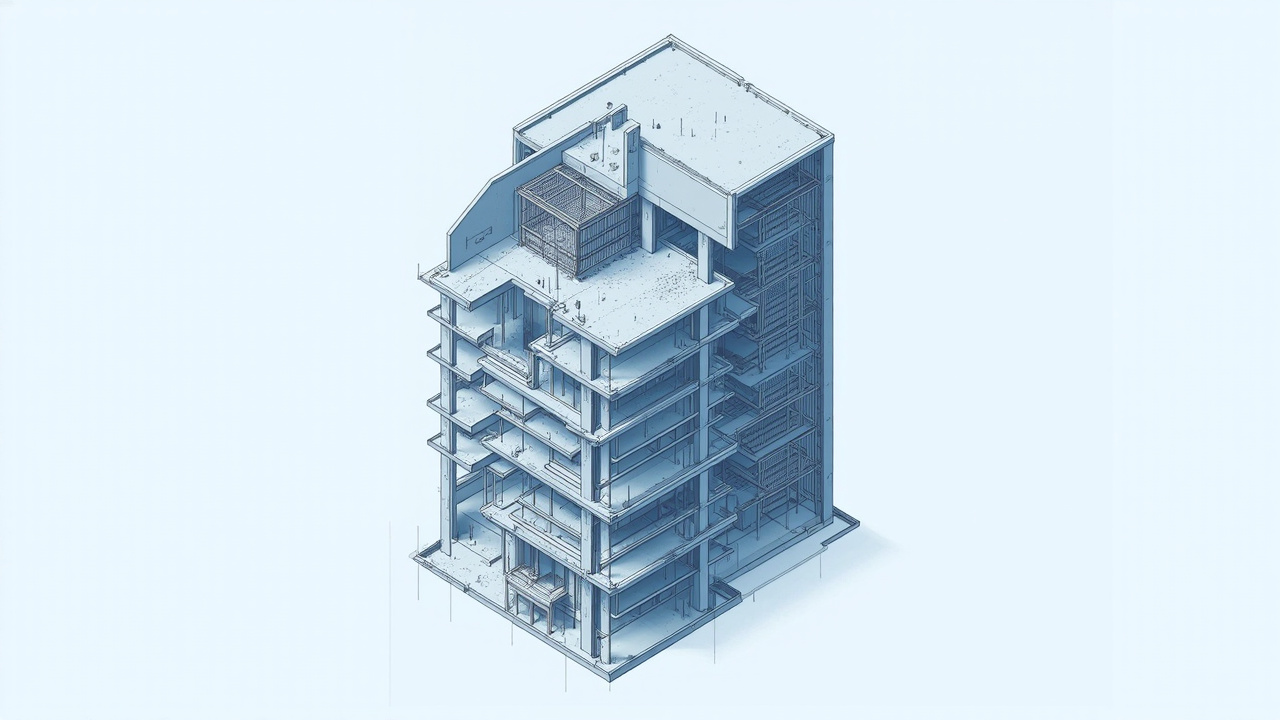
Let’s go back to the source of all the evil — that gorgeous sales gallery that melted your brain. The sales lady in a crisp suit, holding hot coffee, walks you to the massive building model. Her laser pointer deliberately skips the low floors and lands on those glowing boxes at the very top of the building.
You never stopped to think about what this building actually costs to construct. In a 30-story building, the steel, concrete, and labor on the 2nd floor and the 20th floor are exactly identical. The foundation is shared, the elevators are shared, the land share is identical too.
From a construction-cost standpoint, the high floor doesn’t cost the developer a single extra cent in real money. So why does the per-ping price jump by thousands of NT dollars with every floor you climb? That price gap, in the industry, is called the vertical premium — and it’s the sweetest slice of cake on the developer’s profit sheet.
The developer’s strategy is brutally cunning: they first use low-floor budget units to lure in budget-strapped owner-occupier buyers, covering their land and construction costs with those low-margin units so the project never loses money. Once break-even is secured, every single dollar from those sky-high-priced view units is pure profit.
They slap a price tag on nature’s free gifts — sunlight, air, and scenery — then sell them to you at a premium. You think you’re paying NT$2 million for a scarce resource, but you’re really paying for air that the developer created at zero cost. You mortgage thirty years of your youth and sweat to the bank, just to swap it for a view that cost nothing to produce.
After You Move In: The Reality Show of High-Floor Living Disasters
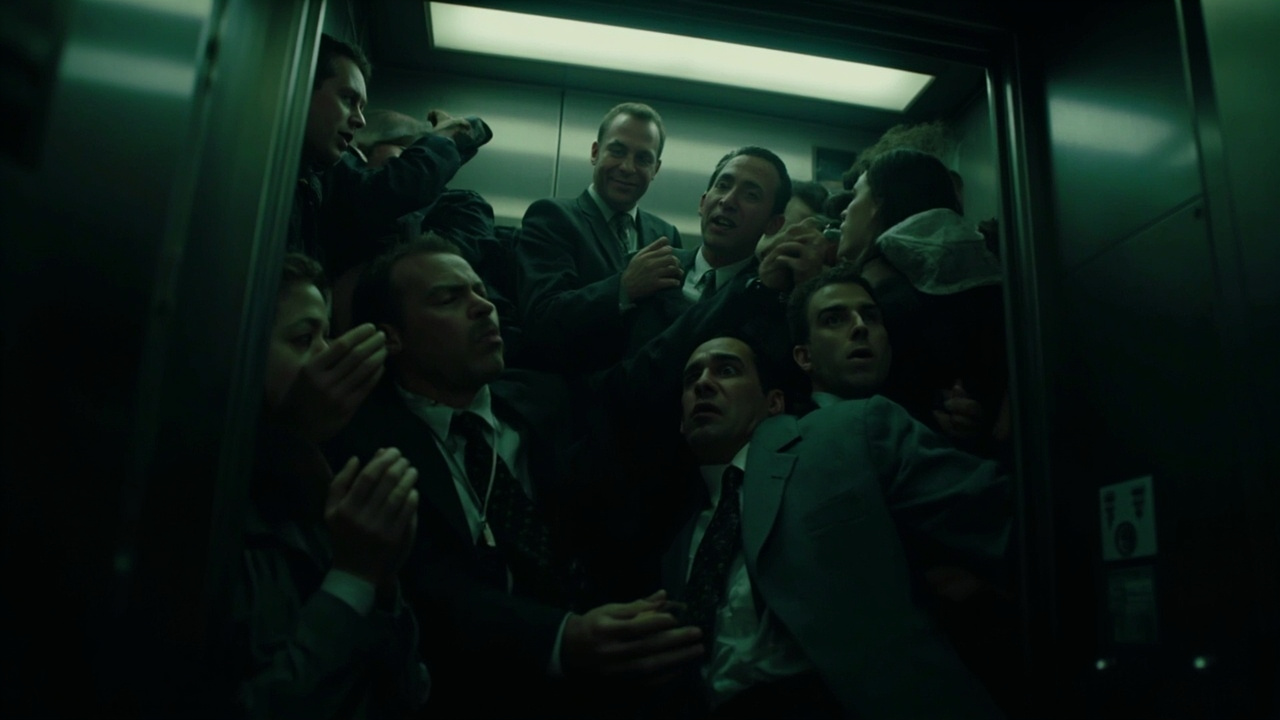
Even more cruel: when you finally move into that high-floor dream home, reality immediately hits you with a haymaker. That fantasy of sipping red wine while watching the night skyline? It shatters in your very first month.
The human brain has a fatal mechanism called diminishing marginal utility — or what we call aesthetic fatigue. No matter how breathtaking the view outside your window, when you drag yourself home from work exhausted, you won’t glance at it once. All you can think about is shower, bed, or collapse on the couch and scroll your phone. That invincible night view becomes wallpaper.
Beyond aesthetic fatigue, high-floor living usually comes with a parade of soul-crushing daily disasters:
First, the invisible tax of commute time. Every morning at peak hour, everyone in the building is queuing for the same few elevators. You live on the 20th floor, the elevator stops at every floor, and the hallway is jammed with school kids and office workers rushing out. You thought living high was a luxury — turns out it’s a daily survival war that makes the MRT look like a vacation.
Then there’s the double torture of water pressure and wind exposure. High floors usually suffer low water pressure; your shower spurts and trickles unpredictably. Even if you shell out for a booster pump, the machine’s hum grinds on your nerves deep into the night. And Taiwan sits in a typhoon-and-earthquake belt — that’s a destiny no high-floor buyer escapes. Every major typhoon or quake hits your floor with an amplitude that makes you question every life choice you’ve ever made.
And don’t forget the western sun and greenhouse effect. That floor-to-ceiling window you’re so proud of? In summer it turns into a giant heater. Afternoon sun pours in and the indoor temperature spikes instantly. To fight the heat, you yank down thick blackout curtains and crank the AC to max. The invincible view you paid NT$2 million for? Buried behind heavy curtains, never seeing daylight.
As for that oversized view glass — after a few months of wind and rain, it cakes with dust and water stains. DIY cleaning is impossible; you have to pay big bucks for spider-window cleaners dangling on ropes. Twice-a-year window cleaning fees, plus brutal electricity and management fees — these are the hidden costs quietly draining your cash flow.
Banks and Buyers Team Up to Strangle You: The Liquidation Truth of the View Premium

When you finally can’t take the lifestyle torture anymore, or you need to sell and upsize for a growing family, you hit the cruelest stage of property investing: the cold, merciless test of the resale market.
You confidently list your apartment with an agent, asking a number that includes that NT$2 million premium you once paid. You assume the next buyer will, just like you did, whip out their wallet without blinking for that view. But reality slaps you awake, because in the resale market, the pool of buyers willing to take the bait has completely changed.
People walking into a sales gallery are usually drunk on aspirational dreams, easy prey for romantic sales pitches. But resale shoppers are battle-scarred, budget-pinched owner-occupier buyers. They might be shopping for marriage, a school district for the kids, or a shorter commute. Every dollar in their pocket is hard-earned and carefully counted.
When they see two units in the same complex — one on the 3rd floor for NT17 million — what do you think they pick? **They pick the 3rd floor without hesitation, because that NT2 million could fully renovate the 3rd-floor unit, or sit in the bank as their kids’ education fund. For owner-occupier buyers, scenery doesn’t pay the bills. A high-floor view is not worth taking on another thirty years of debt.
On top of buyers refusing to pay, you’ll face another killing blow — the bank’s merciless appraisal system. When buyers apply for a mortgage, the bank’s appraiser evaluates value based on objective factors: the official land value, the depreciation of building materials, and recent half-year transaction prices in the neighborhood.
**The bank’s system is cold and ruthlessly rational — it will never add NT15 million apartment needed only a NT5 million down. Owner-occupier buyers who can casually drop NT$5 million in cash are unicorns — you’ve effectively made yourself invisible to the market.
Old Wang vs. Xiao Li: The Brutal Math of the NT$2M View Premium

Let’s run the simplest math and break down how terrifying the wealth-divide is between buying the 2nd floor and the 20th floor.
Suppose Old Wang and Xiao Li both fall for the same building. Old Wang plays it safe on the 3rd floor — NT17 million on the 20th floor. With a 20% down payment, Old Wang puts up NT3.4 million. The rest is mortgage: Old Wang carries NT13.6 million.
Over the next thirty years, Xiao Li pays a much larger mortgage bill every month than Old Wang. That extra NT$1.6 million in principal, at current mortgage rates, piles up another shocking amount of interest over thirty years. For that view, Xiao Li not only paid more principal — he also worked for the bank for free for decades.
Ten years later, both need to sell for family reasons. Because the owner-occupier market is cold and ruthless, Xiao Li’s 20th-floor unit can’t fetch the hoped-for NT18 million, pocketing a clean NT18.5 million.
On the surface, Xiao Li made NT2 million extra principal he originally paid, plus all the extra mortgage interest he bled over those ten years, Xiao Li’s real return on investment is a brutal negative number**. He got crushed in this property bet.
Even scarier: we haven’t even counted the massive hidden opportunity cost — the real engine of class divergence. That extra NT$400,000 down payment Xiao Li paid, and the monthly mortgage gap, if Old Wang had funneled those savings into a disciplined index fund — say, an S&P 500 tracker — at a historical average compound growth rate of 7–8% per year, that money would snowball into a serious fortune over a decade.
Old Wang can use the extra passive income for travel, his kids’ education, or even as the down payment on a second property. And Xiao Li? His cash flow is completely locked up by the brutal mortgage. He’s a wage slave in every sense — can’t afford to get sick, can’t dare to quit. All because of one bad decision at the sales gallery, one moment of vanity, two completely different financial destinies.
The Rich Play It Backwards: Rent the Mansion, Buy the Asset

This is actually a long-standing blind spot in Taiwan’s financial culture. Too many people treat buying a home to live in as some sacred, untouchable faith. They blur the line between shelter and investment, thinking “I’m going to live in it anyway, so it’s fine to pay a bit more.” That brainwashed mindset, fed by developers and traditional elders, is the poison that keeps the poor buying poor and never breaking free.
The rich actually run the opposite playbook. They separate assets from consumption with crystal clarity. To the rich, a house is first a financial instrument, and only second a concrete box to live in. They buy based on land-value preservation, rental cash-flow yield, and future market liquidity. They would never pay an emotional premium for some fuzzy view out the window.
So what does a rich person do if they really want that high-floor night view? The answer is simple: they rent it. In the high-end rental market, the rent gap is a tiny fraction of the price gap. A 3rd-floor unit listed at NT20 million might only differ by a few thousand NT$ in monthly rent.
The rich understand rental yield fundamentals, so they rent that high-floor mansion, enjoy the top-tier view and service, and then deploy the NT$5 million they would have blown on the unit into high-cash-flow core assets. Like a low-floor rental studio, or a portfolio of high-dividend stocks — letting the money make them even more money.
Using passive income from owned assets to cover the rent on a luxury high-rise — that’s the real wolf-of-wall-street move, a dimensional takedown. The masses do the opposite: they spend their hard-earned active labor income to buy a depreciating liability. You think buying the high floor bought you a ticket to upward mobility — what you really bought is a shackle built by capital to harvest you.
Starting today, you need to completely shatter the conventional thinking drilled into you by elders and developers. Re-examine every big-ticket purchase. Next time you walk into a sales gallery and face the agent’s silver-tongued pitch, stay ice-cold.
Ask yourself three silent questions: How much actual usable space does this extra money buy me? When I resell, are there enough buyers out there willing to pay for this feature? Will the bank recognize this value? If the answer is no, swallow your vanity, turn around, and pick the practical, value-for-money unit.
Always remember this brutal law of wealth: what actually makes you rich is never the envy and admiration in other people’s eyes — it’s how many core, cash-flow-generating assets you hold, and how much optionality you keep when risk shows up.
Buying face will never move you up a class. Only buying the right assets will let you survive — and win — this brutal capital game.
If this article gave you any real, practical help with your financial planning, don’t hold back on the likes and shares. Forward it to the friends around you who are currently house-hunting or about to step into the trap — help them dodge the developer’s carefully laid snares, and invest every hard-earned dollar where it actually counts. Finally, may every hustler in this city be granted the eyes to see through the rules of capital — and reach financial freedom soon.
This article involves financial/investment advice. Please evaluate based on your own circumstances and consult a professional financial advisor.
Comments