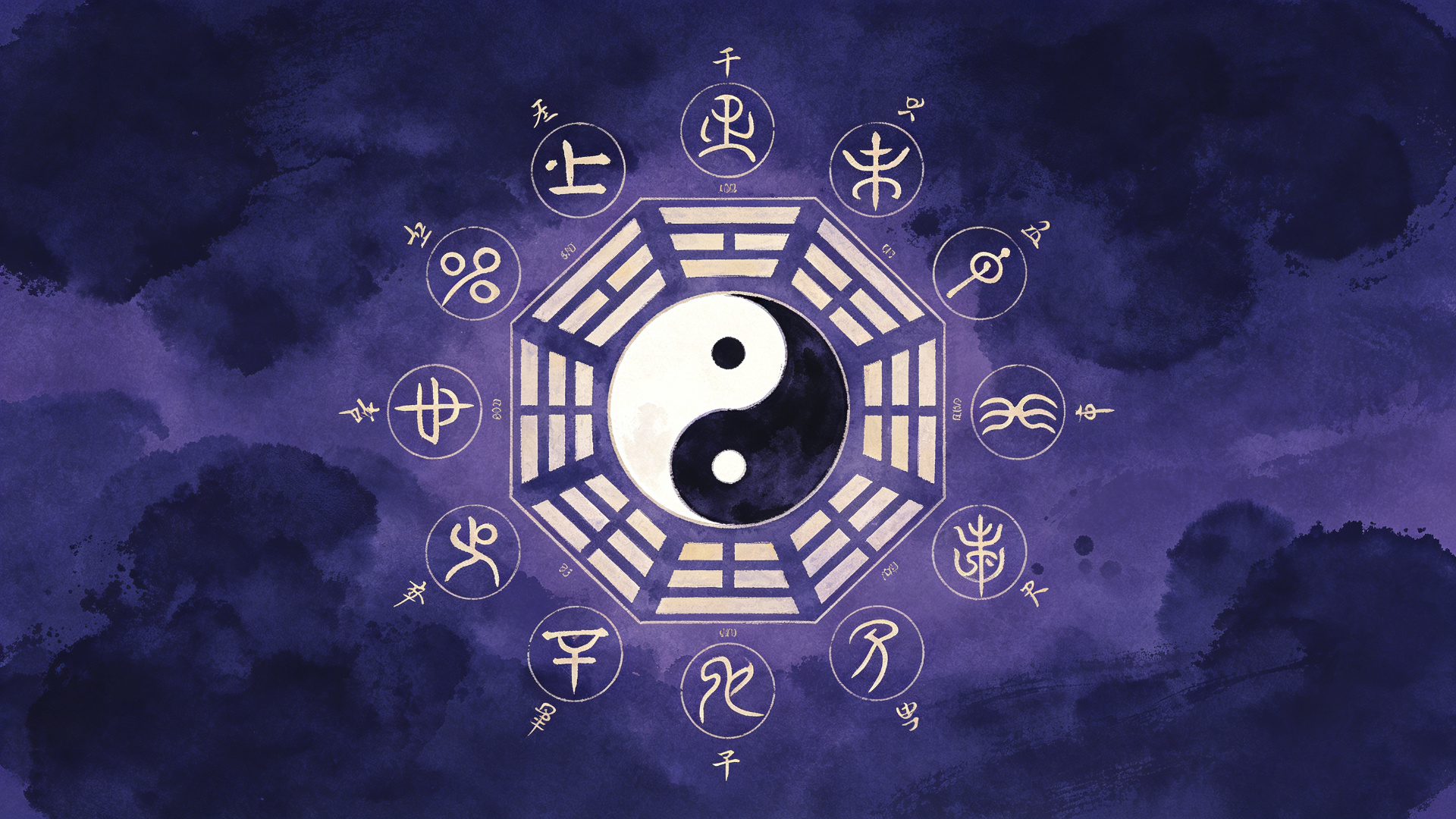
Many people, when first encountering Bazi (Eight Characters), think it is an esoteric and difficult metaphysical art. But in reality, the core logic of Bazi is quite simple—it is essentially a time encoding system that converts the exact moment of your birth into an eight-character code.
These eight characters are not random symbols; they carry the energy information of yin-yang and the five elements from heaven and earth. Just as everyone receives a “personal user manual” at birth, Bazi is the key to deciphering this manual.
You don’t need any special “gift” to learn Bazi. It is more like a system of logic. Anyone can start interpreting their own birth chart once they master the basic rules. This article is your first lesson into the world of Chinese metaphysics.
The Essence of Bazi: The Energy Code of Time
The formal name for Bazi is “Four Pillars Astrology,” originating from ancient Chinese astronomical calendars. The ancients observed that people born at different times exhibited striking similarities in character and destiny, leading to the development of this system.
Core Concept: Yin-Yang and Five Elements
The entire Bazi system is built on two foundations:
- Yin-Yang: Everything has two aspects—day and night, movement and stillness, firm and yielding
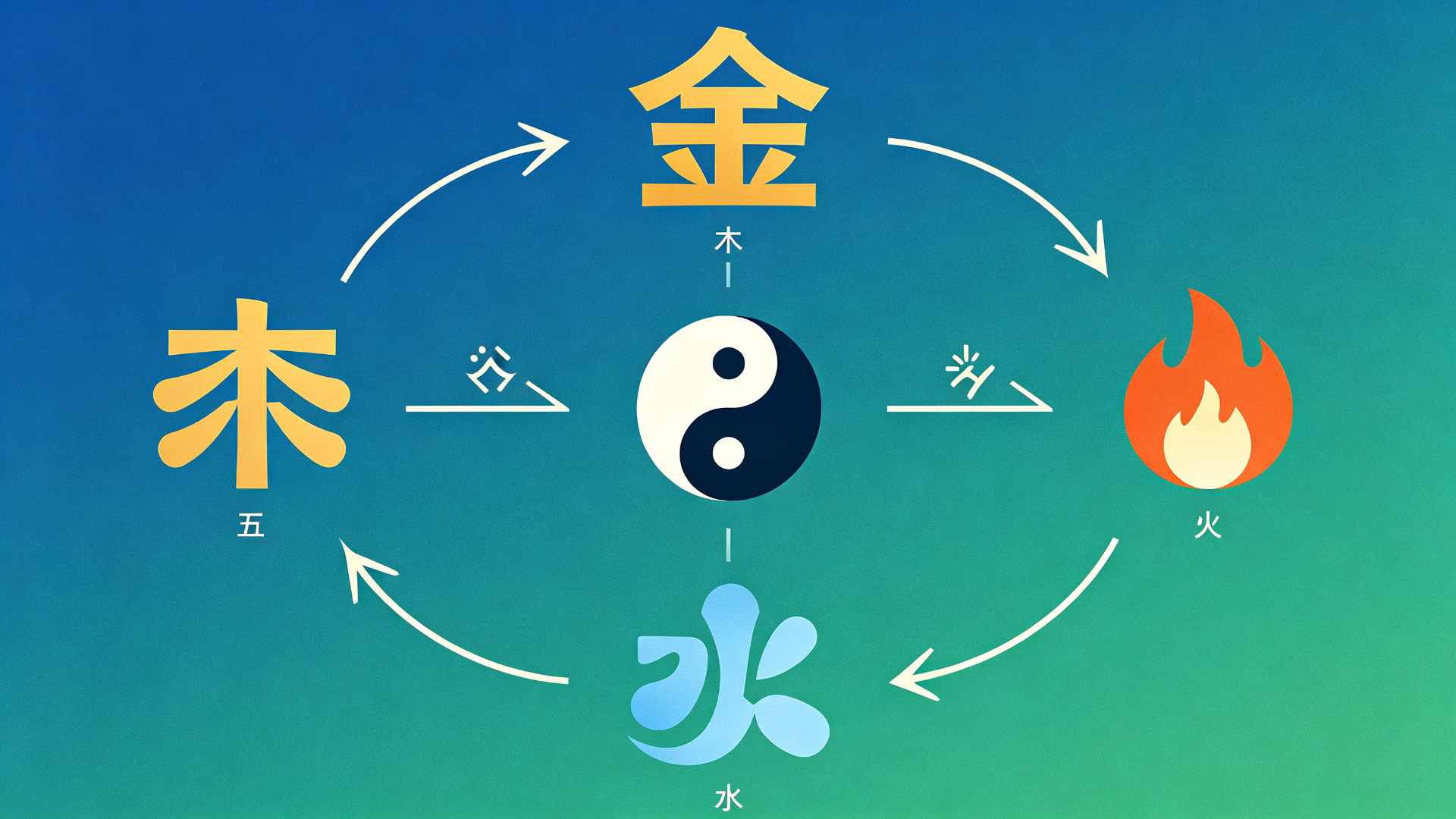
- Five Elements: Wood, Fire, Earth, Metal, Water—five fundamental energies that generate and control each other
The five elements are not five substances, but five energy states:
- Wood: Growth, expansion, flexibility
- Fire: Heat, light, upward movement
- Earth: Stability, nourishment, support
- Metal: Convergence, solidity, structure
- Water: Flow, wisdom, downward movement
The elements follow strict generation and control cycles: Wood fuels Fire, Fire creates Earth, Earth produces Metal, Metal holds Water, Water nourishes Wood; simultaneously Wood controls Earth, Earth controls Water, Water extinguishes Fire, Fire melts Metal, Metal cuts Wood. These rules are the foundation for interpreting all Bazi charts.
Why Eight Characters? The Four Pillars Structure
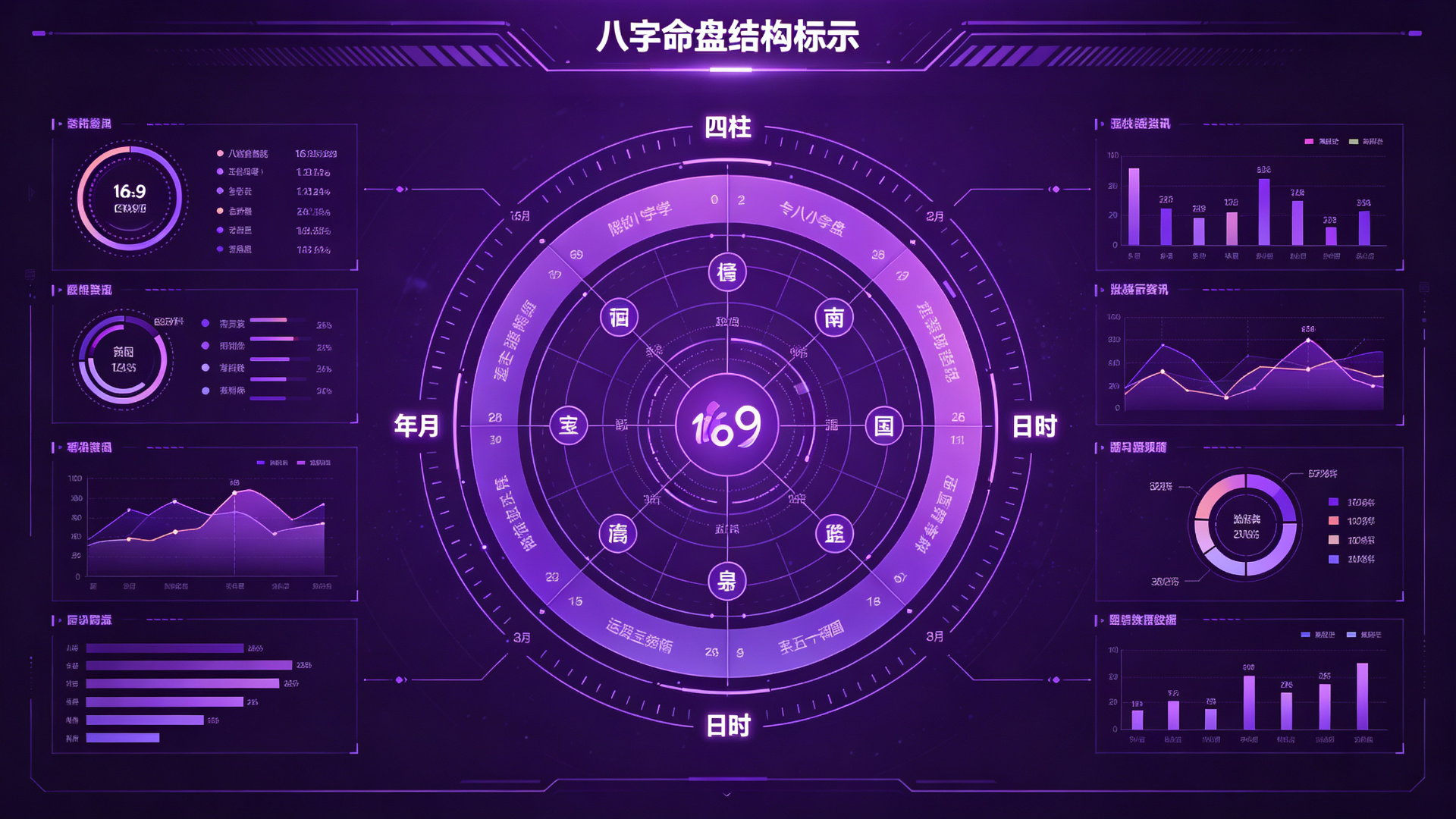
Why exactly eight characters? Because they come from the “Four Pillars”—Year, Month, Day, and Hour. Each pillar contains two characters (one Heavenly Stem, one Earthly Branch), and four pillars multiplied by two equals eight.
What Each Pillar Represents:
- Year Pillar: Ancestry, family background, youth fortune (ages 1-16)
- Month Pillar: Parents, siblings, early adulthood fortune (ages 17-32)
- Day Pillar: Self and spouse, middle age fortune (ages 33-48) → THE MOST IMPORTANT PILLAR
- Hour Pillar: Children, later life fortune (ages 49+)
The “Heavenly Stem” of each pillar is like the branches and leaves of a tree—showing external characteristics. The “Earthly Branch” is like the roots—the deep inner energy. Earthly Branches also contain “Hidden Stems,” a detail beginners often overlook.
The Heavenly Stem of the Day Pillar is called the “Day Master”—this is the core of the entire chart. All seven other characters interact around the Day Master. The first step in analyzing any Bazi chart is identifying the Day Master.
What Can Bazi Tell You? What Can’t It Tell You?

Many people misunderstand Bazi, thinking it can “predict the future.” A more accurate description is: Bazi reveals “tendencies and potentials”, not absolute “outcomes.”
Bazi can accurately analyze:
✅ Your innate personality traits and thinking patterns ✅ Suitable industries and career types ✅ Financial patterns and money-making potential ✅ Relationship views and compatible partner types ✅ Health vulnerabilities and organs needing attention ✅ Fortune fluctuations throughout life stages
Bazi CANNOT tell you:
❌ Next lottery winning numbers ❌ Exact name of your future spouse ❌ Certain disasters that will definitely happen ❌ Shortcuts to success without effort
Destiny analysis is like weather forecasting: it tells you it will rain tomorrow, but whether you bring an umbrella or go out is still your decision. Knowing trends helps you make better choices, not wait passively for fate.
Beginner Mindset and Learning Path

The most common mistake beginners make is wanting to “predict accurately” from day one. Actually, the most important thing in the beginning stage is establishing correct foundational concepts.
Three Recommendations for Beginners:
First, start by understanding yourself. Don’t try to read others’ charts initially. Understand your own chart first. Your personality, your past, your choices—these are the best verification materials.
Second, don’t worship “miracle psychics.” Many online “masters” claiming perfect accuracy rely heavily on话术. Real metaphysics is logical reasoning, not channeling.
Third, destiny analysis is a tool, not the answer. The purpose of Bazi is to help you know yourself, leverage your strengths, and avoid blind spots—not to trap you in fatalistic pessimism.
Recommended Learning Path:
- Memorize basic characteristics of 10 Heavenly Stems and 12 Earthly Branches
- Understand Five Elements interactions and 10 Gods system
- Learn to assess Day Master strength
- Understand how 10-year Luck Cycles and Annual Flows work
- Read numerous case studies for verification
Bazi is not fatalism—it is a science of self-awareness. It tells you what your innate equipment is, but how you use that equipment is always your choice.
In the upcoming series, we will systematically break down every aspect of Bazi. From Heavenly Stems and Earthly Branches to Five Elements interactions, from the 10 Gods system to Luck Cycles—using engineering logic to guide you through this thousand-year-old wisdom.
Disclaimer: This content is for educational and academic research purposes only and does not constitute the sole basis for any life decisions. Destiny analysis indicates trends only; actual outcomes depend on personal choices and environmental factors.
Comments