
June 2026 Report — Roll-Out Self-Rescue: What to Do When an Option Punches Through the Strike
💡 Reading time: ~10 minutes | Series: Monthly Performance Review #6
June opener: both positions under water
Entering June, the two May Sell Put positions I’d held were both deep ITM:
| Position | Strike | Stock price early June | Distance to strike | Status |
|---|---|---|---|---|
| NVDA SP $223 × 6 | $223 | ~$212 | -4.9% | 🔴 Deep ITM |
| GOOG SP $370 × 6 | $370 | ~$352 | -4.9% | 🔴 Deep ITM |
Expiration on 6/18 was only 7 days away. If I did nothing, I’d be forced to buy 600 shares of NVDA (at $223/share) and 600 shares of GOOG (at $370/share), requiring more than $355,000 — far beyond my account’s capacity.
I had to decide: cut my losses, or roll out?
What is a roll out?
Roll Out = close a near-expiry losing position + open a new position with a further-out expiration.
The essence is “buy time to wait for the stock to recover.” You pay the realized loss as the price, in exchange for a “start over” opportunity.
My roll-out operations: executed 6/11
NVDA: $223 × 6 → $215 × 6
| Action | Detail |
|---|---|
| Close old position | Buy back NVDA SP $223 × 6, paid $12,240 ($20.40/share) |
| Old position income | Originally $6,180 |
| Realized loss on old | -$6,060 |
| Open new position | Sell NVDA SP $215 × 6, collect $12,462 ($20.77/share) |
| New expiration | 2026/08/21 (71 days longer) |
| Strike adjustment | $223 → $215 (down $8, +3.6% safety buffer) |
GOOG: $370 × 6 → $375 × 3
| Action | Detail |
|---|---|
| Close old position | Buy back GOOG SP $370 × 6, paid $15,360 ($25.60/share) |
| Old position income | Originally $4,890 |
| Realized loss on old | -$10,470 |
| Open new position | Sell GOOG SP $375 × 3, collect $11,100 ($37.00/share) |
| New expiration | 2026/08/21 |
| Contract adjustment | 6 contracts → 3 contracts (halved) |
Note: I made an important adjustment on GOOG — halved the contracts from 6 to 3. Because the GOOG loss was bigger, I didn’t want to absorb the same position pressure again.
Cost-benefit analysis of the roll-out
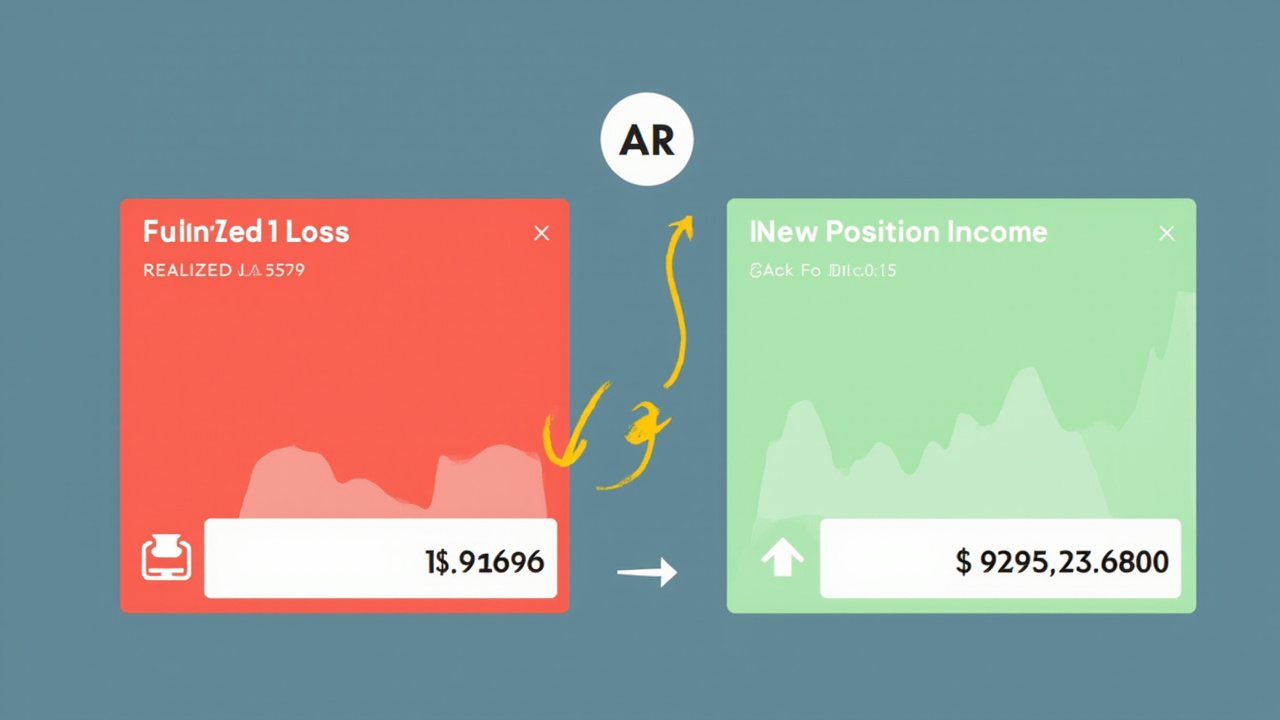
The cost already paid
| Item | Amount |
|---|---|
| NVDA realized loss on old | -$6,060 |
| GOOG realized loss on old | -$10,470 |
| Total realized loss | -$16,530 |
That money is already debited from the account. No recovering it.
The new opportunity gained
| New position | Premium income | Expiration | Strike |
|---|---|---|---|
| NVDA SP $215 × 6 | $12,462 | 8/21 | $215 |
| GOOG SP $375 × 3 | $11,100 | 8/21 | $375 |
| New position total income | $23,562 |
If both expire OTM before 8/21 (stock recovers), the new positions’ $23,562 can substantially cover the old $16,530 loss.
But that’s the best case. If the stock keeps falling, I’m staring at a second roll or a forced cut.
Current position status (mid-June)
| Position | Strike | Expiry | Opening premium | Current price | Distance to strike | Status |
|---|---|---|---|---|---|---|
| NVDA SP $215 × 6 | $215 | 8/21 | $12,462 | $212.45 | -1.2% | ⚠️ Slightly ITM |
| GOOG SP $375 × 3 | $375 | 8/21 | $11,100 | $367.11 | -2.1% | ⚠️ Slightly ITM |
Both are still struggling around the strike. 66 days left until 8/21, time is on my side — but only if the stock doesn’t keep falling.
Three possible scripts
Script A (best): stock recovers above strike → OTM expiry
- NVDA > $215, GOOG > $375
- Full $23,562 from new positions
- Net of the old $16,530 loss: +$7,032
- Ending: successful turnaround ✅
Script B (medium): stock recovers slightly but doesn’t reach strike
- Need to close early in early August, recover 50%–70% of premium
- Net: maybe break even or small loss
- Ending: living to fight another day ⚠️
Script C (worst): stock keeps falling
- Need a second roll-out or cut immediately
- Net: losses grow
- Ending: cut off a limb to survive 🔴
Managing the mindset in June
After the roll-out, the hardest part isn’t the mechanics — it’s the mindset.
Every day, looking at the floating P&L on those two positions feels like riding an elevator — up $1 and I’m happy, down $1 and I panic.
My coping methods:
- Set an alarm: only check once a day (5 PM, 30 minutes after the US market opens)
- Write in the journal — turn the anxiety into words, not trades
- Keep training — physical fatigue fights mental chatter
- Re-read the risk rules — whatever the outcome, the system is right
When to use a roll-out — summary
| Good for roll-out | Not good for roll-out |
|---|---|
| ✅ Fundamentals haven’t changed, stock fell on market sentiment | ❌ Company fundamentals deteriorated (earnings disaster) |
| ✅ New position premium can cover 70%+ of the loss | ❌ New premium isn’t enough to cover the loss |
| ✅ You still have medium-to-long-term confidence in the underlying | ❌ You don’t want to hold this stock anymore |
| ✅ First roll (give yourself one chance) | ❌ Already rolled twice (time to cut) |
📌 Little Otter’s June note: A roll-out isn’t magic to escape a loss — it’s a strategic retreat that trades time for space. The cost has been paid (-$16,530); now all I can do is manage the new positions well and wait for the market to return. The next 8 weeks are decision time. Whatever happens, I’m clearer-headed than I was in May.
Disclaimer: This article is a personal trading experience share, not investment advice.
Comments