
Slow and steady wins the race. Investing is like rolling a snowball — you need a long enough slope and enough snow.
Should you put your money into a house or the stock market first? This is probably the most agonizing question for every young salaried worker. Housing prices keep climbing, salaries can’t keep up, and saving alone can never outpace inflation.
This article compiles real-world experience from celebrity Huang Deng-Hui, entertainer GINO, and Wall Street veteran analyst Chen Wei-Liang — covering the “buy a house vs. buy stocks” dilemma and how to build NT$200K monthly passive cash flow using ETFs, in four core strategies.
1. Limited Budget: Buy Stocks First, Then a House
The answer might surprise you: buy stocks first, then a house.
Over the past 20 years, Taiwan’s average annual housing price growth has been around 5-6%, but the average salary growth for workers is under 1%. Trying to save a down payment on salary alone can never keep up with housing prices. However, the stock market’s long-term average compound annual return is 12-15%.
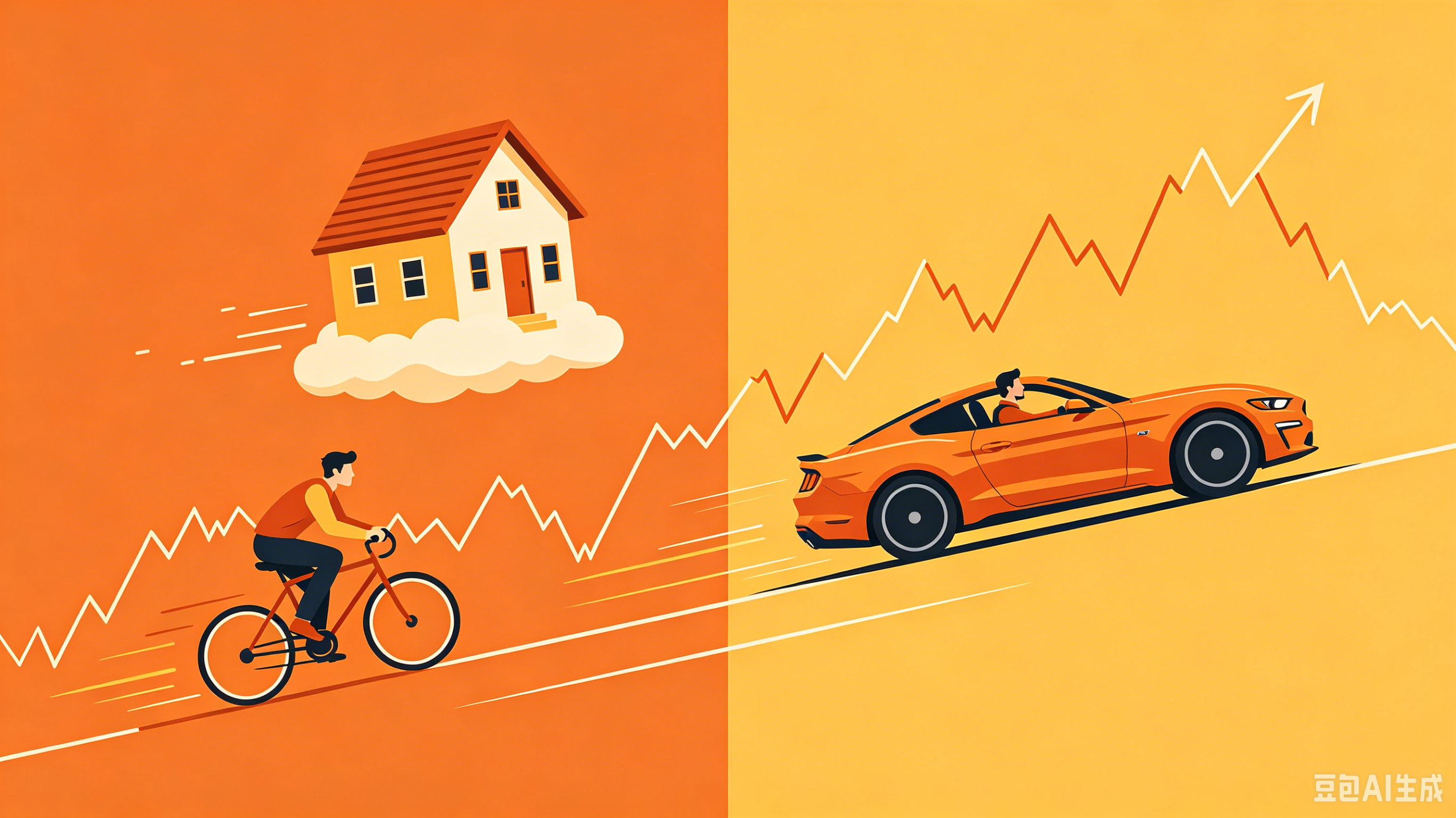
Think of it this way: if housing prices are an SUV, your salary is a bicycle — you’ll never catch up. But if you grow your capital in the stock market “supercar” first, buying a spacious, new-build apartment later becomes much easier.
Real Example: Huang Deng-Hui’s “Stock-to-House” Move
Huang sold his profitable TSMC stocks to make the down payment on a large apartment in Nangang. After buying, he went further by leveraging the concept of “good debt”: investing the multi-million dollar mortgage proceeds into stable targets like 0050. As long as the investment return rate (~5%) exceeds the mortgage interest rate (~2%), he earns the spread effortlessly.
The point isn’t that buying a house is bad — it’s that sequence matters. Grow your assets first, then use assets to buy property. Far more efficient than grinding to save a down payment.
2. Avoid Four Investment Landmines
Before rushing into the market, know which traps to absolutely avoid. Huang admits he once chased shipping stocks and followed tips, only to watch them plummet. These four psychological traps are the root cause of most retail investor losses:
Landmine 1: FOMO (Fear of Missing Out)
Jumping in during volume spikes is often the start of getting harvested. When everyone in your social circle is posting profit screenshots, smart money entered long ago — you’re just catching the last baton.
Landmine 2: Loss Aversion
Behavioral economics tells us the pain of losing is 2.5x the joy of winning. This creates a fatal pattern: taking small profits quickly while holding losses stubbornly — small wins, big losses.
Landmine 3: Herd Effect
Blindly following hot trends without your own analytical framework. Remember: when the market auntie is chatting about a stock, it’s usually time to exit.
Landmine 4: Overconfidence
Thinking you can go all-in on one stock and get rich, ignoring the underlying risks. Concentrating in a single stock is like putting all your eggs in one basket — drop it and everything’s gone.
The Secret Weapon for Bottom-Fishing: Fear & Greed Index
Want to buy during a crash? Watch CNN’s Fear & Greed Index. When it drops below 25, the market is in extreme fear — historically, these are often the best entry points. Being greedy when others are fearful isn’t just a saying.

3. The “Boring” But Rock-Solid ETF Strategy
Entertainer GINO is a typical conservative investor. He doesn’t chase hot stocks or day-trade, but he has a clear goal: not having to take acting jobs just for money in the future. His strategy is so boring it’s almost dull — and that’s exactly why it works.
Strategy 1: Go Global, Follow the Market
Don’t just buy Taiwan’s market-cap ETFs (0050, 006208) — also invest in US ETFs tracking the S&P 500. The reason is simple: US stocks represent about 60% of global market cap with the strongest growth potential. Spreading between Taiwan and US baskets means lower risk and higher growth potential.
Strategy 2: Core + Satellite Allocation
80% of funds go into broad market-cap ETFs (the “core”) for long-term holding. 20% goes into sector or thematic ETFs (the “satellite”) like semiconductor ETFs, adjustable based on economic cycles.
Strategy 3: Three-Phase Retirement Blueprint
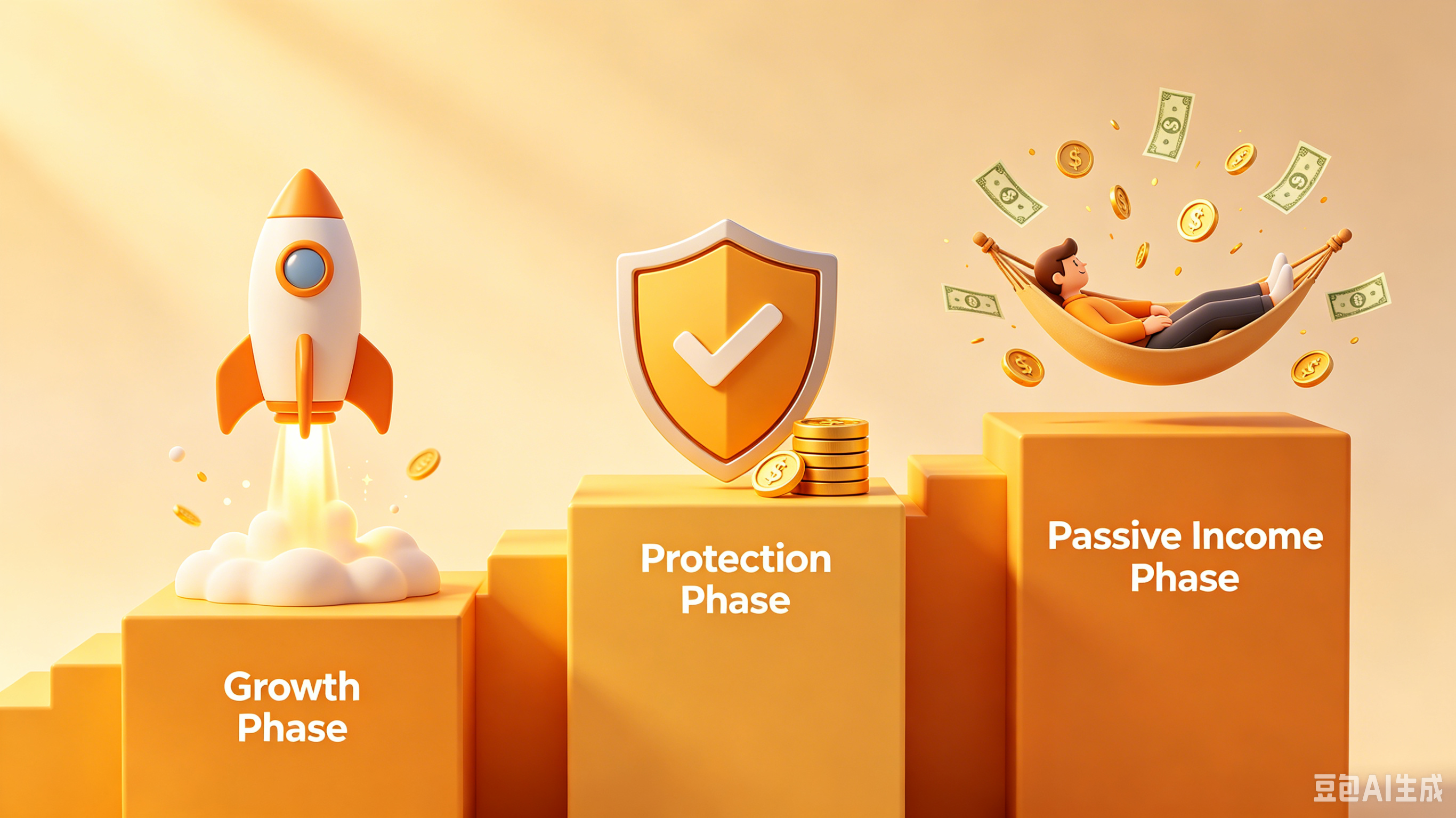
GINO designed a retirement plan with three clear phases:
- Aggressive Phase (20s-40s): All-in on equity ETFs, prioritizing growth, maximizing compounding
- Transition Phase (40s-50s): Gradually shifting to a balanced portfolio, adding bonds to reduce volatility
- Harvest Phase (55+): Convert to income-focused investments
When capital reaches a certain scale and age advances, the strategy shifts from offense to defense:
- Redirect partial gains to stable high-yield bond ETFs (~5% yield)
- Pair high-dividend ETFs with bonds as a shield
- Target: generating over NT$200K monthly passive cash flow
Simple math: if your portfolio reaches NT$48 million with a 5% annual yield, that’s NT$2.4 million per year, averaging NT$200K per month. Not fantasy — it’s the mathematical result of 10-15 years of dollar-cost averaging + compounding.
Summary: Start Now, Let Time Work for You
There’s no perfect timing for investing — only the earliest start.
You don’t need a large lump sum. NT$30K per month in dollar-cost averaging is the best starting point. Choose the right tools (market-cap ETFs), control your emotions (avoid the four landmines), maintain discipline (never stop), and leave the rest to time and compounding.
Slow and steady wins the race. The snowball is already in your hands — now find a slope long enough and give it a push.

Disclaimer: This article is for financial knowledge sharing and personal opinion only. It does not constitute investment advice. Investing involves risk — please carefully evaluate your own financial situation before entering the market.
Comments